India's Indigenous Strength Reflected in PFBR's Criticality Achievement
Synopsis
The Prototype Fast Breeder Reactor (PFBR) has achieved criticality, showcasing India's robust nuclear capabilities and indigenous expertise. This milestone not only marks a technological achievement but also signals a promising future for nuclear energy in India.
Key Takeaways
PFBR's criticality indicates a significant advancement in India's nuclear technology.
India's nuclear capacity is set to increase significantly in the coming years.
The government is investing heavily in Small Modular Reactors for future energy needs.
India's nuclear policy aims for long-term energy independence.
International collaborations enhance India's nuclear program credibility.
New Delhi, April 7 (NationPress) The successful attainment of criticality at the Prototype Fast Breeder Reactor (PFBR) is not merely a technological achievement; it showcases the evolution of India’s nuclear ambitions and the robustness of its homegrown capabilities, as stated in an official announcement on Tuesday.
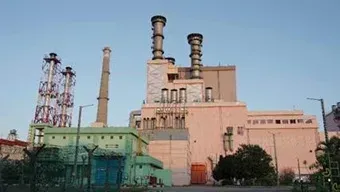
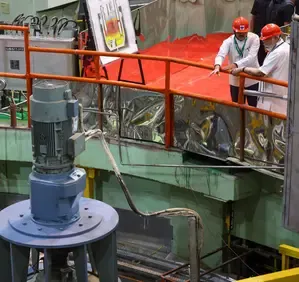
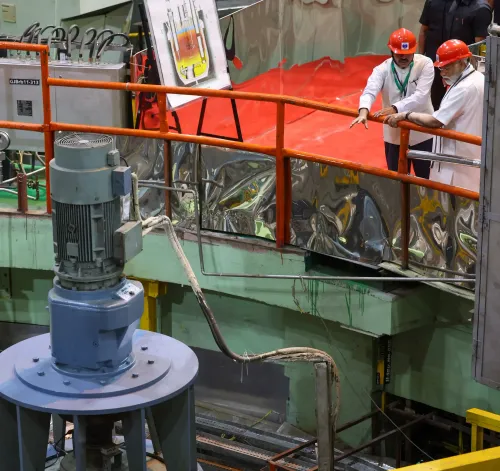
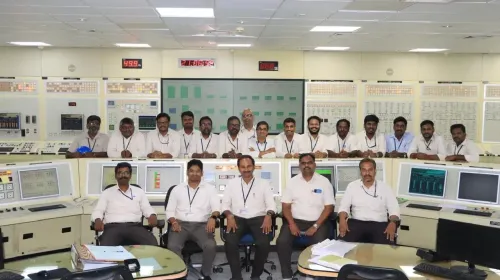
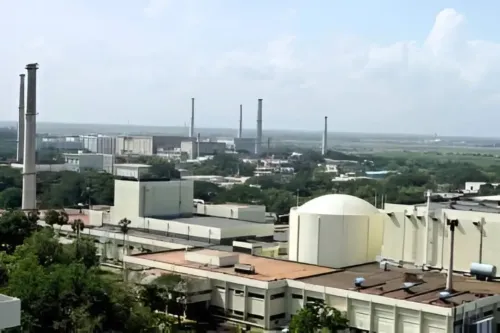
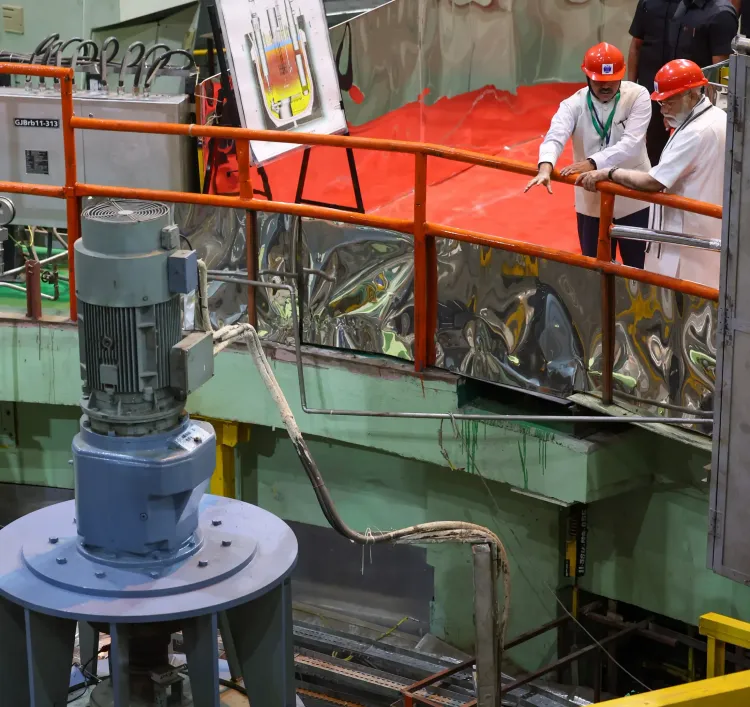
The PFBR, which is completely designed and constructed in India, is situated at Kalpakkam in Tamil Nadu and reached its initial criticality on April 6, signaling the start of a sustained nuclear chain reaction.
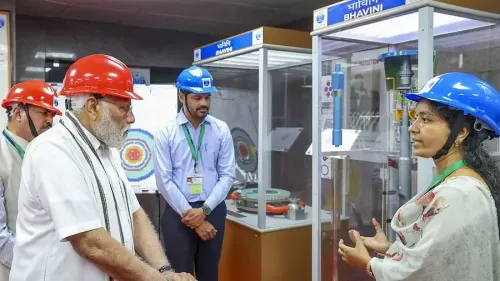
This reactor, with a capacity of 500 MWe (Megawatt electrical), was developed by Bharatiya Nabhikiya Vidyut Nigam Limited (BHAVINI) at the Kalpakkam Nuclear Complex.
“The advancements at the Kalpakkam Nuclear Complex reflect confidence in cutting-edge reactor technologies and highlight the pivotal role of the Department of Atomic Energy in facilitating this transition. As capacity increases and newer technologies emerge, nuclear energy is poised to assume a more significant position in India’s energy landscape,” noted the official fact-sheet.
Despite having limited uranium reserves, India boasts one of the largest thorium reserves globally. To optimize these resources, the Department of Atomic Energy has formulated a three-stage nuclear power program based on a closed nuclear fuel cycle, aimed at progressively augmenting domestic fissile resources and achieving long-term energy autonomy.
India's current nuclear output stands at 8.78 Gigawatt (GW). In 2024–25, nuclear power facilities produced 56,681 million units of electricity nationwide.
Nuclear energy consistently contributes approximately 3 percent to India's total electricity generation, with its share at 3.1 percent in 2024–25.
“India's nuclear capacity is projected to grow nearly threefold in the coming years. The development of indigenous 700 Megawatt (MW) and 1,000 MW reactors through international partnerships is expected to elevate the installed capacity to 22.38 GW by 2031–32,” the statement added.
India has entered into Inter-Governmental Agreements (IGAs) on Civil Nuclear Cooperation for peaceful purposes with 18 nations, showcasing the increasing global confidence in India's nuclear initiatives.
The Nuclear Energy Mission has allocated Rs 20,000 crore for the design, development, and implementation of Small Modular Reactors (SMRs), indicating a significant long-term commitment to indigenous nuclear technology. At least five domestically designed SMRs are expected to become operational by 2033, enhancing India's clean and reliable energy strategy.
The Bhabha Atomic Research Centre (BARC) is spearheading the development of next-generation reactor designs, including the 200 MWe Bharat Small Modular Reactor (BSMR-200), the 55 MWe SMR-55, and a High-Temperature Gas-Cooled Reactor that can reach up to 5 MWth (Megawatt thermal) for hydrogen production.
Furthermore, to bolster this mission, the government has introduced the 'Sustainable Harnessing and Advancement of Nuclear Energy for Transforming India (SHANTI) Act, 2025,’ which modernizes India's nuclear legal framework. This act facilitates limited private sector involvement in the nuclear domain under regulatory supervision, paving the way for new collaborations and investments.
Point of View
The achievement of criticality at the Prototype Fast Breeder Reactor is a testament to India's capability in advancing its nuclear technology. It reflects a strategic vision for energy independence and showcases the commitment to harnessing indigenous resources, crucial for the nation's growth.
NationPress
13 Sept 2026
Frequently Asked Questions
What is the Prototype Fast Breeder Reactor?
The Prototype Fast Breeder Reactor (PFBR) is a 500 MWe reactor designed and built in India, located at the Kalpakkam Nuclear Complex. It is pivotal for India's nuclear power generation strategy.
When did the PFBR achieve criticality?
The PFBR achieved its first criticality on April 6, 2023.
What is the significance of achieving criticality?
Achieving criticality marks the initiation of a sustained nuclear chain reaction, which is essential for the reactor's operation and signifies a major step forward in India's nuclear capabilities.
How much electricity does India generate from nuclear power?
As of 2024-25, India's nuclear power plants generated 56,681 million units of electricity, contributing approximately 3.1 percent to the total electricity generation.
What is the future outlook for India's nuclear capacity?
India's nuclear capacity is expected to grow nearly threefold by 2031-32, with new indigenous reactors being developed in collaboration with international partners.