India's PFBR at Kalpakkam achieves criticality, joins elite fast breeder reactor nations
Synopsis
India's 500 MW PFBR at Kalpakkam has gone critical — a milestone that places the country alongside Russia as the only nations with operational fast breeder reactor technology. More than a scientific first, it is the activation of Stage Two of Homi Bhabha's decades-old nuclear roadmap, and the essential bridge to India's thorium-powered energy future.
Key Takeaways
India's 500 MW Prototype Fast Breeder Reactor (PFBR) at Kalpakkam, Tamil Nadu has achieved criticality for the first time.
India joins Russia as one of the only nations operating advanced fast breeder reactor technology.
The milestone marks India's entry into Stage Two of its three-stage nuclear power programme envisioned by Homi Jehangir Bhabha .
The PFBR is designed to breed more fissile material than it consumes, using plutonium-based fuel .
India's nuclear capacity is projected to grow from 8.78 GW to 22.38 GW by 2031-32 .
The reactor will help develop Uranium-233 from thorium , paving the way for Stage Three and potentially centuries of energy supply.
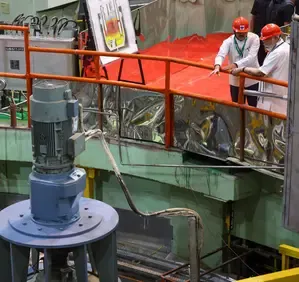
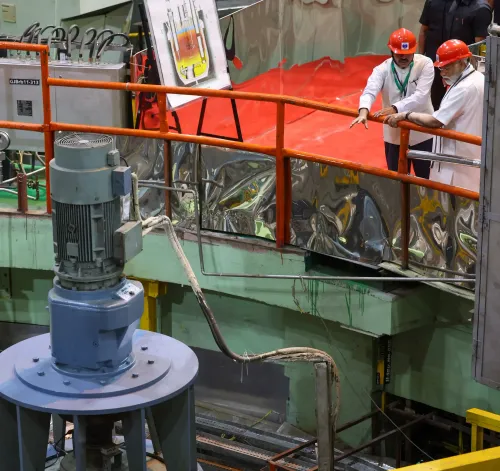
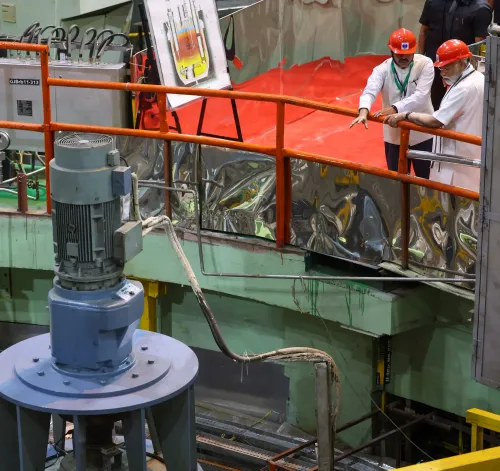
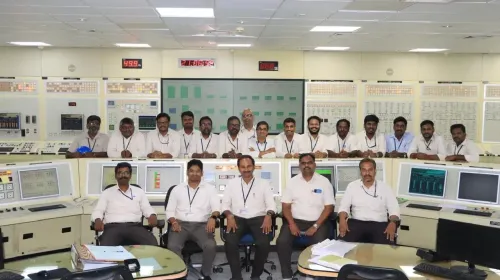
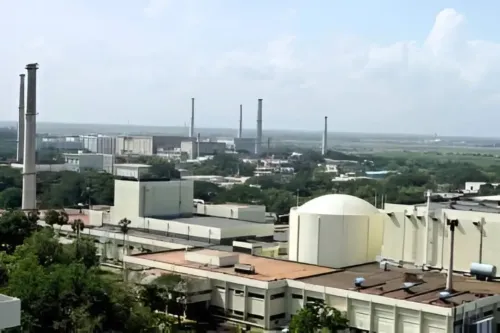
India's indigenously developed 500 MW Prototype Fast Breeder Reactor (PFBR) at Kalpakkam in Tamil Nadu has achieved criticality — the stage at which a nuclear reactor sustains a controlled, self-sustaining chain reaction for the first time. The milestone, reported on 23 May, places India among an exclusive group of nations with operational fast breeder reactor technology, with Russia currently the only other country running commercial fast breeder reactors.
A Historic Leap in India's Nuclear Programme
According to an analysis by Business Report, the PFBR's criticality marks India's formal entry into the second stage of its three-stage nuclear power programme — a roadmap originally conceived by pioneering nuclear scientist Homi Jehangir Bhabha, widely regarded as the architect of India's nuclear strategy. The first stage relies on natural uranium as fuel in conventional reactors, generating plutonium as a by-product. The second stage, now activated, channels that plutonium into Fast Breeder Reactors.
What makes the PFBR particularly significant is its design capability: it is engineered to produce more fissile material than it consumes, using plutonium-based fuel to breed additional fuel — effectively acting as its own fuel generator. This self-sustaining cycle directly strengthens India's long-term energy security.
The Road to Thorium: Stage Three on the Horizon
The Kalpakkam reactor is expected to play a pivotal role in developing Uranium-233 from thorium, setting the foundation for the programme's third and most ambitious stage. India holds some of the world's largest thorium reserves, while its uranium resources remain comparatively limited. According to the report, thorium-based energy generation could potentially power the country's needs for several hundred years.
Notably, India's strategic pivot to thorium is not merely aspirational — it is a structural necessity. Unlike uranium-rich nations that can sustain conventional reactor fleets indefinitely, India's energy independence hinges on unlocking its thorium endowment. The PFBR criticality is the critical bridge between the country's uranium-dependent present and its thorium-powered future.
Clean Energy and Net-Zero Targets
The development is also seen as a significant contributor to India's clean energy ambitions. The country has committed to achieving net-zero carbon emissions by 2070 under the leadership of Prime Minister Narendra Modi, and nuclear power — particularly advanced reactors with minimal waste profiles — is viewed as a cornerstone of that transition.
India's current nuclear power generation capacity stands at 8.78 GW, accounting for nearly 3% of the country's total electricity output. This share, while modest, is set to grow substantially. With indigenous 700 MW reactors already in the pipeline and upcoming international collaborations involving 1,000 MW reactors, India's installed nuclear capacity is projected to reach 22.38 GW by 2031-32, according to the report.
India's Place in the Global Nuclear Order
The PFBR milestone arrives at a moment when global interest in advanced nuclear technology is surging, driven by energy security concerns and decarbonisation imperatives. Russia's BN-800 and BN-1200 reactors have long been the benchmark for commercial fast breeder technology. India's entry into this league — with a fully indigenous design — represents not just a scientific achievement but a geopolitical statement about the country's technological self-reliance.
With the PFBR now critical, attention will shift to full-power operation, regulatory clearances for commercial generation, and the timeline for replicating the design at scale. India's nuclear establishment has signalled ambitions to build multiple fast breeder units beyond Kalpakkam in the years ahead.
Point of View
But its deeper significance is strategic. India is one of the few major economies whose long-term energy independence is structurally dependent on cracking thorium — and the PFBR is the only credible path to get there. What mainstream coverage underplays is the timeline risk: achieving criticality is the beginning, not the end. The gap between criticality and commercial-scale power generation has historically been wide in India's nuclear programme, with the PFBR itself facing years of delays. The real test is whether this momentum translates into accelerated construction of subsequent fast breeder units — and whether India's nuclear regulatory and industrial ecosystem can scale fast enough to hit the 22.38 GW target by 2031-32.
NationPress
19 Sept 2026
Frequently Asked Questions
What is the PFBR criticality milestone achieved at Kalpakkam?
The 500 MW Prototype Fast Breeder Reactor (PFBR) at Kalpakkam in Tamil Nadu has achieved criticality — the point at which a nuclear reactor sustains a controlled, self-sustaining chain reaction for the first time. It marks India's formal entry into the second stage of its three-stage nuclear power programme.
Why is the PFBR milestone significant for India?
It places India alongside Russia as one of the only countries with operational fast breeder reactor technology. The PFBR is designed to produce more fuel than it consumes, directly strengthening India's long-term energy security and reducing dependence on imported uranium.
What is India's three-stage nuclear power programme?
Conceived by nuclear scientist Homi Jehangir Bhabha, the programme has three stages: Stage One uses natural uranium in conventional reactors to produce plutonium; Stage Two uses that plutonium in Fast Breeder Reactors like the PFBR; Stage Three aims to use thorium — of which India has vast reserves — for large-scale power generation via Uranium-233.
How does the PFBR support India's clean energy goals?
Nuclear power produces minimal carbon emissions, and the PFBR's success supports India's commitment to net-zero carbon emissions by 2070. India's nuclear capacity is projected to grow from 8.78 GW to 22.38 GW by 2031-32 through indigenous 700 MW reactors and international collaborations involving 1,000 MW units.
What comes after criticality for the PFBR?
Achieving criticality is the first major operational milestone. The reactor must next progress to full-power operation and obtain regulatory clearances for commercial electricity generation. India has also signalled plans to build additional fast breeder reactors beyond Kalpakkam to scale up the programme.