Government Confirms Fast Breeder Reactors Will Boost Thermal Efficiency and Reliability
Synopsis
The government has highlighted the pivotal role of fast breeder reactors in ensuring reliable, low-carbon power generation. With India's 500 MWe Prototype Fast Breeder Reactor achieving first criticality, this marks a significant step towards energy security and advancing indigenous nuclear capabilities.
Key Takeaways
Fast breeder reactors provide low-carbon energy.
PFBR achieved its first criticality on April 7.
It enhances India's energy security and nuclear technology.
Designed for better fuel efficiency and sustainability.
Supports the government's 'Atmanirbhar Bharat' initiative.
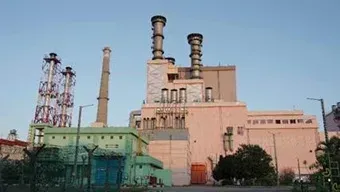
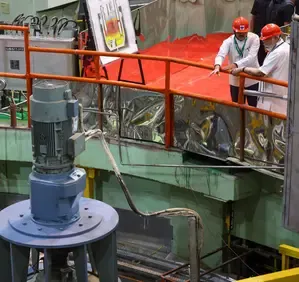
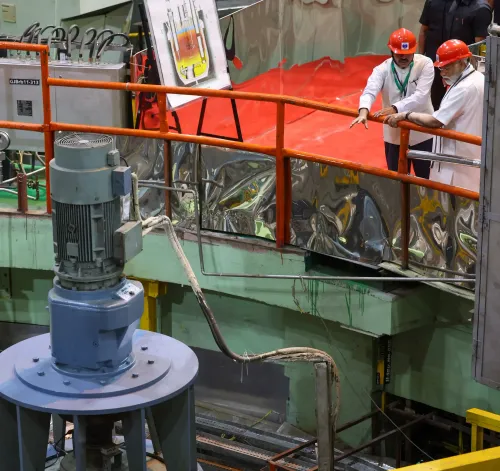
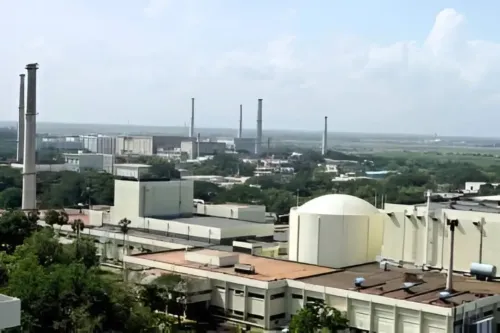
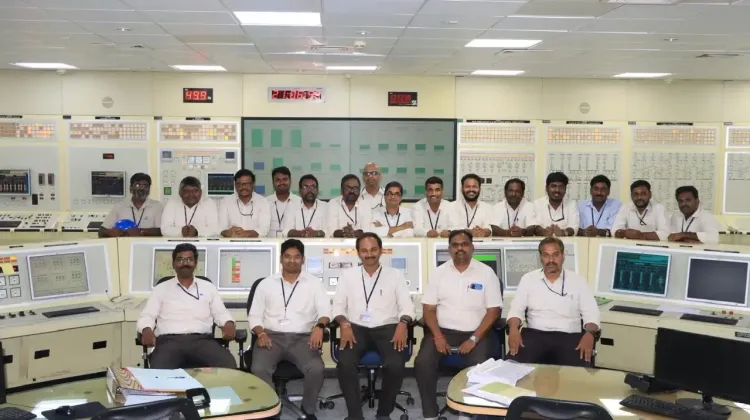
New Delhi, April 7 (NationPress) The government announced on Tuesday that fast breeder reactors will be instrumental in providing dependable, low-carbon base-load electricity with enhanced thermal efficiency, coinciding with the achievement of first criticality by India's 500 MWe Prototype Fast Breeder Reactor (PFBR).
This milestone signifies the initiation of a controlled nuclear fission chain reaction, marking a pivotal advancement in bolstering the nation’s long-term energy security and enhancing local nuclear technology expertise.
The PFBR reached criticality on Monday after fulfilling all safety requirements set forth by the Atomic Energy Regulatory Board (AERB), which granted approval following an extensive evaluation of the plant systems.
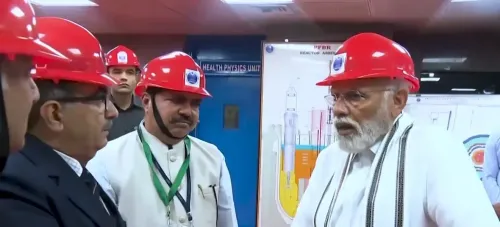
Prime Minister Narendra Modi stated on X that this accomplishment represents a "defining step" in India's civil nuclear advancement.
"India takes a defining step in its civil nuclear journey, progressing to the second phase of its nuclear initiative. The indigenous Prototype Fast Breeder Reactor at Kalpakkam has achieved criticality," he remarked.
PM Modi emphasized that the advanced reactor, which produces more fuel than it consumes, showcases the nation’s scientific and engineering prowess and is a crucial move towards utilizing extensive thorium reserves in the program's third stage.
“A proud moment for India. Congratulations to our scientists and engineers,” he added.
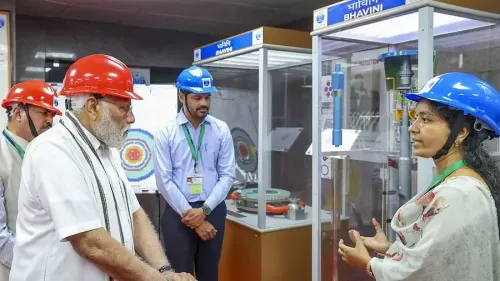
This reactor was designed by the Indira Gandhi Centre for Atomic Research (IGCAR) and constructed and commissioned by the Bharatiya Nabhikiya Vidyut Nigam Ltd (BHAVINI), a public sector undertaking under the Department of Atomic Energy (DAE).
Fast breeder reactors are a vital aspect of India's three-stage nuclear power strategy. Unlike traditional reactors, the PFBR utilizes uranium-plutonium mixed oxide (MOX) fuel and can produce more fissile material than it consumes by converting uranium-238 into plutonium-239.
The reactor is also intended to eventually use thorium-232 to generate uranium-233, aligning with the long-term objective of tapping into India’s significant thorium resources for sustainable energy production.
Officials noted that this achievement is a crucial link between current nuclear technologies and future thorium-based reactors, while improving fuel efficiency and sustainability.
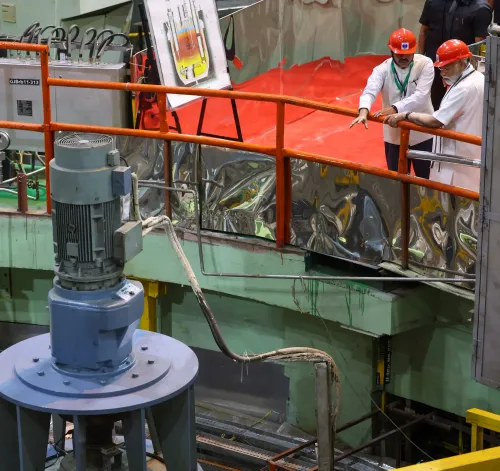
Equipped with advanced safety features, liquid sodium cooling technology, and a closed fuel cycle, the PFBR facilitates the recycling of nuclear materials and minimizes waste.
This initiative underscores India’s escalating capabilities in homegrown design, engineering, and manufacturing, resonating with the 'Atmanirbhar Bharat' initiative.
Point of View
The achievement of the Prototype Fast Breeder Reactor is a testament to India's capability in nuclear technology. It reflects a strategic move towards leveraging indigenous resources and enhancing thermal efficiency in power generation.
NationPress
27 Oct 2026
Frequently Asked Questions
What is the significance of the Prototype Fast Breeder Reactor?
The Prototype Fast Breeder Reactor is crucial for generating reliable, low-carbon electricity and enhancing India's energy security while demonstrating advancements in indigenous nuclear technology.
How does the PFBR differ from conventional reactors?
Unlike conventional reactors, the PFBR uses uranium-plutonium mixed oxide fuel and can produce more fissile material than it consumes.
What are the future plans for the PFBR?
The PFBR is designed to eventually utilize thorium-232 to generate uranium-233, aligning with India's goal of tapping into its vast thorium reserves.
Who was involved in the design and construction of the PFBR?
The PFBR was designed by the Indira Gandhi Centre for Atomic Research and built by Bharatiya Nabhikiya Vidyut Nigam Ltd.
What safety measures are in place for the PFBR?
The PFBR incorporates advanced safety systems, liquid sodium cooling technology, and a closed fuel cycle to recycle nuclear materials and reduce waste.