India backs ARF dialogue mechanism at Manila security meet
Synopsis
India sent a pointed message at Manila's ARF Senior Officials' Meeting: dialogue over confrontation. With Secretary (East) Rudrendra Tandon at the table alongside representatives from the US, China, Russia, and North Korea, India's push for a rules-based Indo-Pacific order through multilateral consensus is a deliberate counterweight to the region's sharpening great-power tensions.
Key Takeaways
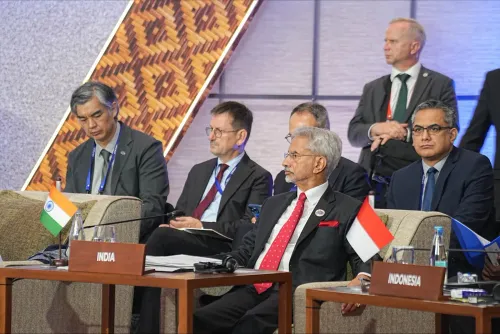
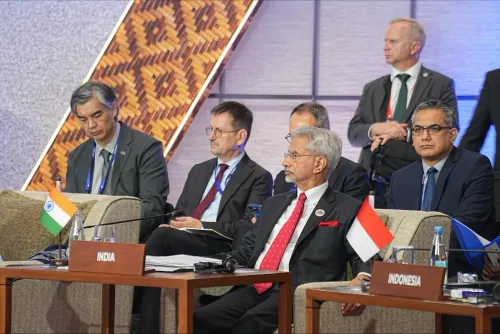
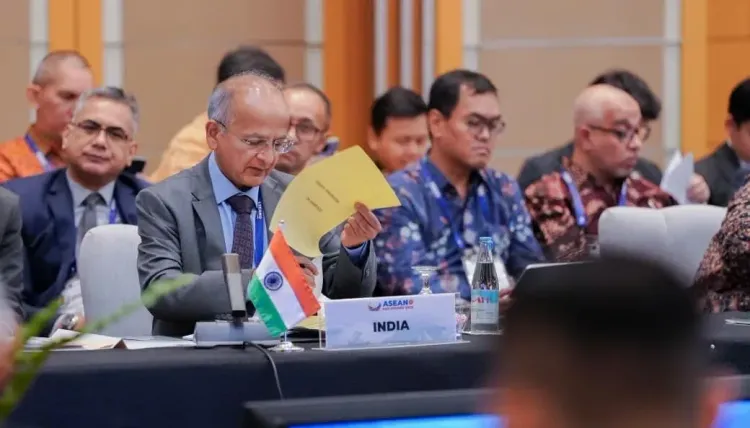
Secretary (East) Rudrendra Tandon led India's delegation at the ARF Senior Officials' Meeting in Manila on 9 June 2026 .
India highlighted the 'critical relevance' of the ARF mechanism and called for dialogue and diplomacy to address contemporary geopolitical challenges.
Deliberations covered regional and international security, with a collective call to uphold a rules-based order in the Indo-Pacific .
The ARF , founded in 1993 , now has 27 members including the US, China, Russia, India, and North Korea.
The forum follows a three-stage security approach: Confidence Building Measures , preventive diplomacy, and conflict resolution frameworks.
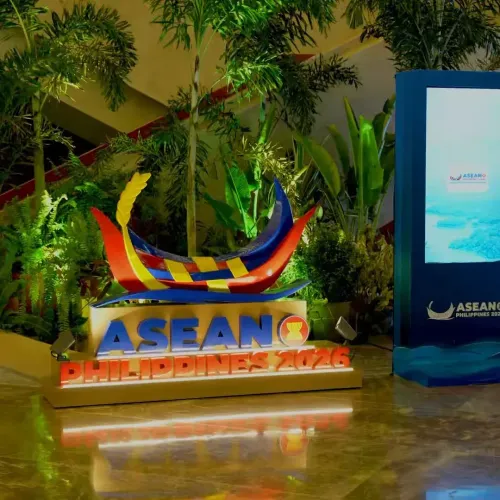
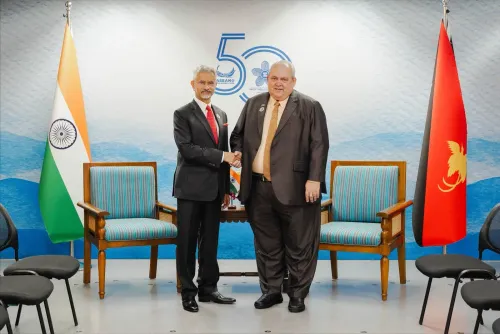
India on 9 June 2026 reaffirmed its support for the ASEAN Regional Forum (ARF) as a critical platform for dialogue and diplomacy, with Secretary (East) Rudrendra Tandon leading the Indian delegation at the ARF Senior Officials' Meeting in Manila, Philippines. The Ministry of External Affairs (MEA) confirmed the participation, underscoring India's commitment to multilateral security cooperation in the Indo-Pacific.
India's Position at the Meeting
Tandon highlighted what New Delhi sees as the 'critical relevance' of the ARF mechanism in navigating contemporary geopolitical pressures. His remarks centred on the need for sustained dialogue and diplomacy rather than unilateral action, a stance consistent with India's broader foreign policy posture in the region.
Deliberations at the meeting covered the evolving regional and international security landscape. Participating nations collectively called for combined efforts to uphold a rules-based order for the global commons, with the Indo-Pacific squarely at the centre of those discussions.
What the ARF Is and Why It Matters
The ARF was established in 1993 as a regional security cooperation and dialogue platform, growing out of deliberations at the ASEAN Post Ministerial Conference. It currently comprises 27 members, including the 11 ASEAN member states, the 10 ASEAN Dialogue Partners — among them Australia, China, India, Japan, Russia, and the United States — as well as Bangladesh, North Korea, Mongolia, Pakistan, Sri Lanka, and Papua New Guinea.
In 1995, the ARF adopted a three-stage evolutionary approach to security: first, Confidence Building Measures (CBMs); second, development of preventive diplomacy; and third, elaboration of approaches to conflict resolution. The forum has since been guided by ASEAN's foundational values of consensus and progress at a pace comfortable to all members.
The Broader Geopolitical Context
India's emphasis on dialogue at Manila comes at a moment of heightened tensions across the Indo-Pacific, with competing territorial claims, great-power rivalry, and evolving security alignments straining multilateral frameworks. Notably, the ARF brings together nations that are often at odds — including China, the United States, and North Korea — making consensus-building a persistent challenge.
This is consistent with India's longstanding approach of engaging multiple security forums simultaneously — including the Quad, bilateral defence partnerships, and ASEAN-centric platforms — to hedge against regional instability without formally aligning with any single bloc.
What Comes Next
The ARF Senior Officials' Meeting typically feeds into the ARF Ministerial Meeting, where Foreign Ministers of member states take stock of the security agenda. India's active participation signals that New Delhi views ASEAN-led multilateralism as a meaningful complement to its bilateral and minilateral security engagements in the region.
Point of View
New Delhi's public endorsement of an ASEAN-led, consensus-driven forum — one that seats China, the US, and North Korea at the same table — reflects a deliberate hedging strategy. The ARF's structural weakness is well-documented: its consensus model has historically blunted decisive action on flashpoints like the South China Sea. India knows this, yet chooses to champion it, which suggests the forum's value to New Delhi lies less in outcomes and more in maintaining access and optionality across a fractured regional order.
NationPress
20 Sept 2026
Frequently Asked Questions
What did India say at the ARF Senior Officials' Meeting in Manila?
India, represented by Secretary (East) Rudrendra Tandon, underlined the critical relevance of the ARF mechanism and called for dialogue and diplomacy to address contemporary geopolitical challenges. The delegation also supported collective efforts to maintain a rules-based order in the Indo-Pacific.
What is the ASEAN Regional Forum (ARF)?
The ARF is a 27-member regional security cooperation and dialogue platform established in 1993. It includes the 11 ASEAN member states, 10 ASEAN Dialogue Partners such as India, China, the US, and Russia, as well as countries like Bangladesh, North Korea, and Pakistan.
Who led the Indian delegation at the Manila meeting?
Secretary (East) Rudrendra Tandon led the Indian delegation at the ARF Senior Officials' Meeting in Manila on 9 June 2026, as confirmed by the Ministry of External Affairs.
Why does India participate in the ARF?
India participates in the ARF as part of its broader Indo-Pacific engagement strategy, using ASEAN-centric multilateral platforms to promote dialogue, build confidence, and reinforce a rules-based regional order alongside its bilateral and minilateral security partnerships.
What is the ARF's three-stage security approach?
Adopted in 1995, the ARF's three-stage approach begins with Confidence Building Measures, advances to preventive diplomacy, and culminates in elaborating approaches to conflict resolution. Progress is guided by ASEAN's principle of consensus at a pace comfortable to all members.