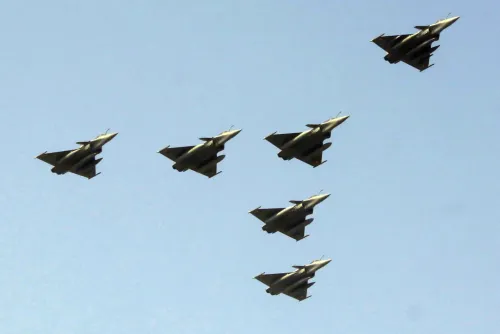
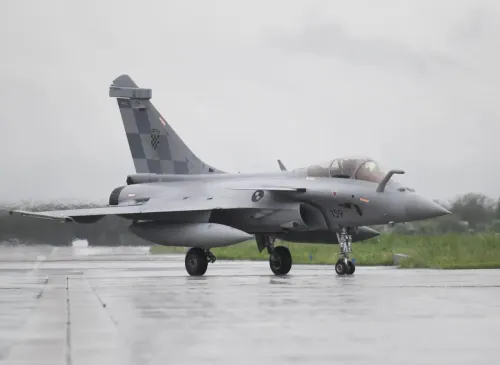
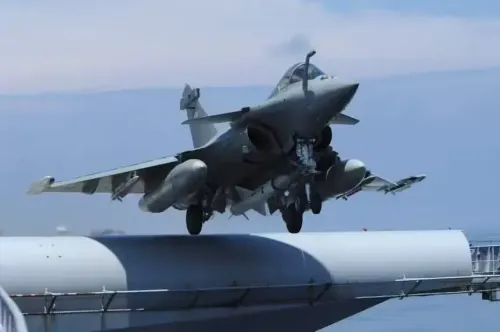
Rafale indigenisation key pillar of India-France deal: Foreign Secy Misri
Synopsis
India isn't just buying Rafales — it wants to build them. Foreign Secretary Vikram Misri's briefing in Nice made clear that co-development, co-design, and co-manufacturing are now non-negotiable conditions framing every defence platform discussion with France, signalling a fundamental shift in how New Delhi approaches big-ticket military procurement.
Key Takeaways
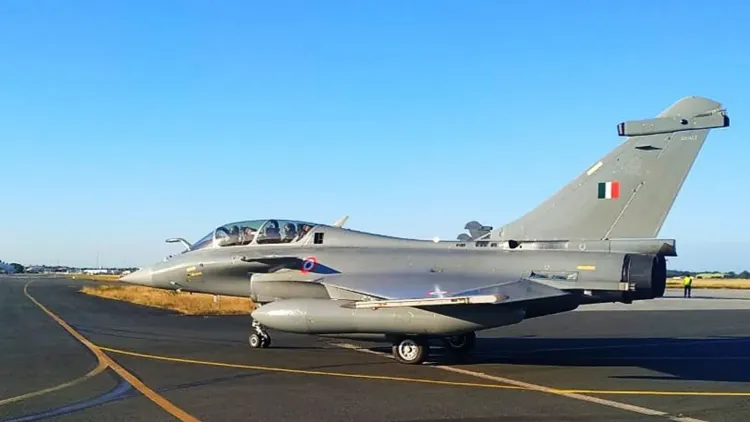
Foreign Secretary Vikram Misri on 15 June called indigenisation a key pillar of the Rafale deal during a briefing in Nice, France .
Misri outlined a four-pronged framework: co-development, co-design, co-production, and co-manufacturing .
He confirmed Indian Air Force Rafale discussions between the two countries are 'moving forward'.
The indigenisation principle applies to all defence platforms , not just Rafale, according to Misri.
PM Modi departed Nice for Bratislava after a visit that yielded bilateral outcomes on innovation and future technology.
Foreign Secretary Vikram Misri on Sunday, 15 June underscored indigenisation as a central pillar of India's Rafale fighter jet negotiations with France, reaffirming New Delhi's push for defence self-reliance through the 'Make in India' initiative. Misri made these remarks during a special Ministry of External Affairs briefing on Prime Minister Narendra Modi's official visit to Nice, France.
What Misri Said on Rafale Talks
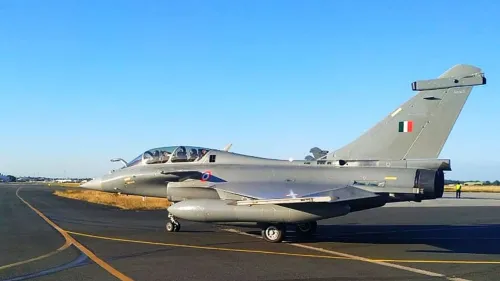
Responding to questions on the Rafale aircraft, Misri confirmed that bilateral discussions remain active. 'The discussions are ongoing between both nations regarding the Rafale aircraft. The Indian Air Force operates Rafale; the discussion between the two countries and the two Air Forces is moving forward,' he said.
On the indigenisation dimension, Misri was emphatic: 'We always believe that, and Prime Minister Modi always strengthens that, the Indian defence sector should move towards Make in India.' He outlined a four-pronged framework India is pursuing — co-development, co-design, co-production, and co-manufacturing — with the explicit goal of maximising local content in every defence platform.
The Broader Defence Manufacturing Vision
'The more the design and manufacturing happen in India, the more beneficial it is to us,' Misri stated. He added that the principle extends beyond Rafale: 'Whatever defence platform we talk about, we should take more local content and more local manufacturing as the basis. And the future designs also should be done keeping this in mind.'
The Foreign Secretary also noted that discussions between the two sides cover multiple platforms — not just the Rafale — with both countries actively deliberating on buying and selling arrangements across defence categories. This comes amid India's broader effort to raise its domestic defence production value, which the government has set ambitious targets for over the past decade.
Modi's Nice Visit: Key Outcomes
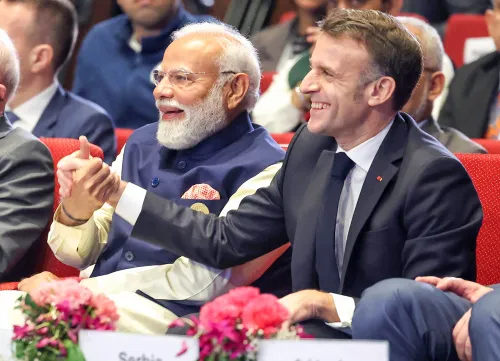
PM Modi arrived in Nice on Saturday at the invitation of French President Emmanuel Macron. The visit yielded several bilateral outcomes, with a strong focus on innovation and future technology, according to the Ministry of External Affairs, which announced the results on social media platform X.
Before departing for Bratislava, Modi posted on X: 'Nice to have met you in Nice. A productive first leg indeed. The India-France partnership will keep scaling new heights. See you in Evian and Paris…'
Why This Matters for India's Defence Sector
India's insistence on indigenisation in defence deals reflects a structural policy shift — away from outright imports toward technology transfer and domestic production. The Rafale deal, already operational with the Indian Air Force, is being used as a template to deepen industrial linkages with France. Notably, this is consistent with the government's target of achieving ₹1.75 lakh crore in domestic defence production and ₹50,000 crore in exports by 2025, benchmarks that have drawn both progress and scrutiny.
With Modi's European tour continuing to Evian and Paris, further defence and technology announcements are anticipated in the coming days.
Point of View
But the proof will be in the contractual fine print — specifically, how 'local content' is defined and verified. Past defence offset obligations under earlier procurement rules were widely seen as underdelivered, with foreign OEMs routing minimal actual production to India. If the new framework repeats that pattern under a different vocabulary — co-production in name, import in practice — the Make in India defence narrative will face credibility questions. The Nice visit's real test is whether the next phase of Rafale negotiations produces binding technology transfer commitments, not just aspirational language about future designs.
NationPress
14 Sept 2026
Frequently Asked Questions
What did Foreign Secretary Vikram Misri say about the Rafale deal with France?
Misri said indigenisation is a key pillar of the Rafale negotiations, with India pushing for co-development, co-design, co-production, and co-manufacturing. He confirmed that discussions between India and France on the Rafale aircraft are ongoing and moving forward.
Is India buying more Rafale jets from France?
Discussions on the Rafale aircraft and other defence platforms are ongoing between the two countries, according to Misri, but no new purchase announcement was confirmed during the Nice visit. Both sides are deliberating on buying and selling arrangements across multiple defence categories.
What is India's Make in India defence goal?
India aims to maximise local content and domestic manufacturing in all defence platforms it acquires or develops. The government has set targets of ₹1.75 lakh crore in domestic defence production and ₹50,000 crore in exports, with indigenisation built into deal structures as a condition.
What were the outcomes of PM Modi's visit to Nice, France?
The visit yielded several bilateral outcomes focused on innovation and future technology, according to the Ministry of External Affairs. Modi subsequently departed for Bratislava, with further engagements planned in Evian and Paris.
Why is co-manufacturing important in the Rafale context?
Co-manufacturing ensures that a portion of the aircraft's design and production happens in India, building domestic aerospace industrial capacity and reducing import dependence. It is part of India's broader shift from outright defence imports to technology transfer-linked procurement.