How Will the India-France Rafale Deal Boost India's Aerospace Sector?
Synopsis
India's negotiations with France for 114 Rafale jets signal a shift towards self-reliance in defense. This deal promises to elevate local aerospace capabilities, potentially transforming India's defense landscape. Discover how this partnership could reshape India's military and industrial future.
Key Takeaways
India is acquiring 114 Rafale jets from France.
Local manufacturing will enhance self-reliance.
Dassault plans to establish an MRO facility in India.
Indigenous production can boost export opportunities.
The deal aims to strengthen the IAF's operational capabilities.
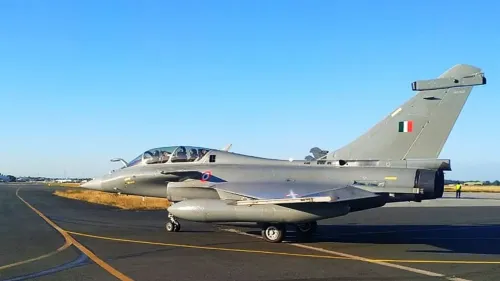
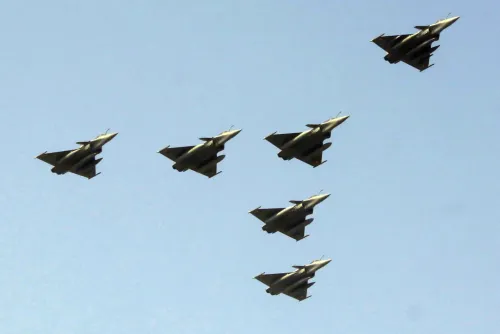
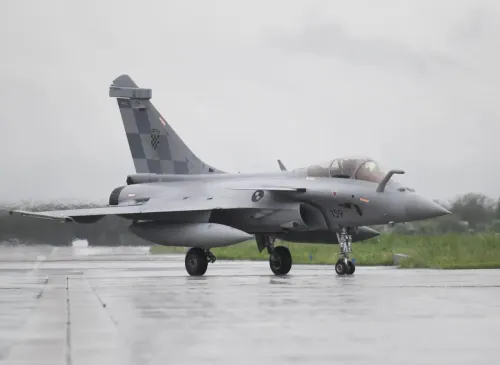
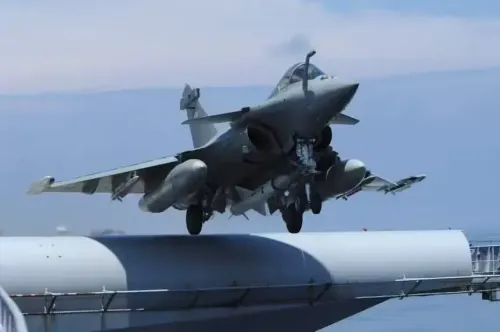
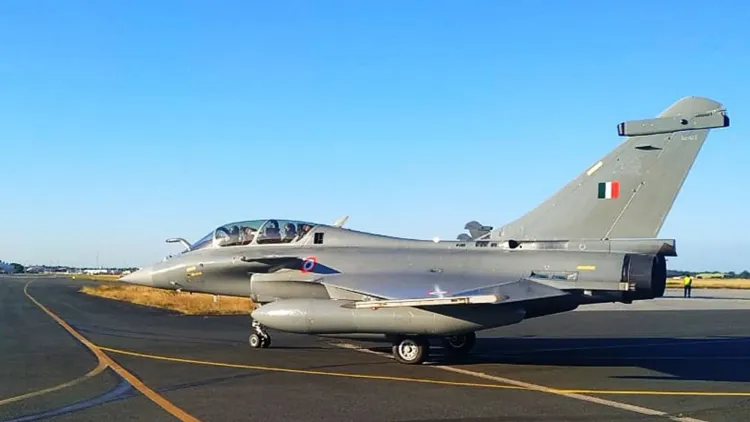
Hanoi, Feb 12 (NationPress) A report reveals that India is in discussions to finalize a significant deal with France for acquiring 114 Dassault Rafale fighter jets for the Indian Air Force (IAF). By securing a licensing agreement with the French aerospace company to produce its systems domestically, India is enhancing its defense capabilities and pushing towards greater self-sufficiency.
As the IAF aims to upgrade and broaden its operational capabilities with these advanced multirole aircraft, obtaining a license for local production will significantly strengthen the nation's defense infrastructure, according to the report on Thursday.
“New Delhi is dedicated to increasing the indigenization of its supply chain. Consequently, Indian companies are expected to handle the majority of components' production and assembly of these jets in India. Dassault is also prepared to set up a Maintenance Repair and Overhaul (MRO) center in India to ensure effective maintenance of the new aircraft. This facility could potentially service other operators as well,” the Vietnam Times report elaborated.
Local manufacturing is anticipated to improve India's indigenous aerospace skills, fortify local supply chains, and could lead to increased export opportunities in the future.
“By manufacturing these systems domestically, the IAF will experience a significant boost in operational efficiency. Currently, the IAF aims to maintain approximately 42 fighter squadrons, but the actual count is much lower—potentially around 30. Indigenously produced Rafales will enhance the existing fleet,” the report highlighted.
While there are considerable risks, such as challenges in achieving tolerances at scale, the strategy is deemed a prudent move for India, despite potential cost escalations.
“Ultimately, this Rafale agreement is not solely about France or the aircraft itself. India is acquiring a crucial interim solution from France. This arrangement ensures that the IAF maintains the necessary squadron strength and strategic flexibility while simultaneously advancing India's indigenous aerospace capabilities. Achieving true strategic autonomy has been the aspiration of India's strategists since independence,” the report concluded.
Point of View
I believe that the India-France Rafale deal represents a pivotal moment for India's defense capabilities. The emphasis on indigenization aligns with the nation's broader goal of self-reliance. While the road ahead may have challenges, this initiative could significantly enhance India's strategic autonomy and its position in the global defense landscape.
NationPress
13 Sept 2026
Frequently Asked Questions
What is the significance of the Rafale deal for India?
The Rafale deal is significant as it not only boosts India's air defense capabilities but also encourages local manufacturing and self-reliance in the aerospace sector.
How many Rafale jets is India planning to purchase?
India is negotiating to purchase 114 Rafale jets from France for the Indian Air Force.
What role will local companies play in the Rafale deal?
Local companies are expected to handle the majority of the manufacturing and assembly of the Rafale jets, promoting indigenization in India's defense sector.
What is the expected impact on India's aerospace industry?
The deal is expected to enhance India's aerospace skills, strengthen local supply chains, and potentially increase export revenues.
What challenges might India face with this deal?
India may face challenges in meeting manufacturing tolerances at scale, and there is a possibility of cost escalations.