CM Himanta Vows to Reclaim Encroached Char, Forest Land in Assam

Synopsis
Chief Minister Himanta Biswa Sarma has reaffirmed Assam's commitment to reclaiming encroached char areas and forest lands, signalling the continuation of the state's contentious but sustained land-reclamation policy under the BJP-led government.
Key Takeaways
Himanta Biswa Sarma publicly reaffirmed on 26 May 2026 that the Assam government will continue reclaiming encroached char areas and forest lands.
Char areas are flood-prone riverine sandbars in the Brahmaputra valley that have long been disputed settlement and encroachment sites.
The Assam government has conducted repeated eviction drives since May 2021 , citing Supreme Court orders on forest encroachment.
Reclaimed land is to be 'utilised for the development and greater interest of the state,' though specific utilisation plans were not detailed in the statement.
Key stakeholders include char-dwelling communities, indigenous groups, civil-society organisations, and the judiciary, all of whom have roles in shaping how the policy unfolds.
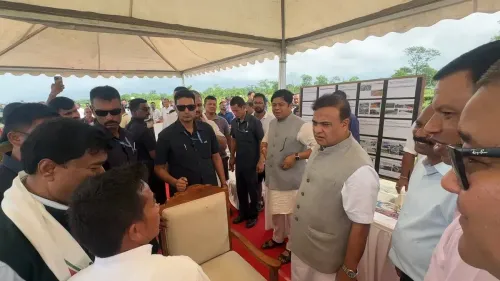
The Chief Minister's Office of Assam on Tuesday, 26 May 2026 quoted Chief Minister Dr. Himanta Biswa Sarma reaffirming the state government's commitment to reclaiming encroached char areas and forest lands and deploying them for the broader development of Assam.
Context
The statement, attributed directly to CM Dr. Himanta Biswa Sarma, reads: 'Our government remains committed to reclaiming encroached char areas and forest lands, and utilising them for the development and greater interest of the state.' The remark signals a continuing policy posture rather than a one-off administrative action, placing land reclamation at the centre of the government's governance agenda.
Char areas are the riverine sandbars and islands that dot the Brahmaputra valley. Prone to seasonal flooding and shifting river courses, these tracts have historically been sites of disputed settlement, encroachment, and intense demographic pressure, making their governance one of Assam's most politically sensitive subjects.
Policy Backdrop
Since CM Sarma took office in May 2021, the Assam government has conducted a series of eviction drives targeting alleged illegal occupations of both forest land and char areas, citing Supreme Court directions on forest encroachment and the state's own land-protection statutes. The drives have consistently been framed by the administration as necessary to protect the ecological integrity of the Brahmaputra basin and to safeguard the land rights of indigenous communities.
The broader policy argument advanced by the BJP-led state government links land reclamation to two parallel concerns: environmental protection of flood-plain ecosystems and the demographic anxiety around alleged illegal immigration that has shaped Assam's politics for decades. Tuesday's statement reinforces that the administration views these drives not as temporary measures but as a sustained, long-term programme.
Stakeholders and Impact
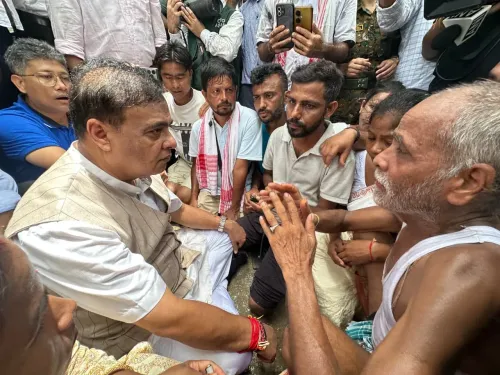
The communities most directly affected by reclamation drives include char-dwelling families — many of them economically marginal — as well as indigenous groups who argue that encroachment on ancestral lands has eroded their rights. Civil-society organisations and legal advocates have previously approached courts seeking due-process protections for those facing eviction, making the judiciary a key arena for this policy.
At the same time, state officials and a section of civil society argue that unchecked encroachment degrades forest cover, disrupts riverine ecology, and places strain on public infrastructure in affected districts. The government's stated intent to 'utilise' reclaimed land for development suggests future plans for resettlement, afforestation, or infrastructure — though specific utilisation blueprints have not been detailed in this statement.
What's Next
Observers will watch for fresh eviction notifications, legislative moves to codify reclamation authority, and any court challenges that may follow renewed drives. The question of how reclaimed char and forest land will ultimately be used — and by whom — is likely to remain a flashpoint in Assam's political landscape in the months ahead. Any concrete utilisation plan announced by the government will be a key indicator of whether the policy shifts from reclamation alone toward measurable developmental outcomes for affected regions.
Point of View
' the Chief Minister frames an inherently contested policy in the language of collective welfare, pre-empting criticism that the drives disproportionately harm marginal communities. The statement also fits a pattern visible across several BJP-governed states where forest and riverine land governance is used simultaneously as an environmental, demographic, and electoral lever. How the government translates 'reclamation' into tangible development outcomes — rather than just evictions — will determine whether this policy retains its political potency or becomes a liability.
NationPress
22 Sept 2026
Frequently Asked Questions
What are char areas in Assam?
Char areas are low-lying riverine sandbars and islands formed by the Brahmaputra and its tributaries. They are seasonally flooded, ecologically fragile, and have been the subject of long-running encroachment and settlement disputes in Assam .
Why is the Assam government reclaiming char and forest land?
The Assam government, led by CM Himanta Biswa Sarma , says reclamation is necessary to protect forest cover, restore riverine ecology, and safeguard the land rights of indigenous communities, citing Supreme Court orders on forest encroachment as legal backing.
Who is affected by Assam's eviction drives on char areas?
The communities most directly affected are char-dwelling families, many of them economically marginal, as well as indigenous groups who claim ancestral rights to land. Civil-society bodies and legal advocates have previously sought court protection for those facing eviction.
What will the Assam government do with reclaimed land?
CM Sarma has stated the reclaimed land will be 'utilised for the development and greater interest of the state,' but no specific utilisation plan — such as afforestation, resettlement, or infrastructure — was detailed in the 26 May 2026 statement.
How long has Assam been conducting char area eviction drives?
The Assam government has conducted repeated eviction drives targeting alleged illegal occupations of forest and char land since CM Himanta Biswa Sarma took office in May 2021 , making it a sustained rather than episodic policy.