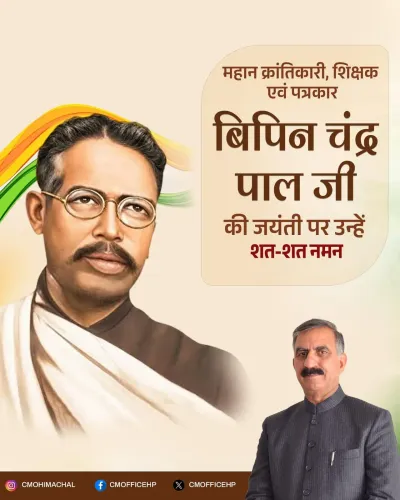
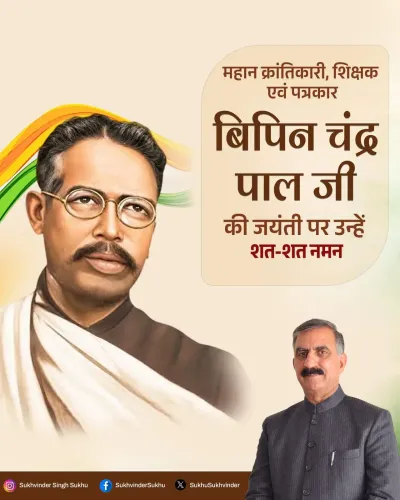
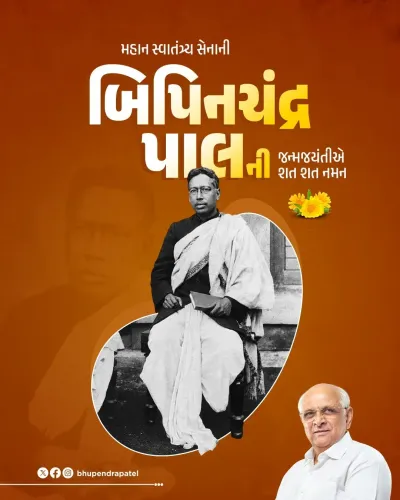
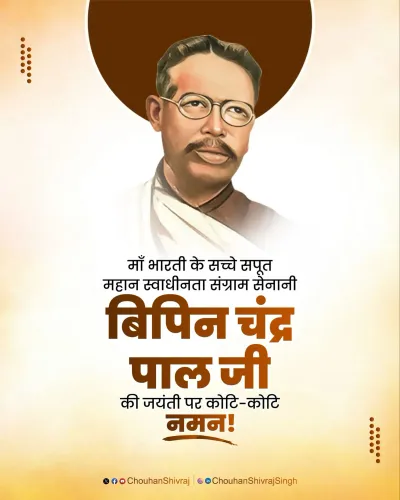
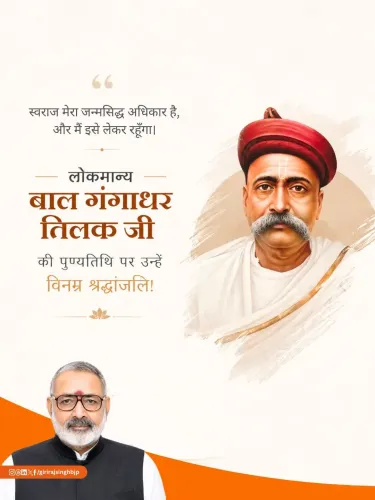
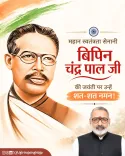
Giriraj Singh pays tribute to Bipin Chandra Pal on birth anniversary
Synopsis
Union Textiles Minister Giriraj Singh marked the birth anniversary of Bipin Chandra Pal on 7 November 2026, honouring the firebrand orator and Swadeshi champion as a 'strong pillar' of the legendary Lal-Bal-Pal nationalist trio whose life remains an enduring inspiration.
Key Takeaways
Giriraj Singh posted a tribute to Bipin Chandra Pal on his birth anniversary on 7 November 2026 .
Pal is remembered as a member of the Lal-Bal-Pal trio alongside Lala Lajpat Rai and Bal Gangadhar Tilak .
The trio led the assertive-nationalist or 'extremist' faction inside the Indian National Congress during the Swadeshi Movement .
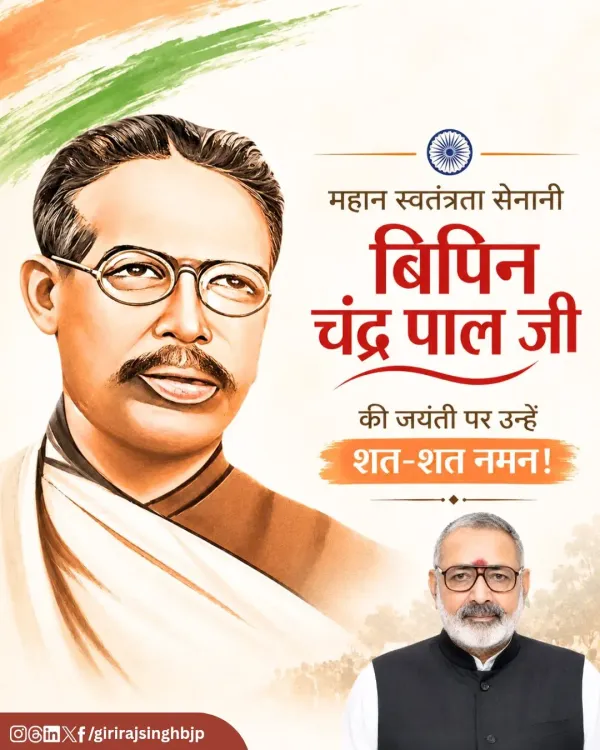
Singh described Pal as a 'fiery orator and symbol of patriotism' whose life was entirely devoted to India's freedom.
The tribute reflects a broader BJP practice of commemorating pre-Gandhian nationalist icons on significant anniversaries.
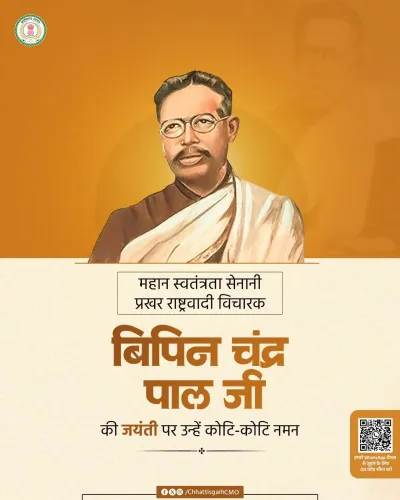
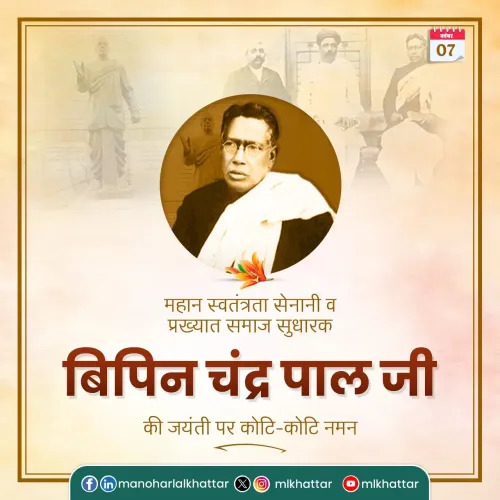
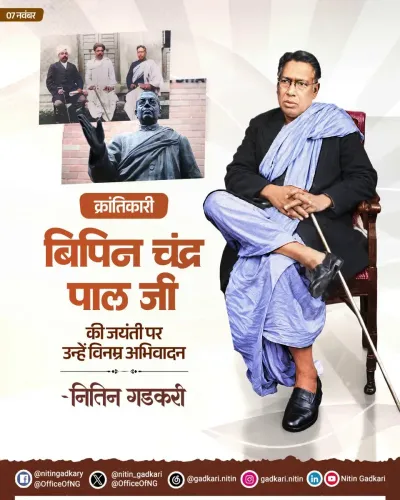
A freedom fighter who demanded nothing less than complete independence at a time when most leaders still spoke of reform — Bipin Chandra Pal remains one of the most electrifying figures of India's independence movement. On his birth anniversary, Union Textiles Minister Giriraj Singh offered heartfelt homage to the firebrand orator on Saturday, 7 November 2026.
Singh's post, shared on X in Hindi, read: 'महान स्वतंत्रता सेनानी... बिपिन चंद्र पाल जी की जयंती पर उन्हें कोटि-कोटि नमन!' — 'Crores of salutations to the great freedom fighter Bipin Chandra Pal on his birth anniversary!' He described Pal as a 'strong pillar of the Lal-Bal-Pal trio, a fiery orator and a symbol of patriotism,' adding that his life, entirely devoted to the nation's freedom and service, 'will always inspire the countrymen.'
Who was Bipin Chandra Pal — and why the Lal-Bal-Pal trio still resonates
Bipin Chandra Pal was a Bengali journalist, orator and nationalist who became one of the most consequential voices of the Swadeshi Movement in the early twentieth century. Alongside Lala Lajpat Rai of Punjab and Bal Gangadhar Tilak of Maharashtra, he formed the celebrated Lal-Bal-Pal triumvirate — the driving force of the 'extremist' or assertive-nationalist faction within the Indian National Congress. Where moderates sought incremental concessions from British rule, this trio pushed for Swaraj — complete self-rule — and popularised the economic nationalism of Swadeshi as a tool of mass resistance.
Pal was perhaps the most intellectually restless of the three. A gifted platform speaker and prolific writer, he articulated a spiritual dimension to nationalism that set him apart, arguing that true independence was inseparable from cultural and moral self-assertion. His speeches drew enormous crowds and helped transform the independence cause from an elite concern into a popular movement.
BJP's pattern of honouring assertive-nationalist icons
Singh's tribute fits a consistent pattern. BJP leaders regularly mark the birth and death anniversaries of pre-Gandhian nationalist figures — Tilak, Lajpat Rai, Subhas Chandra Bose — whose assertive, confrontational style of politics the party's ideological tradition holds in particular esteem. These commemorations carry no direct policy implication, but they serve a clear cultural purpose: reinforcing a lineage of unapologetic nationalism that predates the Congress-led mainstream.
For a minister whose constituency of Begusarai, Bihar sits in the Hindi heartland, invoking a Bengali icon of pan-Indian nationalism also signals the breadth of that tradition — a reminder that the fire for freedom burned from Bengal's delta to Punjab's plains long before any single movement claimed ownership of it.
Pal's legacy, often overshadowed by Gandhi's later dominance of the national narrative, deserves the periodic restoration that such tributes provide. The man who roared for Swaraj before it was mainstream still has something to say to every generation that asks what it means to truly serve a nation.
Point of View
But it is never entirely without ideological weight. The BJP has long sought to construct an alternative nationalist genealogy — one that foregrounds assertive, culturally rooted figures like the Lal-Bal-Pal trio rather than the Congress-centric Gandhian arc. Marking Pal's anniversary publicly reinforces that counter-narrative for the party's base. It also quietly elevates Bengal's contribution to militant nationalism — strategically useful messaging in a state the BJP has invested heavily in since 2019.
NationPress
7 Nov 2026
Frequently Asked Questions
Who was Bipin Chandra Pal?
Bipin Chandra Pal was a Bengali journalist, orator and nationalist leader of the early twentieth century, best known as one-third of the Lal-Bal-Pal trio that championed Swadeshi and complete self-rule during the Indian independence movement.
What is the Lal-Bal-Pal trio?
Lal-Bal-Pal refers to Lala Lajpat Rai, Bal Gangadhar Tilak and Bipin Chandra Pal — three nationalist leaders who led the assertive faction of the Indian National Congress and popularised the Swadeshi movement in the early 1900s.
When is Bipin Chandra Pal's birth anniversary?
Bipin Chandra Pal's birth anniversary falls on 7 November, which Union Textiles Minister Giriraj Singh marked with a tribute post on X in 2026.
What did Giriraj Singh say about Bipin Chandra Pal?
Giriraj Singh called Pal a 'strong pillar of the Lal-Bal-Pal trio, a fiery orator and a symbol of patriotism,' adding that his life devoted to India's freedom and service will always inspire the nation.
Why do BJP leaders frequently honour pre-Gandhian nationalists?
BJP leaders regularly commemorate assertive-nationalist icons like the Lal-Bal-Pal trio to highlight an alternative lineage of Indian nationalism that emphasises cultural self-assertion and complete self-rule, aligning with the party's broader ideological emphasis.