Assam CM Office: 140 Gaj Mitras to Deploy in Tamulpur
Synopsis
Assam's Chief Minister's Office has announced deployment of 140 Gaj Mitra community volunteers in Tamulpur district to monitor elephant movements and issue early warnings, addressing chronic human-elephant conflict in the Bodoland Territorial Region bordering Bhutan.
Key Takeaways
140 Gaj Mitras are to be deployed specifically in Tamulpur district , Assam, to address human-elephant conflict.
Tamulpur is a district created in 2020 within the Bodoland Territorial Region, bordering Bhutan , with dense forest overlapping human settlements.
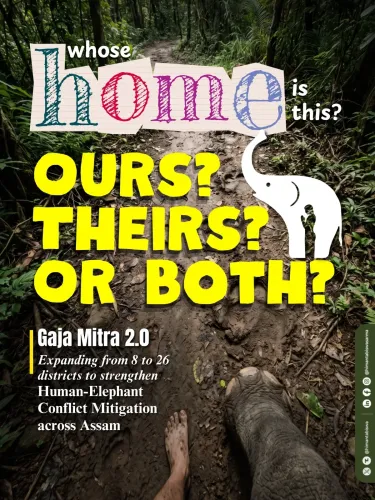
Gaj Mitras are community-based volunteers trained to monitor elephant movements, issue early warnings, and use non-lethal deterrents.
The initiative aligns with Project Elephant , launched by the Government of India in 1992 to protect wild elephants and manage human-animal conflict.
Human-elephant conflict in Assam is driven by habitat loss, corridor fragmentation, and agricultural expansion into forest margins.
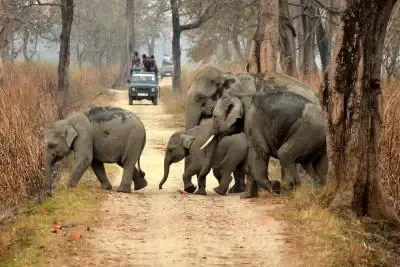
A district where dense forest meets farming villages is getting a new line of defence. The Chief Minister's Office of Assam announced on Monday, 9 November 2026 that 140 Gaj Mitras will be deployed across Tamulpur district to curb the persistent threat of human-elephant conflict in the region.
Who are the Gaj Mitras — and why Tamulpur?
Gaj Mitras — literally 'Friends of Elephants' — are community-based volunteers trained by state forest departments to monitor elephant movements in real time, relay early warnings to nearby villages, and deploy non-lethal deterrents before a confrontation escalates. The model puts local people at the centre of conflict mitigation, turning forest-edge residents from passive victims into active, informed responders.
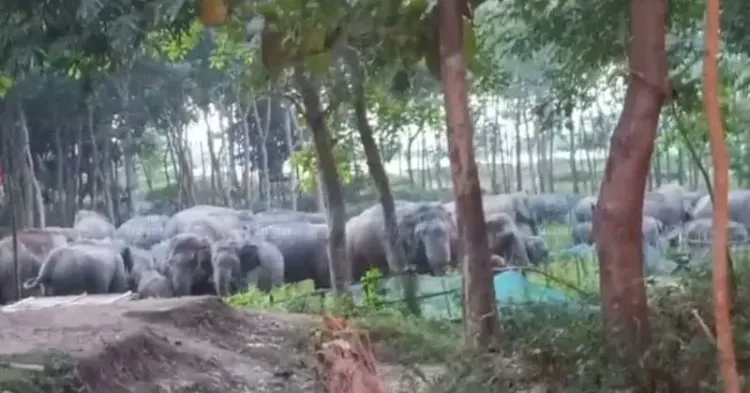
Tamulpur, carved out as a separate district in 2020 and situated within the Bodoland Territorial Region, shares a border with Bhutan and carries significant forest cover that overlaps directly with human settlements and agricultural land. That geography makes it a flashpoint: elephants moving across seasonal corridors can walk from deep jungle into crop fields in a matter of hours, with devastating results for farmers and sometimes fatal consequences on both sides.
Assam's escalating conflict — and the community-first pivot
Human-elephant conflict has been a chronic, sometimes deadly feature of life across Assam and the broader northeast, driven by habitat loss, the fragmentation of historic elephant corridors, and the steady expansion of cultivation into forest margins. The incidents spike seasonally, coinciding with harvest time when ripening crops draw elephants out of the treeline.
State authorities have increasingly turned to community-volunteer frameworks and early-warning systems alongside physical barriers and crop-damage compensation. The approach draws on the spirit of Project Elephant, the Government of India's flagship programme launched in 1992 to protect wild elephant populations, preserve migratory corridors, and address the human cost of conflict through structured, field-level intervention.
What the deployment of 140 volunteers could mean on the ground
Scaling the Gaj Mitra network to 140 personnel in a single district is a significant operational commitment. Each volunteer typically covers a defined patch of forest-edge territory, maintaining contact with both forest officials and village communities. The model's effectiveness hinges on rapid information flow: a warning that reaches a village thirty minutes before an elephant herd arrives can be the difference between a managed dispersal and a tragedy.
The key variables to watch will be the training timeline, the communication infrastructure linking Gaj Mitras to district forest offices, and — ultimately — whether reported conflict incidents and crop-damage claims in Tamulpur trend downward once the network is operational.
In a district where humans and one of Asia's most intelligent animals share a shrinking frontier, 140 trained eyes on the forest edge may prove to be Assam's most practical bet yet.
Point of View
Rather than fencing or compensation alone, can hold the line. For the Bodoland Territorial Region, where land rights, forest boundaries, and community identity are politically sensitive, integrating locals as conservation actors carries both ecological and governance logic. The real test will be whether training quality and inter-agency communication are strong enough to make the network function at speed when it matters.
NationPress
9 Nov 2026
Frequently Asked Questions
What is a Gaj Mitra?
A Gaj Mitra is a community-based volunteer trained by state forest departments in India to monitor elephant movements, issue early warnings to nearby villages, and use non-lethal methods to reduce human-elephant conflict. The name means 'Friend of Elephants' in Hindi.
Why is Tamulpur prone to human-elephant conflict?
Tamulpur district in Assam borders Bhutan and has significant forest cover that overlaps with farmland and human settlements. Elephants moving along seasonal corridors can quickly enter agricultural areas, causing crop damage and posing safety risks to both people and animals.
How many Gaj Mitras will be deployed in Tamulpur?
According to the Assam Chief Minister's Office announcement on 9 November 2026, 140 Gaj Mitra volunteers are set to be deployed in Tamulpur to curb human-elephant conflict.
What is Project Elephant and how does it relate to Gaj Mitras?
Project Elephant is a Government of India programme launched in 1992 to protect wild elephants, preserve their habitats and corridors, and address human-elephant conflict. The Gaj Mitra community-volunteer model is consistent with its grassroots conflict-mitigation goals.
Which region of Assam is Tamulpur in?
Tamulpur is a district within the Bodoland Territorial Region of Assam, created in 2020. It shares a border with Bhutan and has dense forest that makes it a sensitive zone for wildlife-human interaction.