Karnataka CM Office: Gruha Lakshmi fuels women's self-reliance
Synopsis
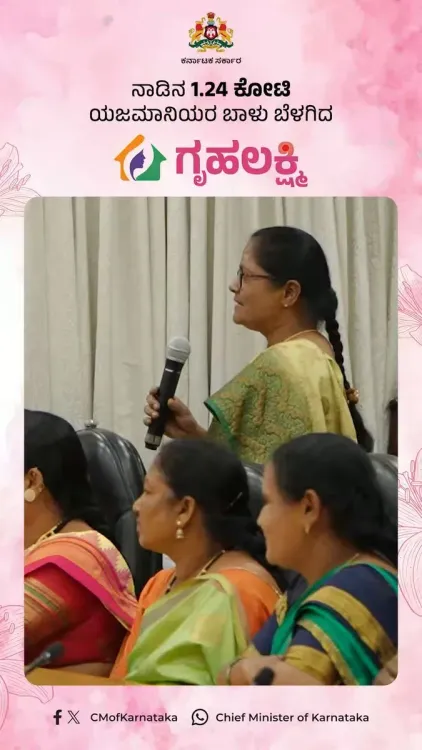
The Chief Minister's Office of Karnataka shared the story of a woman who used Gruha Lakshmi scheme funds to build a home food business selling over 20 snack varieties, citing her journey as evidence of the programme's goal of making women economically self-reliant.
Key Takeaways
The Chief Minister's Office of Karnataka posted a video on 9 November 2026 highlighting a Gruha Lakshmi beneficiary's success story.
The woman manufactures and sells more than 20 varieties of snacks, including chakli and nippatu.
She used Gruha Lakshmi funds to expand her food business, grow income, and achieve financial independence.
Gruha Lakshmi is one of five Congress government guarantees launched after the party's 2023 Karnataka election victory.
The CMO framed the scheme as 'capital for dreams' — seed money that converts welfare recipients into entrepreneurs.
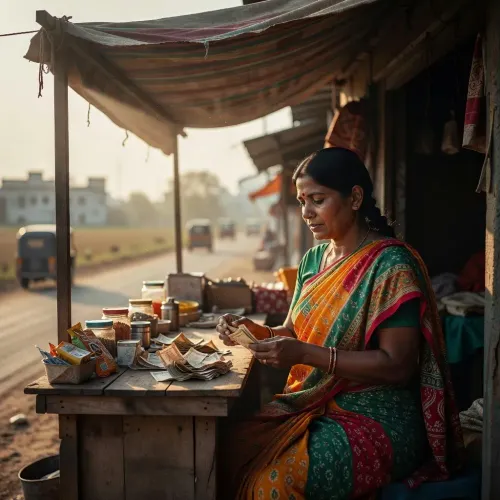
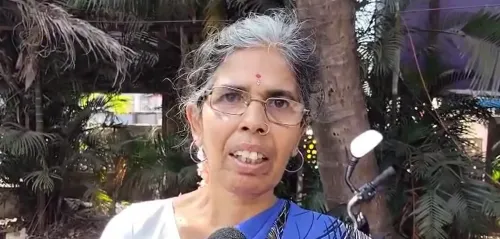
She makes and sells more than 20 varieties of snacks — from chakli to nippatu — and built a thriving small business entirely on her own terms. Behind her success, says the Chief Minister's Office of Karnataka, stands one programme: Gruha Lakshmi.
The CMO shared her story on Monday, 9 November 2026, posting a video that puts a face to what the government calls the scheme's core promise: putting financial power directly in the hands of women, funding their dreams, and giving them the courage to stand on their own effort.
From scheme money to a 20-snack enterprise
The post, written in Kannada, describes how the woman channelled the funds received under Gruha Lakshmi into expanding her food business — growing her product range, boosting her income, and achieving economic self-sufficiency. 'Gruha Lakshmi yojaneyinda badukalli hosa daari kandukolluttiruvara ashaya mattu aatmavishwasake saakshiyaagide' — 'it stands witness to the hope and self-confidence of countless women finding new paths in life through Gruha Lakshmi,' the post reads.
What Gruha Lakshmi promises — and what this story signals
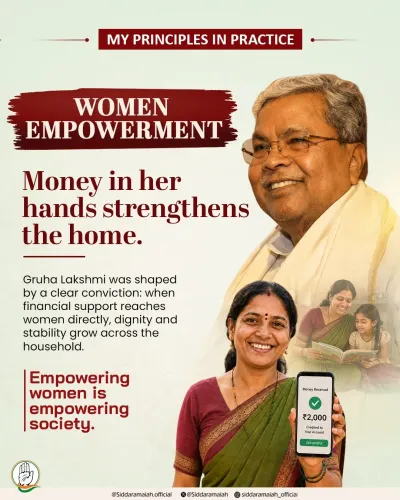
Gruha Lakshmi is a Karnataka government scheme that provides direct financial assistance to women heads of households. The programme is part of a package of five electoral guarantees the Congress government rolled out after coming to power in 2023, aimed squarely at economic relief and empowerment for ordinary families.
The CMO's framing is deliberate: rather than cite disbursement statistics, the post leads with a single woman's journey — snacks on a table, income in a hand, independence earned. It is a storytelling choice that shifts the scheme's narrative from welfare to investment, from recipient to entrepreneur.
The government's case in one video
By anchoring the story in chakli and nippatu — beloved Karnataka snacks with a ready local market — the post grounds an abstract policy in something immediately tangible. The woman did not just receive money; she multiplied it across a product line of more than 20 items, scaled a business, and, in the government's telling, became a living argument for the scheme's design.
Gruha Lakshmi's architects always framed it as seed capital for self-reliance, not simply a cash transfer. Stories like this one are how the Karnataka government makes that case — one entrepreneur at a time.
Point of View
The Karnataka CMO is making a qualitative case for Gruha Lakshmi at a time when direct-benefit transfer schemes across India face scrutiny over their long-term economic impact. The pivot from 'cash transfer' to 'entrepreneurship enabler' is a calculated reframe — positioning the scheme as an investment in productivity, not a fiscal liability. It also signals that the government is building its next electoral narrative around verified human outcomes, not just numbers. If more such stories can be systematically documented and shared, Gruha Lakshmi could become a template for how state governments defend and sustain large welfare commitments.
NationPress
9 Nov 2026
Frequently Asked Questions
What is the Gruha Lakshmi scheme in Karnataka?
Gruha Lakshmi is a Karnataka government programme that provides direct financial assistance to women heads of households. It was one of five guarantees the Congress government implemented after winning the 2023 state election, designed to give women economic power and support self-reliance.
How did the woman in the Karnataka CMO post use Gruha Lakshmi funds?
According to the Chief Minister's Office of Karnataka, she used the scheme's funds to expand a home food business, growing her product range to over 20 snack varieties including chakli and nippatu, increasing her income, and achieving financial independence.
What snacks does the Gruha Lakshmi beneficiary sell?
The CMO's post mentions chakli and nippatu as examples, noting she produces and sells more than 20 varieties of food items in total.
When did Karnataka launch the Gruha Lakshmi scheme?
Gruha Lakshmi was launched by the Karnataka Congress government following its victory in the May 2023 state assembly elections, as part of a package of five pre-election guarantees.
What is the goal of Karnataka's Gruha Lakshmi yojana?
The stated goal is to place economic power directly in women's hands, serve as capital for their aspirations, and build their confidence to become financially self-reliant through their own hard work.