Pakistan's economic decay is its gravest national security threat
Synopsis
A Pakistani newspaper's analysis turns the national security conversation on its head: Pakistan's real adversary isn't India or terrorism — it's its own economic stagnation. With growth at a 60-year low, a 32% youth NEET rate, and flat per capita income since 2022, the piece argues the establishment's strategic miscalculation is watching this slow-motion crisis without urgency.
Key Takeaways
Pakistan's annual growth under Prime Minister Shehbaz Sharif stands at 2.33 per cent — the weakest in six decades .
Poverty estimates range from 29 per cent to 40 per cent ; real per capita growth was approximately –0.2 per cent between 2022 and 2026 .
Pakistan's NEET rate for youth aged 15–24 stands at 32–33 per cent nationally, against a median age of around 20 years .
The India–Pakistan escalation of May 2025 and the US–Iran confrontation are cited as evidence of a structural shift toward networked, algorithm-driven warfare that Pakistan is ill-equipped for.
Defence modernisation is estimated to require roughly 2 per cent of GDP in additional investment in technological and intellectual capability.
The Friday Times argues that real power in Pakistan rests with officials in Islamabad and Rawalpindi , not the elected civilian government.
Pakistan's sluggish economic growth is not merely a fiscal challenge — it is the country's single most serious national security threat, one that no military build-up, diplomatic maneuvering, or managed political stability can offset, according to an analysis published in The Friday Times, a Lahore-based Pakistani newspaper.
A Growth Rate That Barely Keeps Pace
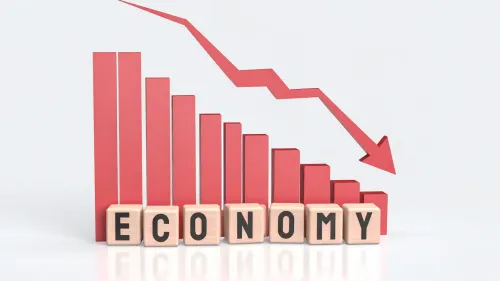
Under Prime Minister Shehbaz Sharif, Pakistan has recorded its weakest annual growth in six decades, posting just 2.33 per cent — a figure that barely keeps pace with population expansion. The analysis notes that Pakistanis are measurably poorer than they were in 2022, with millions having slipped below the poverty line. Estimates of the poverty rate range from 29 per cent to 40 per cent, depending on the methodology used, though the article argues that the statistical dispute itself obscures a visible and worsening decline.
A Young, Idle Population and the NEET Crisis
Pakistan's median age is approximately 20 years, making it one of the younger populations in South Asia. Yet the country's official NEET rate — the share of youth aged 15 to 24 not in employment, education, or training — stands at 32 to 33 per cent nationally. The Friday Times piece argues that a state cannot sustain strategic strength while its economic foundations are actively eroding, and that the security establishment's relative inaction on this front constitutes its 'greatest strategic miscalculation.'
The Changing Face of War Raises the Stakes
The analysis draws on two recent flashpoints to make its case for economic urgency: the US–Iran confrontation and the India–Pakistan military escalation of May 2025. Both, it contends, signal a structural shift in modern warfare — away from conventional platforms toward networked systems driven by algorithms, autonomous vehicles, and precision-strike capability. Pakistan's armed forces, the article argues, remain largely configured for the industrial-era wars of the twentieth century. Adapting to this new paradigm would require a costly overhaul of the defence ecosystem, estimated at roughly 2 per cent of GDP, and would demand technological capability and intellectual capital that the country currently lacks.
Flat Per Capita Growth and an Absent Economic Strategy
Between 2022 and 2026, Pakistan's real per capita growth was flat or marginally negative, at approximately –0.2 per cent. The article is pointed in its assessment of the civilian administration: it characterises the government as having no genuine growth strategy, relying instead on an IMF-backed stabilisation narrative that it presents as achievement. It further notes that foreign policy decisions during this period were widely attributed to Field Marshal Asim Munir, not the elected civilian government. 'The civilian government is a stranger in its own administration,' the piece states, with real decisions made by officials in Islamabad and Rawalpindi.
Strategic Miscalculation at the Top
The Friday Times analysis concludes that Pakistan's security establishment continues to treat India, Afghanistan, and terrorism as its primary adversaries, when the more immediate threat is internal economic decay. This comes amid persistent IMF programme conditions, recurring balance-of-payments crises, and a sovereign debt profile that leaves little fiscal headroom for either social investment or defence modernisation. Without a credible economic turnaround, the article warns, Pakistan's strategic position will continue to weaken regardless of its military posture.
Point of View
While the establishment that holds real power has historically prioritised defence spending over human capital. A 32% youth NEET rate in a country with a median age of 20 is not a fiscal statistic — it is a recruitment pipeline for instability. The IMF stabilisation frame may steady the balance of payments, but it does not generate the growth needed to absorb a bulging youth cohort. Until Pakistan's security calculus genuinely internalises economic development as a strategic imperative — not a technocratic afterthought — the gap between military posture and national resilience will keep widening.
NationPress
30 Sept 2026
Frequently Asked Questions
Why is Pakistan's economic slowdown considered a national security threat?
According to an analysis in The Friday Times, Pakistan's 2.33% annual growth — its lowest in six decades — barely keeps pace with population growth, leaving millions poorer and a large share of youth idle. The piece argues that a state cannot sustain strategic strength while its economic foundations erode, making internal decay a more immediate threat than external adversaries.
What is Pakistan's NEET rate and why does it matter?
Pakistan's NEET rate — the share of youth aged 15 to 24 not in employment, education, or training — stands at 32 to 33 per cent nationally. With a median age of around 20 years, a large idle youth population poses long-term risks to social stability and economic productivity.
How has Pakistan's per capita income changed since 2022?
Pakistan's real per capita growth between 2022 and 2026 was flat or slightly negative, at approximately –0.2 per cent. The Friday Times article notes that Pakistanis are measurably poorer than they were in 2022, with poverty estimates ranging from 29 to 40 per cent depending on methodology.
What role did the India–Pakistan escalation of May 2025 play in this analysis?
The Friday Times cited the India–Pakistan military escalation of May 2025, alongside the US–Iran confrontation, as evidence of a structural shift in modern warfare toward networked, algorithm-driven systems. The article argues Pakistan's military remains configured for twentieth-century industrial warfare and would need significant investment — around 2 per cent of GDP — to adapt.
Who is described as holding real power in Pakistan's government?
The Friday Times analysis contends that real decision-making power in Pakistan rests with officials in Islamabad and Rawalpindi, not the elected civilian administration. It notes that key foreign policy moves during this period were widely attributed to Field Marshal Asim Munir rather than Prime Minister Shehbaz Sharif's government.