Is the IMF’s Orthodoxy Leading Pakistan into a Low-Growth Trap?
Synopsis
A critical report suggests that the IMF's adherence to traditional policies is likely to trap Pakistan in low growth for years, exacerbating the hardships faced by its citizens. Without a reevaluation of fiscal strategies, the economic outlook remains bleak.
Key Takeaways
Pakistan is facing a low-growth trap due to IMF policies.
The burden of fiscal adjustments is falling on ordinary citizens.
Public spending has surged without restraint.
Nearly 50% of the population is below the poverty line.
Significant tax increases have not broadened the tax base.
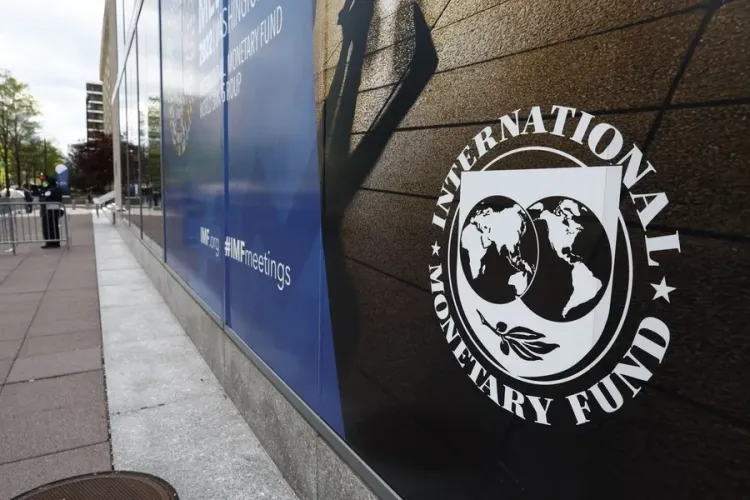
New Delhi, Jan 4 (NationPress) A recent report indicates that the IMF’s orthodox policies are likely to push Pakistan into a low-growth trap for an extended period. Without a significant reevaluation of the current approach and a genuine change in the superficial nature of the imposed fiscal austerity, the economy is expected to suffer long-term detriment, leaving ordinary Pakistanis in a state of unnecessary hardship.
According to author Sakib Sherani, writing for Dawn, since 2022, the current government has placed an overwhelming burden on the average citizen through stringent austerity measures under IMF supervision.
“A substantial fiscal adjustment has been achieved through extensive taxation and cuts in subsidies, with no indication of expenditure restraint from the government on itself or its supporters,” the report criticizes.
In stark contrast, government spending has surged to unprecedented levels, with discretionary expenditures ballooning as public funds are lavishly utilized for patronage and establishing loyalties to a new political framework.
This has shifted the entire burden of economic adjustment onto the backs of ordinary citizens and compliant businesses.
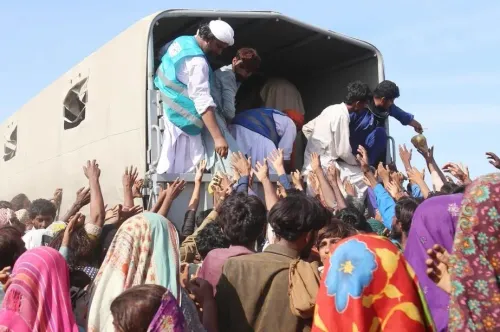
“Consequently, the nation is facing enduring economic ‘scarring,’ leading to business closures, rising unemployment, and almost half of the population now estimated to live below the poverty line,” Sherani notes.
For instance, a cumulative fiscal adjustment of 5.5 percent of GDP has occurred, marking the largest adjustment in Pakistan's history over a similar timeframe.
Much of this adjustment has stemmed from new tax initiatives. Since 2022-23, the government has enforced taxes and levies exceeding Pakistani rupee 50.4 trillion (including both federal and provincial taxes, as well as the petroleum levy).
“This figure is equivalent to the total tax collection over the 17 years preceding 2022. Following previous patterns of failure, this additional taxation has not resulted from broadening the tax base, but rather from further demands on existing taxpayers,” the report states.
The government’s ‘development’ spending, serving as a covert method for distributing taxpayer funds to ruling coalition politicians, has escalated from Rs 1.9 trillion in 2022-23 to a projected Rs 3.1 trillion by 2025-26.
“Expenditures on new fleets of vehicles, all-expenses-paid international trips for excessively large delegations, and extravagant spending on offices and official residences are all part of this trend,” the report highlights.
Additionally, the report suggests that either the IMF is complicit in this regime-supporting scheme or it has grossly neglected its responsibility towards the citizens of a member nation. In either case, accountability is necessary.
Regrettably, the IMF seems to be ignoring the government’s extravagant spending and reluctance to widen the tax base, the report concludes.
Point of View
It's imperative we reflect on the plight of ordinary Pakistanis amidst these fiscal adjustments. The government’s approach, heavily influenced by IMF policies, raises significant concerns about its sustainability and fairness. Our nation deserves a strategy that prioritizes its citizens over political patronage.
NationPress
22 Sept 2026
Frequently Asked Questions
What is the current economic outlook for Pakistan?
The outlook remains grim with potential long-term low growth unless there is a significant policy shift away from harsh austerity measures imposed by the IMF.
How has taxation affected ordinary Pakistanis?
Ordinary citizens have faced excessive burdens through increased taxation and reduced subsidies, leading to widespread economic distress.
What is the role of the IMF in Pakistan's economy?
The IMF has been a key player in shaping Pakistan's economic policies, but its orthodox approaches are now being questioned for their effectiveness.