Is Blaming IMF Bailouts a Distraction from Pakistan’s Own Failures?
Synopsis
In a recent report, a panel led by Prime Minister Shehbaz Sharif reveals that Pakistan's economic challenges cannot be solely blamed on the IMF. The panel highlights the long-standing issues that hinder progress for the 250 million citizens, emphasizing the need for substantial reforms to break free from the current economic malaise.
Key Takeaways
Pakistan's economic growth is hampered by longstanding structural issues.
Blaming the IMF detracts from the need for internal reforms.
The panel stresses the importance of a conducive business environment .
Fiscal austerity under the IMF has led to increased burdens on ordinary citizens.
Long-term solutions require a fundamental rethink of economic strategies.
New Delhi, Jan 15 (NationPress) The ongoing situation in Pakistan, which affects its 250 million citizens, is hindered by various constraints impacting all 20 priority export products and six export drivers, according to a media report. It emphasizes that blaming the IMF will not improve the dire economic conditions the country is facing.
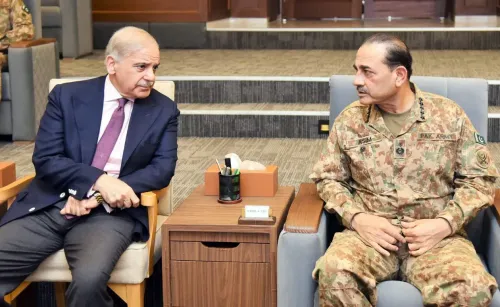
A panel set up by Prime Minister Shehbaz Sharif reached this conclusion after engaging with industry stakeholders, as reported by Dawn. This panel was tasked with devising a strategy to exit the IMF program once the current bailout ends next year.
The report indicated that the panel’s tendency to blame restrictive IMF financing for the government's inability to implement necessary reforms is a way to overshadow the state’s own failure to act.
Additionally, the factors impeding economic and export growth — such as high and unstable energy prices, unpredictable policies, distorted taxes, logistical issues, and regulatory hurdles — have been long-standing issues.
The report notes, "These challenges have been highlighted in both donor and government reports, as well as in media analyses." The IMF advocates for a favorable business environment.
Conversely, the authorities are attributing the sluggish economy to the IMF program to mask their incompetence and to distract from the ruling party’s reluctance to dismantle entrenched rent-seeking structures.
A recent Dawn report suggested that adherence to the IMF’s policies may trap Pakistan in a low-growth cycle for years. Without a significant reevaluation of the current approach and the superficial nature of the imposed fiscal austerity, the economy will remain impaired long-term, causing further suffering for ordinary Pakistanis.
Since 2022, the government has imposed a heavy burden on the populace through austerity measures guided by the IMF.
The report criticizes, "A significant fiscal adjustment has been achieved through increased taxation and subsidy cuts, without any sign of spending restraint from the government itself or its supporters."
Point of View
My perspective remains firmly aligned with the nation’s interests. The ongoing debate about the IMF's role highlights our need for introspection and accountability. While external factors do play a significant role, we must not lose sight of our responsibilities in reforming our economic landscape. The path to progress demands both acknowledgment and action.
NationPress
30 Sept 2026
Frequently Asked Questions
What are the main economic challenges facing Pakistan?
Pakistan faces high energy costs, policy unpredictability, distorted taxation, logistical issues, and regulatory burdens affecting its economy and exports.
Why is the IMF being blamed for Pakistan's economic issues?
Authorities claim that the restrictive measures imposed by the IMF hinder the implementation of necessary reforms, which is seen as an attempt to deflect from the government's own failures.
What is the expected outcome if Pakistan continues to follow the IMF's austerity measures?
Without reevaluating the current strategy, Pakistan risks being trapped in a low-growth cycle, leading to prolonged economic hardship for its citizens.