Is Pakistan's Economy Surviving on IMF Reviews?
Synopsis
Uncover how Pakistan's economy is becoming increasingly dependent on IMF reviews, with policies prioritizing short-term gains over long-term sustainability. This article delves into the implications of such an approach and highlights the urgent need for a shift in policymaking to avoid further decline.
Key Takeaways
Pakistan's economy is increasingly reliant on IMF reviews.
The country faces significant twin deficits: fiscal and balance of payments.
Criticism of the IMF's approach highlights the need for sustainable economic policies.
Immediate policies may compromise long-term economic health.
A fundamental shift in policymaking is necessary to reclaim economic sovereignty.
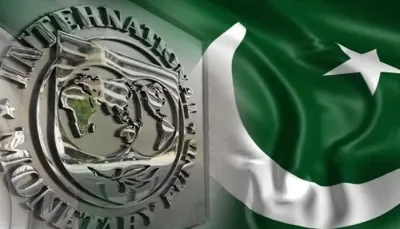
New Delhi, Jan 1 (NationPress) Pakistan is experiencing the establishment of a “survivalist” economy, where every policy decision is primarily influenced by the necessity to clear the next International Monetary Fund (IMF) review. This continues even if such policies compromise the tax base for the foreseeable future, leaving the economy as vulnerable as ever, likely heading towards another IMF programme, according to a recent report.
The analysis from Business Recorder, authored by Shahid Sattar, indicates that Pakistan is grappling with a persistent twin deficit: a fiscal shortfall (exceeding expenditures over revenue) and a balance of payments dilemma (utilizing more foreign exchange than it generates).
“For the past fifty years, our imports have consistently been at twice the rate of our exports relative to GDP. In simple terms, Pakistan is a nation that has not succeeded in production,” it stated.
The report contends that the IMF’s approach fundamentally falters due to its “dogmatic commitment to revenue generation at the expense of value creation.”
“By compelling the government to achieve stringent fiscal targets—through any means possible—the Fund has instigated policies that hinder the essential export-driven growth needed to escape the cycle of debt,” it elaborated.
The historical economic framework based on state support has proven to be flawed, leading to ineffective resource distribution.
“However, there is a distinction between helping an addict recover and depriving a healthy individual. The IMF programme seems incapable of distinguishing between withdrawing support and subsidies and actively undermining the environment necessary for legitimate businesses to thrive,” the report further noted.
While the IMF ostensibly collaborates with the Finance Minister and the State Bank's Governor, technically, all policies within the Letter of Intent stem from the government’s own suggestions.
“In practice, the programme mirrors the demands of those wielding the most significant political and economic influence. When strategies fail, the IMF claims they were government-designed, while the government contends the IMF insisted upon them. This lack of clarity benefits all except the nation and its citizens,” the report lamented.
“Unless we reclaim our policymaking from the narrow, revenue-focused constraints of IMF programmes, we are not merely navigating a crisis but actively facilitating our own decline,” it concluded.
Point of View
I believe that Pakistan's current economic trajectory, driven by IMF dependency, needs to be critically reassessed. While immediate relief may seem necessary, prioritizing short-term revenue at the expense of sustainable growth could lead to systemic decline. We must advocate for a balanced approach that promotes long-term economic health.
NationPress
30 Sept 2026
Frequently Asked Questions
What is the current state of Pakistan's economy?
Pakistan is facing a survivalist economy characterized by policies aimed at passing IMF reviews, which may compromise long-term economic health.
How does IMF influence Pakistan's economic policies?
The IMF's stringent fiscal targets often lead to policies that prioritize short-term revenue generation, affecting the country's sustainable growth.
What are the twin deficits faced by Pakistan?
Pakistan struggles with a fiscal deficit, where expenditures exceed revenues, and a balance of payments crisis, consuming more foreign exchange than it earns.
Why is there criticism of the IMF's approach?
The IMF is criticized for its dogmatic adherence to revenue extraction , which may stifle the essential export-led growth necessary to break the debt cycle.
What is needed for Pakistan's economic recovery?
A shift in policymaking is essential, moving away from revenue-centric IMF programmes to strategies that foster long-term economic stability.