Is Bundelkhand Under a Severe Cold Wave? Orange Alert Issued!
Synopsis
A severe cold wave is currently affecting Bundelkhand, with an orange alert issued for multiple districts across Madhya Pradesh and Uttar Pradesh. Residents are facing challenges due to low visibility and biting temperatures, prompting local governments to take precautionary measures, including school closures and community bonfires. Stay informed on this developing situation.
Key Takeaways
A cold wave is affecting Bundelkhand with an orange alert in effect.
Authorities have implemented school closures and adjusted timings.
Community bonfires are being set up for those in need.
Low visibility continues to hinder transportation.
Farmers are advised to protect crops from frost damage.
Bhopal/Chhatarpur, Jan 5 (NationPress) A severe cold wave has gripped the entire Bundelkhand region, impacting districts in both Madhya Pradesh and the neighboring Uttar Pradesh.
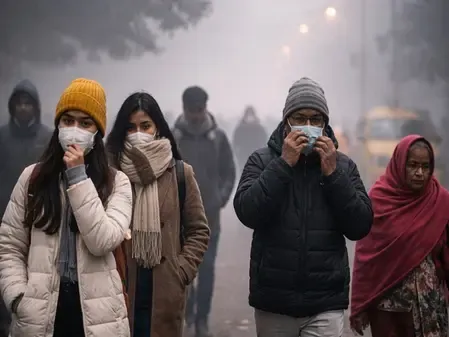
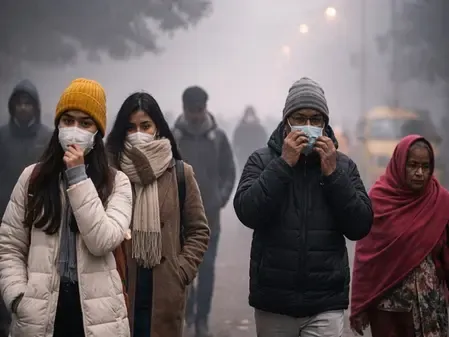
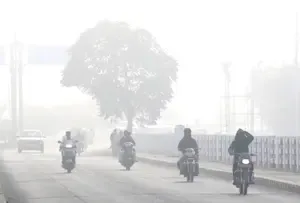
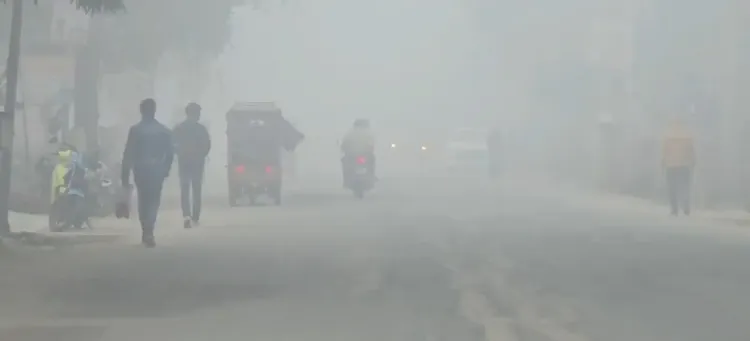
Thick fog and piercing northerly winds have complicated daily activities for the locals, while reduced visibility has hampered both road and rail transport. Nineteen district authorities have announced school closures, while others have adjusted school opening hours.
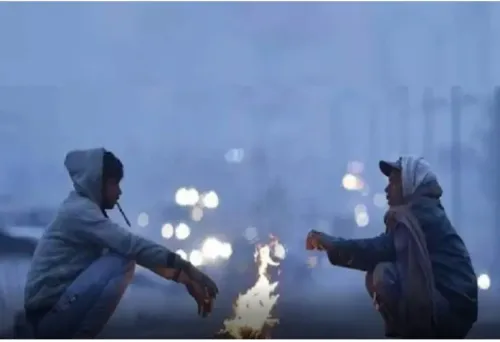
The Chhatarpur district administration has instructed municipal bodies and gram panchayats to set up community bonfires at vital public spots, including canal junctions and busy intersections, to offer relief to the homeless, nighttime travelers, and laborers.
The local Meteorological Department (IMD) office in Bhopal has issued an orange alert for all districts in Bundelkhand for the upcoming 48 hours, cautioning about the continuation of extreme cold conditions.
Districts under this alert comprise Chhatarpur, Datia, Tikamgarh, Niwari, and Panna in Madhya Pradesh, along with Mahoba and Banda in Uttar Pradesh.
Visibility has drastically reduced during early morning and night hours, endangering commuters and leading to transportation delays. “Khajuraho's visibility was recorded at merely 50 meters,” stated weather experts.
Sadly, the harsh weather conditions resulted in one fatality on Sunday when an individual succumbed to the bitter cold at the Shyama Prasad Mukherjee Inter-State Bus Stand in Chhatarpur. However, local authorities have not verified whether the death was directly due to the extreme cold.
Meteorologists link the ongoing cold snap to frigid winds originating from northern India, which are expected to persist for several more days.
Agricultural specialists and departmental officials have raised concerns that the freezing climate might jeopardize standing crops, particularly wheat and pulses. The department has urged farmers to ignite small bonfires along the boundaries of their fields at night to create a protective layer of smoke and warmth, reducing frost damage.
Rural areas are facing the most severe impacts, with thick fog affecting both humans and livestock. Cattle herders are struggling to find grazing grounds, while residents find it difficult to perform outdoor tasks.
Authorities have urged the public to take necessary precautions, stay indoors during peak cold hours, and report any individuals in distress. Relief efforts, including the distribution of blankets in certain regions, are being coordinated by district administrations.
Point of View
It’s crucial to provide timely and accurate updates on the ongoing severe cold wave impacting Bundelkhand. The plight of residents and the proactive measures taken by local administrations reflect a community's resilience. Our commitment is to keep the public informed and safe during these challenging conditions.
NationPress
27 Sept 2026
Frequently Asked Questions
What areas are affected by the cold wave?
The cold wave is affecting several districts in Bundelkhand, including Chhatarpur, Datia, Tikamgarh, Niwari, and Panna in Madhya Pradesh, as well as Mahoba and Banda in Uttar Pradesh.
What precautions are local authorities taking?
Local authorities have declared school holidays, adjusted school timings, and set up community bonfires to aid those in need.
What is the expected duration of the cold wave?
The Meteorological Department has indicated that the cold wave conditions are likely to persist for the next few days.
How is agriculture affected?
Agriculture experts warn that the freezing temperatures could damage crops like wheat and pulses, prompting advice to farmers to light bonfires for protection.
What should residents do during this cold wave?
Residents are advised to stay indoors during peak cold hours and take necessary precautions to ensure their safety and well-being.