Is the US Prioritizing the Western Hemisphere Over China?
Click to start listening
Synopsis
The U.S. military's focus on the Western Hemisphere, especially the operation to apprehend Nicolás Maduro, marks a significant shift from its long-standing attention to China. This strategic realignment raises questions about the implications for America's global military presence and its ability to manage threats.
Key Takeaways
- U.S. military operations are increasingly focused on the Western Hemisphere.
- Nicolas Maduro's capture operation underscores this shift.
- Long-standing commitments to China may be compromised.
- This strategic change necessitates a reevaluation of U.S. military presence globally.
- Potential challenges arise regarding overextension and resource allocation.
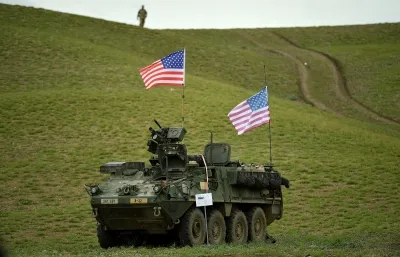
New Delhi, Jan 6 (NationPress) The United States operation aimed at capturing Venezuela’s President Nicolas Maduro signifies a crucial shift in Washington's military strategy, emphasizing the Western Hemisphere while potentially neglecting its traditional focus on China in the Indo-Pacific, as reported.
According to Politico, an American digital news outlet specializing in politics and policy, “The military has executed a plan by redirecting most of the over 12 naval vessels in the Caribbean from their initial European and Pacific missions. This includes the U.S.S. Gerald R. Ford, which was supposed to be on a scheduled deployment in the Mediterranean with its destroyer escorts prior to its reassignment to the Caribbean in October.”
The report highlights, “This decision has resulted in a significant void in the long-established U.S. naval presence in and around Europe.” The analysis delves into the extensive preparations involved, including months of naval build-up, the diversion of carrier task forces from other regions, and a special operations raid performed by elite units.
Thus, this strategy emphasizes the administration's readiness to deploy advanced military resources closer to home rather than primarily for deterrence against significant power adversaries. Such a reorientation is not just tactical; it indicates a strategic choice about where Washington perceives its most pressing threats and opportunities, necessitating a reassessment of force posture, logistics, and alliance commitments across various regions.
However, executing operations like the recent extraction of Maduro and his spouse poses considerable challenges. It demanded extensive planning and a substantial American naval fleet, supported by squadrons of fighter aircraft and drones positioned in Puerto Rico and other locations within the region,” noted Politico.
“These forces remain stationed or on standby, including destroyers equipped with long-range Tomahawk cruise missiles, long-range bomber flights based in the continental U.S., and a special operations ‘mothership’ patrolling the South American coastline,” it continued.
Importantly, “All these assets would significantly influence a potential confrontation with China, yet they are currently being utilized in a region devoid of any major superpower competitors.” Notably, Beijing has recently conducted large-scale military drills encircling Taiwan, an independent democracy that China historically regards as part of its territory. China expressed concern over the U.S. announcing a record arms sale to Taiwan and the National Security Strategy (NSS) document emphasizing the importance of aligning allied actions to prevent the dominance of any single competing nation.
It appears that President Trump may have been influenced by another issue highlighted in the NSS released in December, which aims to reaffirm the historical foreign policy doctrine known as the Monroe Doctrine. Established in 1823 by President James Monroe to counter European colonialism in the Western Hemisphere, this doctrine viewed any foreign intervention in the political affairs of the Americas as an act of hostility against the U.S.
As quoted in the report, “The larger concern is overextension,” stated a source from the defense department. “We aren’t manning every spot as it currently stands... Imagine if Iran escalates again,” the official remarked. “While the U.S. might manage to avoid overcommitting itself, this is only a short-term outlook,” the report quoted Bryan Clark, a retired Navy officer and a senior fellow at the Hudson Institute, a conservative think tank.
He indicated that officials are reallocating ships from European and Middle Eastern missions for the Western Hemisphere initiative. Politico suggested that if the ships see their usual six-to-eight-month deployments extended, “the Navy will likely encounter challenges with planned maintenance schedules and crew rest.” Given Trump’s renewed warnings to Cuba and Colombia, it is inferred that the U.S. President might need American forces to remain in the region as a potential leverage point.
Clark further remarked to the digital news source, “‘If they prolong these ships' assignments or dispatch the next set of deployments to (U.S. Southern Command), we will observe an impact,’ because Navy presence will be effectively reduced to the existing forces stationed in Europe or Japan.
Point of View
I believe that this strategic pivot by the United States signifies a crucial adjustment in its military priorities, reflecting the need for a balanced approach in addressing both regional and global challenges. While the focus on the Western Hemisphere is timely, it must not come at the cost of vigilance against rising powers like China.
NationPress
07/01/2026
Frequently Asked Questions
What prompted the U.S. to shift its military focus?
The U.S. operation to capture Nicolás Maduro signifies a strategic shift to prioritize security concerns in the Western Hemisphere.
How does this affect U.S. relations with China?
The shift may lead to a perceived weakening of U.S. presence in the Indo-Pacific, potentially emboldening China.
What are the implications of this military strategy?
This strategy could alter force posture and logistics, necessitating adjustments in U.S. alliances and commitments.
What challenges does the U.S. face with this new focus?
The U.S. must balance operations in the Western Hemisphere while maintaining readiness to address threats in other regions.
How does the Monroe Doctrine relate to this shift?
The Monroe Doctrine, which opposes foreign intervention in the Americas, is being revisited as part of this strategic realignment.