Does the US Really Have Maximum Leverage Over Venezuela's Interim Authorities?
Synopsis
The US government declares it holds 'maximum leverage' over Venezuela's interim authorities amid ongoing discussions about Greenland's strategic importance. The White House emphasizes that these matters are vital to national security, highlighting the potential for military options if necessary.
Key Takeaways
The US claims maximum leverage over Venezuela's interim authorities.
Discussions about Greenland's strategic role are ongoing.
No US troops are currently stationed in Venezuela.
Venezuelan oil proceeds will be accessed through US-controlled accounts.
The option for military action remains open.
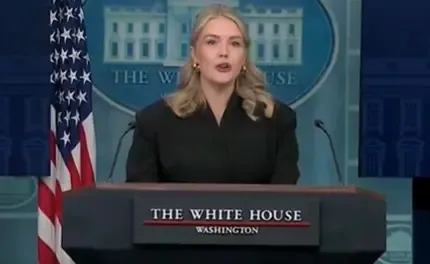
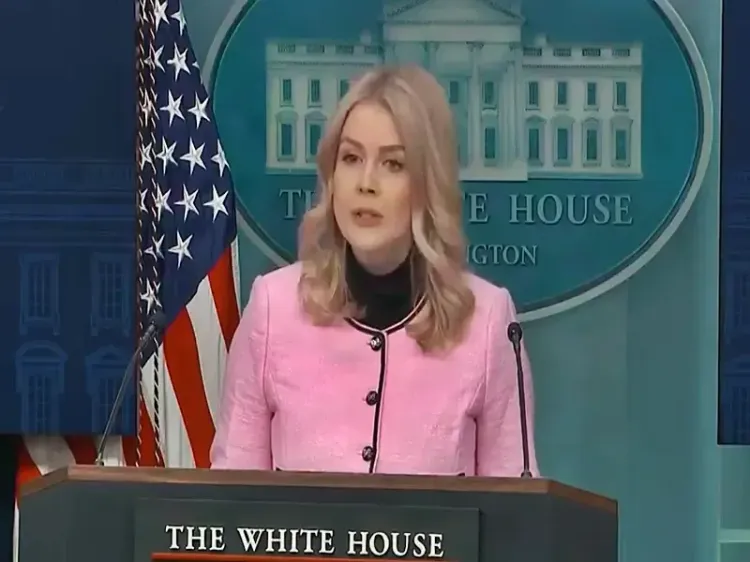
Washington, Jan 7 (NationPress) In a strong defense of its actions concerning Venezuela, the White House declared on Wednesday that the United States now possesses "maximum leverage" over the interim authorities of the nation, while also emphasizing that talks are ongoing about Greenland, labeling both situations as crucial to U.S. national security.
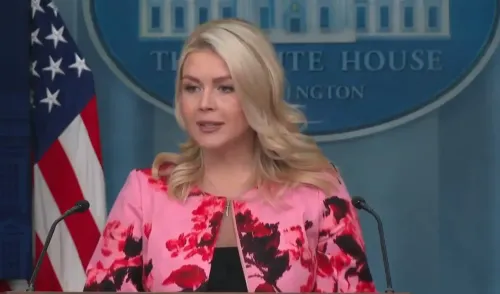
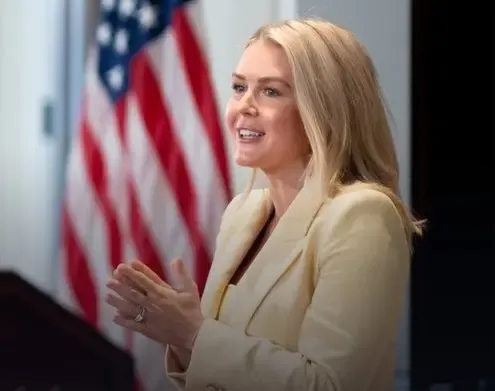
White House Press Secretary Karoline Leavitt informed journalists that the U.S. now holds "maximum leverage" over Venezuela's interim authorities following what she characterized as a significant U.S. operation conducted last week.
"There is no other military globally capable of executing this operation," Leavitt mentioned to the press. “America is genuinely back regarding Venezuela,” she added.
Leavitt explained that the administration is working closely with Venezuela’s interim leaders and has gained access to Venezuelan oil that was previously held offshore due to sanctions.
“This was an agreement established by the President and his team with the Venezuelan interim authorities,” she stated.
According to Leavitt, the oil will be marketed globally, with the revenue first directed through accounts under U.S. control.
“All earnings from the sale of Venezuelan crude oil and petroleum products will initially be deposited in U.S.-controlled accounts,” she noted, adding that the funds would be allocated “at the discretion of the United States government.”
Leavitt emphasized that there are no U.S. troops stationed in Venezuela but highlighted that the option for military action remains available if necessary.
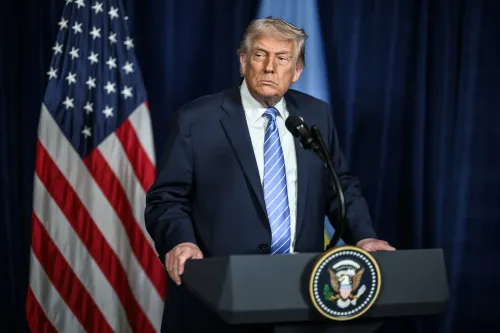
“The President certainly reserves the right to deploy the U.S. military if necessary,” she remarked. “Diplomacy is always the primary option.”
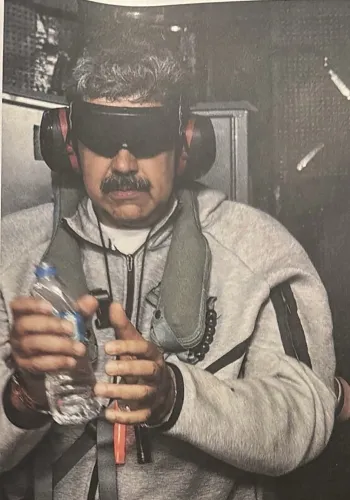
Addressing Venezuela’s political climate, Leavitt stated that the former president is no longer in power, labeling him an “illegitimate leader,” and reiterated the administration’s refusal to acknowledge his authority.
The White House also announced the seizure of oil tankers associated with what it termed Venezuela’s “shadow fleet,” indicating that these vessels had breached U.S. sanctions.
“The United States under this President will not tolerate such actions,” Leavitt asserted.
As for Greenland, Leavitt confirmed that discussions are ongoing regarding the strategic significance of the Arctic territory amid escalating geopolitical competition.
“The acquisition of Greenland by the United States is not a recent concept,” she claimed. “Presidents since the 1800s have regarded it as beneficial for America’s national security.”
She noted that the President believes such a move would aid in countering increased Russian and Chinese activities in the Arctic region.
“All options are always available to the President,” Leavitt stated, while not dismissing any potential actions.
When questioned about Denmark’s sovereignty over Greenland, Leavitt mentioned she had not heard the President question it personally.
“I have not heard him question it personally,” she affirmed.
The White House reiterated its support for NATO, with Leavitt citing the President’s conviction that the United States would “always be there for NATO,” while also continuing to encourage member nations on burden-sharing.
Venezuela has consistently been a focal point of U.S. sanctions and pressure efforts, while Greenland’s strategic importance has heightened as competition among major powers in the Arctic escalates.
Point of View
The U.S. administration's assertive stance on Venezuela reflects a commitment to exert influence in the region, while also addressing the strategic importance of Greenland. It is essential to monitor these developments as they could have significant implications for U.S. foreign policy and national security.
NationPress
30 Sept 2026
Frequently Asked Questions
What are the implications of the US having maximum leverage over Venezuela?
The US having maximum leverage suggests a strong influence over Venezuela's interim authorities, which could impact diplomatic relations, oil access, and broader geopolitical dynamics.
Why is Greenland strategically important to the US?
Greenland is strategically important due to its location in the Arctic, which is increasingly relevant amid rising competition from Russia and China.
Are there US troops currently in Venezuela?
No, the White House has confirmed that there are no US troops on the ground in Venezuela at this time.
What actions has the US taken regarding Venezuela's oil?
The US has coordinated with Venezuela’s interim authorities to access oil that was previously held offshore under sanctions, with proceeds routed through US-controlled accounts.
Is military action an option for the US regarding Venezuela?
Yes, the President has reserved the right to use military force if deemed necessary, although diplomacy is prioritized.