Is Sindh's Disturbing Situation a Result of Policy Neglect?
Synopsis
Sindh, despite adequate funding and autonomy, showcases alarming policy failures and neglect, as highlighted in a recent report. With a staggering lack of basic facilities and educational access, the province's plight starkly contrasts with others, raising questions about the effectiveness of governance in Pakistan.
Key Takeaways
Sindh's sanitation issues are alarming, with 14% of households lacking toilet facilities.
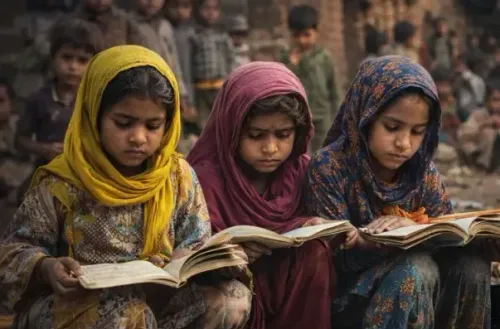
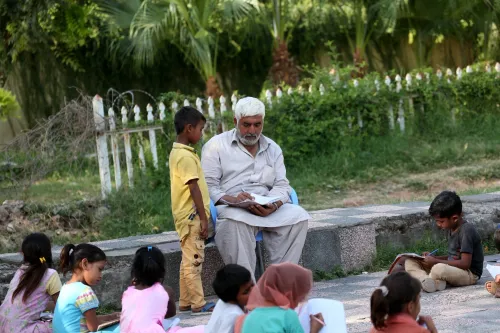
There is a significant educational gap in Sindh, with nearly 40% of school-age children not enrolled.
Political stability in Sindh has not translated into progress.
Resource distribution and fiscal autonomy are critical for improving provincial conditions.
The 18th Amendment has not led to effective governance in Sindh.
New Delhi, Feb 9 (NationPress) Despite receiving adequate funding and enjoying provincial autonomy post the 18th Amendment in Pakistan, Sindh has become a troubling example of both policy failure and neglect, as highlighted in a recent report.
The ‘Household Integrated Economic Survey 2024-25’ reveals a stark contrast within the country, depicting two distinct Pakistans — one that is progressing while the other remains stagnant, as reported by Express Tribune.
For instance, Sindh has the highest percentage of households (14 percent) lacking basic toilet facilities, surpassing the so-called underdeveloped province of Balochistan (12 percent) and lagging significantly behind Punjab and Khyber Pakhtunkhwa (K-P), both around 5 percent.
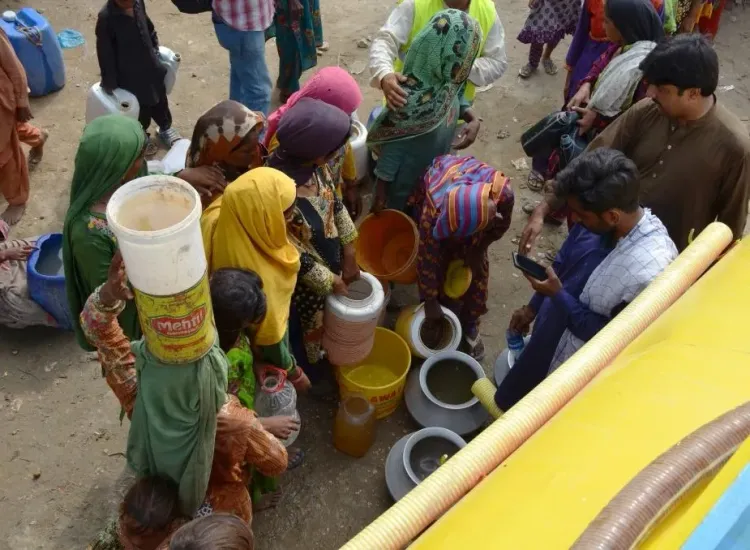
Rural Sindh continues to depend on hand pumps for drinking water more than any other province.
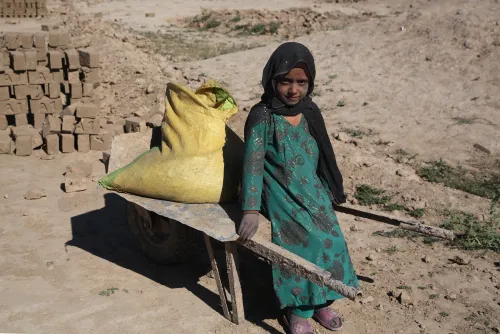
Moreover, there exists a 10 percent literacy gap between Sindh and Punjab. Almost 40 percent of children of school age in Sindh are not enrolled in school, and merely two-thirds are fully vaccinated, compared to 79 percent in Punjab.
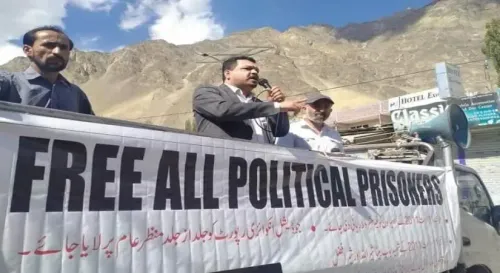
The report also points out that Sindh is not grappling with political instability like many other provinces, as the same party has maintained substantial majorities over the last four election cycles.
The document emphasizes that without achieving progress across all provinces, genuine national advancement will remain unattainable.
A recent article from Lahore's Friday Times asserts that it is crucial to empower provinces to generate sufficient resources, which would also assist in addressing the federal government's overall fiscal deficit.
For instance, Balochistan should be entitled to the “net proceeds” from excise duty on natural gas, while K-P should receive similar benefits from electricity, as stipulated in Article 161(1)(a) and (b) of the Constitution — a provision that is currently not being enforced.
“Their current allocations from sales tax under the 7th NFC Award are limited to 9 percent and 15 percent, respectively. Despite their abundant natural resources of oil, gas, and electricity, their low population results in minimal shares of the revenues generated from these resources. Sindh faces comparable challenges,” the article states.
Following the 18th Amendment, the authority to impose wealth tax, capital gains tax on real estate, gift tax, inheritance tax, etc., is vested in the provinces. However, there is a lack of political will to levy these taxes on the affluent and influential, a sentiment that is prevalent at both federal and provincial levels.
Point of View
We stand united in our commitment to advocate for the needs of all provinces. The disparity in Sindh's progress is a stark reminder that national advancement requires collective efforts and the equitable distribution of resources across the board. We must prioritize solutions that uplift every corner of the nation.
NationPress
19 Sept 2026
Frequently Asked Questions
What are the key challenges faced by Sindh?
Sindh faces significant challenges including poor sanitation, low literacy rates, and inadequate healthcare access. Reports indicate high percentages of households lacking basic toilet facilities and a vast number of children out of school.
What role does the 18th Amendment play?
The 18th Amendment granted provinces greater autonomy and financial resources. However, Sindh's lack of progress suggests that governance and implementation of policies remain significant issues.
How does Sindh compare to other provinces?
Sindh lags behind provinces like Punjab and Khyber Pakhtunkhwa in various indicators such as sanitation, education, and healthcare, despite having similar or more resources.