Hyderabad ORR road safety: 5-6 daily accidents prompt major crackdown
Synopsis
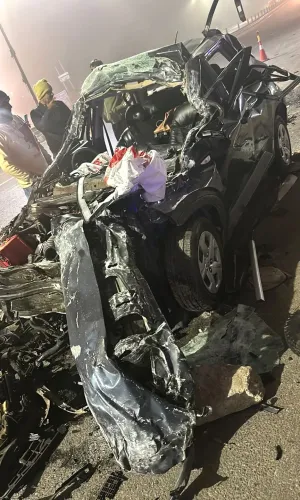
Hyderabad's Outer Ring Road is averaging five to six accidents a day — and 33% are caused by drowsy driving alone. A rare multi-agency meeting chaired by Police Commissioner V.C. Sajjanar has now set a zero-accident target, with counselling for violators, mobile safety alerts for commuters, and a mandatory monthly review mechanism on the way.
Key Takeaways
Hyderabad's ORR records an average of 5–6 accidents daily across 2.8 lakh vehicles per day.
Police Commissioner V.C.
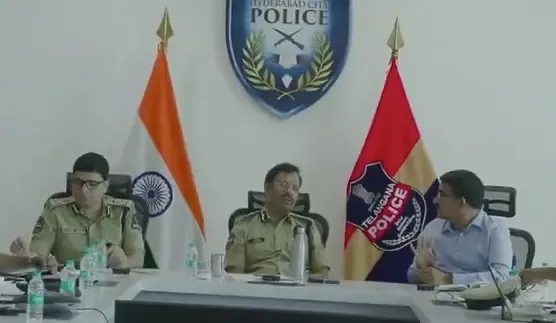
Sajjanar chaired a multi-agency meeting at TGICCC on Tuesday, 6 May to target zero accidents .
Data shows 33% of accidents stem from drowsiness, 25% from reckless driving, 15% from overspeeding, and 14% from tyre bursts.
Traffic violators will receive special counselling in addition to challans; safety messages will be pushed to commuters' phones at ORR entry points.
Transport Commissioner Ilambarthi announced increased CCTV coverage , stricter vehicle fitness and tyre inspections , and implementation of Supreme Court road safety guidelines .
A mandatory monthly review meeting exclusively on ORR road safety has been proposed to ensure sustained accountability.
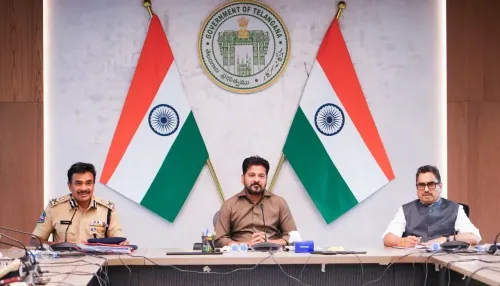
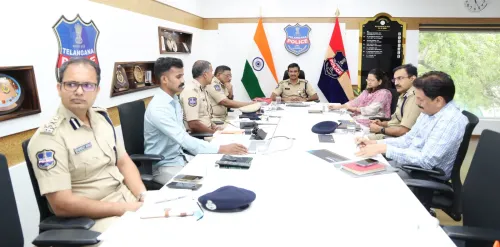
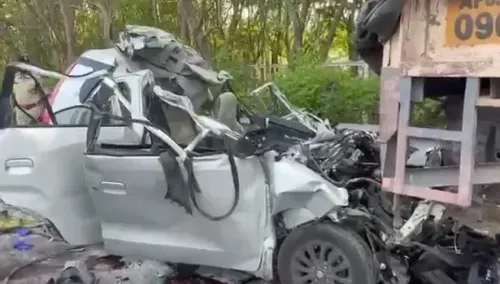
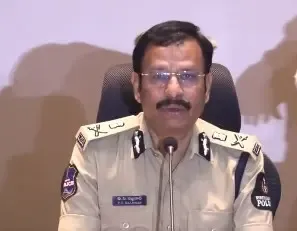
Hyderabad's Outer Ring Road (ORR) is set for a sweeping road safety overhaul after a high-level coordination meeting on Tuesday at the Telangana Integrated Command and Control Centre (TGICCC) flagged an alarming average of five to six accidents every day on the 2.8 lakh-vehicle-a-day expressway. Hyderabad Police Commissioner V.C. Sajjanar, who chaired the meeting, directed officials to target zero accidents through proactive, data-driven interventions rather than reactive responses.
Key Decisions from the Coordination Meeting
The meeting brought together Transport Department Commissioner Ilambarthi, Hyderabad Metropolitan Development Authority (HMDA) Urban Forestry Director VSNV Prasad, and representatives from NHAI, GHMC, HGCL, and IRB Infra, alongside Traffic DCPs and Additional DCPs from the Cyberabad, Malkajgiri, and Future City Commissionerates. Representatives from ORR maintenance agency IRB presented a PowerPoint detailing measures already being implemented on the corridor.
Commissioner Sajjanar stressed that proactive prevention saves more lives than post-accident response. He directed officials to reduce emergency response times and recommended deploying traffic marshals if necessary. He also made it clear that vehicles must not be stopped on the ORR under any circumstances except in the event of a breakdown — and if stopping is unavoidable, commuters must immediately contact the helpline, park exclusively in the extreme left lane, and ensure adequate safety precautions.
What the Accident Data Reveals
Analysing statistics from the past four months, Commissioner Sajjanar highlighted a telling breakdown of causes: 33% of accidents were attributed to drowsiness or sleep deprivation, 25% to reckless driving, 15% to overspeeding, and 14% to tyre bursts. Together, these four causes account for nearly 87% of all ORR accidents — a pattern that officials say is preventable through targeted awareness campaigns and stricter enforcement.
Sajjanar advocated for data-driven safety enhancement measures and the implementation of a safety ranking protocol for expressways, a framework that would allow authorities to benchmark and monitor the ORR's performance against national standards.
Measures Being Rolled Out
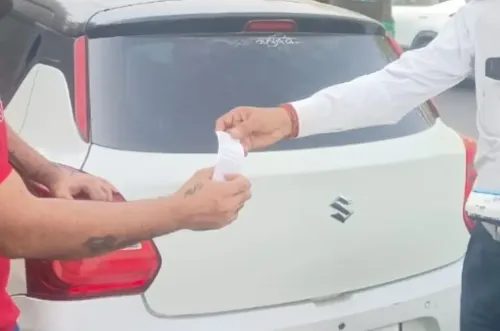
Among the new interventions, traffic violators will not only receive challans but will also undergo special counselling sessions — a step beyond conventional penalty-based enforcement. Safety messages will be sent directly to commuters' mobile phones as they enter the ORR, leveraging real-time geofencing technology to nudge driver behaviour at the point of entry.
Transport Commissioner Ilambarthi confirmed that his department is scaling up CCTV penetration along the corridor and implementing recent Supreme Court guidelines on road safety. Directives have already been issued to officials to place special emphasis on inspecting vehicle fitness and tyre quality — directly addressing the 14% of accidents caused by tyre failures. Ilambarthi also called for a mandatory monthly review meeting exclusively dedicated to ORR road safety to ensure sustained accountability.
Why This Matters
The ORR is one of Hyderabad's most critical arterial corridors, connecting the city's peripheral zones and industrial clusters and handling nearly 2.8 lakh vehicles daily. At five to six accidents per day, the expressway is recording roughly 150–180 incidents a month — a figure that places it among the more accident-prone urban expressways in southern India. This is the first major multi-agency safety review of the corridor in recent months, and the involvement of bodies ranging from NHAI to GHMC signals that the administration is treating it as a systemic, not departmental, problem.
With guidelines, counselling protocols, and a monthly review mechanism now in the pipeline, the next few weeks will test whether the coordination translates into measurable reductions on the ground.
Point of View
The problem is solvable. The harder question is why it took this long to convene a multi-agency review on a corridor handling 2.8 lakh vehicles daily. Counselling for violators and mobile safety alerts are sensible nudges, but their impact depends entirely on follow-through — and Hyderabad's urban infrastructure bodies have a mixed record on sustained inter-agency coordination. The proposed monthly review is the most important commitment on the table; if it holds, it creates an accountability loop that one-off crackdowns never do.
NationPress
22 Sept 2026
Frequently Asked Questions
How many accidents occur daily on Hyderabad's Outer Ring Road?
According to data presented at the TGICCC coordination meeting on 6 May 2025, an average of five to six accidents occur every day on Hyderabad's Outer Ring Road. Police Commissioner V.C. Sajjanar has directed officials to bring this figure down to zero through proactive measures.
What are the main causes of accidents on the Hyderabad ORR?
Analysis of the past four months shows that 33% of ORR accidents are caused by drowsiness or sleep deprivation, 25% by reckless driving, 15% by overspeeding, and 14% by tyre bursts. Together, these four causes account for nearly 87% of all incidents on the corridor.
What new safety measures are being introduced on the Hyderabad ORR?
Key measures include special counselling for traffic rule violators alongside challans, safety SMS alerts sent to commuters' phones as they enter the ORR, increased CCTV coverage, stricter vehicle fitness and tyre quality inspections, faster emergency response times, and deployment of traffic marshals. A mandatory monthly review meeting on ORR safety has also been proposed.
Who attended the ORR road safety coordination meeting?
The meeting was chaired by Hyderabad Police Commissioner V.C. Sajjanar at the TGICCC and was attended by Transport Commissioner Ilambarthi, HMDA Urban Forestry Director VSNV Prasad, and representatives from NHAI, GHMC, HGCL, IRB Infra, and Traffic DCPs from the Cyberabad, Malkajgiri, and Future City Commissionerates.
What are the rules for vehicles breaking down on the Hyderabad ORR?
Commissioner Sajjanar made it clear that vehicles must not be stopped on the ORR except in the case of a breakdown. If stopping is unavoidable, commuters must immediately call the helpline, park exclusively in the extreme left lane, and take adequate safety precautions.