US doubts Pakistan's durability as long-term ally, report says
Synopsis
Despite Pakistan's brief geopolitical spotlight as a facilitator in Iran-US talks, US senators and a congressman are on record questioning its reliability — citing Balochistan's insurgency, active terror groups like LeT and JeM, and a Capitol Hill consensus that any engagement with Islamabad is conditional, not structural.
Key Takeaways
A The National Interest report dated 9 May 2025 flags persistent US doubts over Pakistan's credibility as a long-term partner.
Senator Ted Cruz called Pakistan a "problematic ally" while acknowledging its limited role in Iran-US mediation.
Senator Cory Booker said Pakistan's terrorism track record requires verification before trust is extended.
Congressman Brad Sherman accused Pakistan of sheltering Lashkar-e-Taiba and Jaish-e-Mohammed at a Capitol Hill event.
The Balochistan insurgency continues to undermine investor and policymaker confidence in Pakistan.
The report concludes that US engagement with Pakistan is "conditional and episodic" rather than rooted in structural trust.
Persistent concerns in Washington over Pakistan's credibility as a long-term investment destination and diplomatic partner have been highlighted in a report published on Saturday, 9 May 2025, even as Islamabad has gained temporary geopolitical relevance. The assessment, carried by the American magazine The National Interest, underscores a widening gap between Pakistan's short-term utility and its structural standing in US policy circles.
US Senators Voice Doubts on Pakistan's Reliability
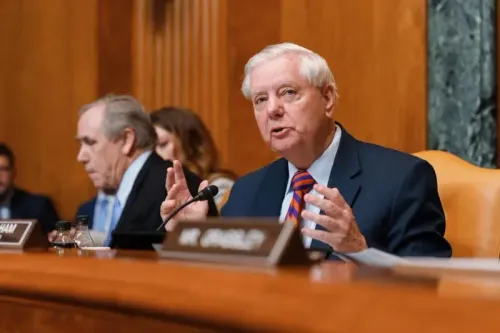
Senator Ted Cruz, a close ally of US President Donald Trump and a member of the Senate Committee on Foreign Relations, acknowledged Pakistan's complicated status in American foreign policy. "I've long described Pakistan as a problematic ally. They are an ally, but there are challenges we struggle with," Cruz was quoted as saying by The National Interest. Cruz also noted Pakistan's facilitative role in Iran-US diplomacy, adding that "President Trump has thanked the Pakistani leadership for their engagement."
Senator Cory Booker, also a member of the Senate Foreign Relations Committee, raised parallel concerns rooted in Pakistan's track record on terrorism. "There are a lot of things that raise my attention — that before trusting them, we should verify," Booker said.
Balochistan Insurgency Reinforces Investor Scepticism
The report highlighted that Balochistan, Pakistan's mineral-rich western province, remains mired in insurgency, with militant groups regularly targeting infrastructure and foreign-backed projects. This fragile security environment, the report noted, "reinforces skepticism" among US investors and policymakers considering long-term commitments in the country. In an administration driven largely by transactional ties, this gap further casts doubt over the durability of Pakistan's diplomatic engagement with Washington.
Pakistan's Terror Links Under Congressional Scrutiny
Last month, on the first anniversary of the 22 April Pahalgam terror attack — in which Pakistan-backed terrorists killed 26 tourists after identifying their religion — US Congressman Brad Sherman accused Pakistan of continuing to shelter terrorist organisations. Speaking at an event organised by the Indian Embassy in Washington at Capitol Hill, Sherman alleged that groups such as Lashkar-e-Taiba (LeT) continue to operate from safe havens inside Pakistan.
"As the world focuses on Islamabad, where the [Iran] talks are taking place, or not taking place, or might be taking place, we have to use this as an opportunity to demand that the Pakistani government clamp down on the LeT and the JeM [Jaish-e-Mohammed]," Sherman stated. His remarks reinforced the view that Pakistan's recent diplomatic moments have done little to improve its standing on Capitol Hill.
Engagement Seen as Conditional, Not Structural
The National Interest report concluded that the prevailing view in Washington is that engagement with Pakistan is "conditional and episodic rather than evidence of structural trust." This pattern of conditional engagement has persisted across multiple US administrations, with Pakistan oscillating between strategic asset and liability depending on regional priorities. The report noted that Pakistan's effort to mediate between Iran and the United States has not translated into a shift in the fundamental scepticism among US lawmakers toward treating Islamabad as a credible long-term ally. As Iran-US diplomacy continues to unfold, the structural questions about Pakistan's reliability are unlikely to be resolved by a single diplomatic gesture.
Point of View
From Cruz on the right to Booker on the left, reflects a durable consensus: Pakistan is useful in a crisis but not trusted across administrations. The Balochistan insurgency and the continued operation of groups like LeT and JeM are not new revelations — they are long-documented grievances that Islamabad has repeatedly failed to address convincingly. Until Pakistan demonstrates verifiable, sustained action against terror infrastructure on its soil, any diplomatic dividend will remain episodic and transactional.
NationPress
22 Sept 2026
Frequently Asked Questions
Why do US lawmakers doubt Pakistan as a long-term partner?
US lawmakers cite Pakistan's track record on terrorism, the ongoing Balochistan insurgency, and the continued presence of groups like Lashkar-e-Taiba and Jaish-e-Mohammed as reasons for scepticism. Senators Ted Cruz and Cory Booker have both publicly questioned Pakistan's reliability as a credible long-term ally.
What did Senator Ted Cruz say about Pakistan?
Senator Ted Cruz described Pakistan as a "problematic ally," acknowledging both its alliance status and the persistent challenges it presents. He also noted that Pakistan's role in Iran-US mediation was appreciated by President Trump.
What is the significance of the Balochistan insurgency for US-Pakistan ties?
Balochistan's mineral wealth makes it strategically attractive, but ongoing militant attacks on infrastructure and foreign-backed projects reinforce scepticism among US investors and policymakers, undermining Pakistan's case as a long-term investment destination.
What did Congressman Brad Sherman allege about Pakistan?
Congressman Brad Sherman alleged at a Capitol Hill event that Pakistan continues to shelter terrorist organisations including Lashkar-e-Taiba and Jaish-e-Mohammed, and called on Islamabad to clamp down on these groups.
How does The National Interest characterise US engagement with Pakistan?
The report concludes that US engagement with Pakistan is "conditional and episodic rather than evidence of structural trust," reflecting a dominant view on Capitol Hill that Pakistan's diplomatic moments have not translated into lasting credibility.