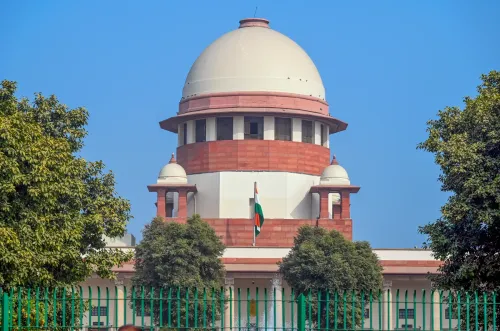
SC registry flags 14 defects in Rahul Gandhi's plea against electoral roll SIR
Synopsis
Rahul Gandhi and 10 INDIA bloc leaders filed a Supreme Court petition challenging the ECI's Special Intensive Revision of electoral rolls — but the registry flagged 14 defects on the very day of filing, from missing vakalatnamas to an ₹220 fee shortfall, stalling the case before it even reaches a bench.
Key Takeaways
The Supreme Court registry flagged 14 defects in the writ petition filed by Rahul Gandhi and 10 INDIA bloc leaders on 12 October 2026 .
Defects include missing vakalatnamas from 9 petitioners, an illegible identity card copy, and a court fee shortfall of ₹220 .
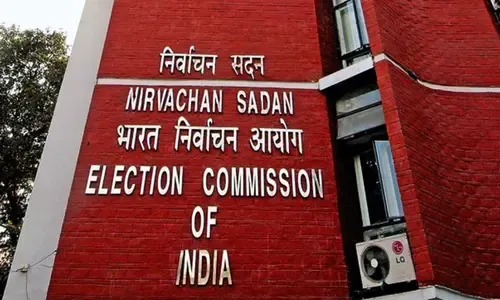
The petition challenges the ECI's Special Intensive Revision (SIR) of electoral rolls, alleging large-scale voter deletions and irregularities.
Named respondents include CEC Gyanesh Kumar and Election Commissioners Sukhbir Singh Sandhu and Vivek Joshi — with naming of individuals itself flagged as a defect.
Under Supreme Court Rules, 2013 , all defects must be rectified before the petition can be listed for hearing.
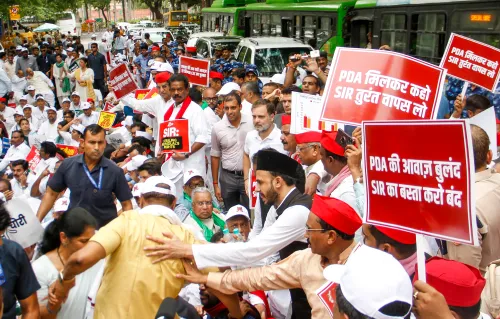
The filing followed a protest march by INDIA bloc leaders towards the Supreme Court on Monday , demanding the CEC's resignation.
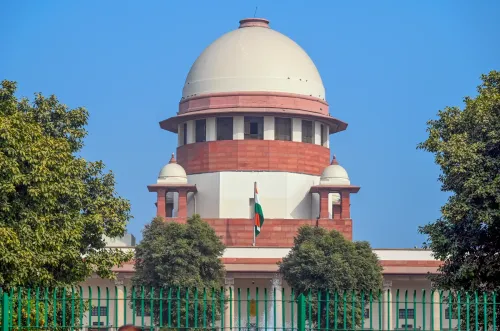
Leader of the Opposition in the Lok Sabha Rahul Gandhi, along with 10 other INDIA bloc leaders, filed a writ petition in the Supreme Court on 12 October 2026 challenging the Election Commission of India's (ECI) Special Intensive Revision (SIR) of electoral rolls — only for the apex court registry to flag 14 defects in the petition the same day, placing the matter in procedural limbo before it can be listed for hearing.
What the Defects Cover
The registry's objections, notified against diary number 64196/2026, range from technical lapses to documentary shortfalls. Among the issues cited: naming individuals as respondents, failure to attach a copy of an earlier relevant judgment, and the absence of vakalatnamas from nine of the petitioners. The registry also flagged the submission of an illegible copy of Congress president Mallikarjun Kharge's identity card and a shortfall of ₹220 in the prescribed court fee.
Additional defects relate to the clarity and legibility of the petition and its accompanying documents, including pages with excessively small fonts and other discrepancies — all of which must be resolved before the matter proceeds. Under the Supreme Court Rules, 2013, rectification of notified defects is mandatory before a petition can be scheduled for hearing.
Who Filed the Petition
Beyond Gandhi and Kharge, the petitioners represent a cross-section of the INDIA bloc: Trinamool Congress leader Saugata Roy, Samajwadi Party chief Akhilesh Yadav, Rashtriya Janata Dal (RJD) leader Tejashwi Prasad Yadav, Shiv Sena (UBT) leader Sanjay Raut, Communist Party of India (Marxist) leader M.A. Baby, Communist Party of India (CPI) leader D. Raja, Jharkhand Mukti Morcha leader Mahua Majhi, NCP (SP) leader Supriya Sule, and Indian Union Muslim League (IUML) leader E.T. Mohammed Basheer.
The named respondents are the Election Commission of India, Chief Election Commissioner (CEC) Gyanesh Kumar, and Election Commissioners Sukhbir Singh Sandhu and Vivek Joshi. Notably, naming individual commissioners as respondents is itself among the defects flagged by the registry.
What the Petition Alleges
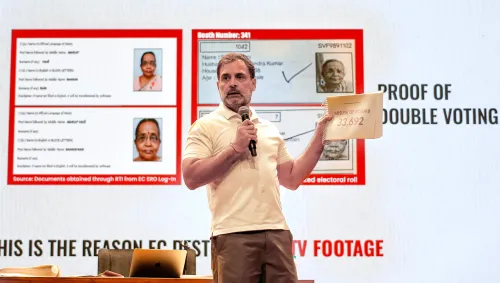
The petition challenges the SIR exercise, alleging large-scale voter deletions and irregularities in the revision of electoral rolls — a charge the opposition has pressed publicly for several weeks. The filing came a day after INDIA bloc leaders marched towards the Supreme Court on Monday, demanding the resignation of CEC Gyanesh Kumar over the alleged irregularities.
This is not the first time the opposition has sought judicial intervention on electoral roll matters; previous representations have also raised concerns about deletion-to-addition ratios in certain states.
How the Petition Came to Be Filed
Gandhi had earlier stated that Chief Justice of India (CJI) Surya Kant advised the opposition leaders, when they sought a direct appointment to raise concerns over the SIR exercise, to instead approach the court through a formal petition. The writ petition filed on 12 October 2026 is the formal response to that guidance.
What Happens Next
The petitioners will need to cure all 14 defects — paying the outstanding court fee, furnishing missing vakalatnamas, replacing illegible documents, and addressing the structural issues flagged by the registry — before the petition can be assigned to a bench and listed for hearing. The timeline for rectification and subsequent listing is currently unclear. The ECI has not issued a public response to the petition's specific allegations as of filing.
Point of View
Which remain serious and unaddressed by the ECI publicly; but process failures of this kind hand opponents an easy narrative about the petition's seriousness. The deeper question is whether this legal challenge is a genuine constitutional remedy or primarily a political signal — and how the opposition answers that question in court will matter as much as the merits of the SIR allegations themselves.
NationPress
13 Oct 2026
Frequently Asked Questions
What is the INDIA bloc's Supreme Court petition about?
The petition challenges the Election Commission of India's Special Intensive Revision (SIR) of electoral rolls, alleging large-scale voter deletions and irregularities. It was filed on 12 October 2026 by Rahul Gandhi and 10 other opposition leaders as a writ petition under diary number 64196/2026.
What are the 14 defects flagged by the Supreme Court registry?
The defects include naming individual Election Commissioners as respondents, missing vakalatnamas from nine petitioners, failure to attach a copy of an earlier relevant judgment, an illegible identity card copy of Congress president Mallikarjun Kharge, a ₹220 shortfall in court fees, and issues with the legibility and font size of documents. All must be corrected before the petition can be listed for hearing.
Who are the petitioners in the case?
The eleven petitioners are Rahul Gandhi, Mallikarjun Kharge, Saugata Roy (TMC), Akhilesh Yadav (SP), Tejashwi Prasad Yadav (RJD), Sanjay Raut (Shiv Sena-UBT), M.A. Baby (CPI-M), D. Raja (CPI), Mahua Majhi (JMM), Supriya Sule (NCP-SP), and E.T. Mohammed Basheer (IUML).
Why did the INDIA bloc approach the Supreme Court?
The bloc had sought a direct appointment with Chief Justice of India Surya Kant to raise concerns about the SIR exercise, and the CJI advised them to file a formal petition. The filing also followed a protest march by opposition leaders towards the Supreme Court on Monday demanding the resignation of Chief Election Commissioner Gyanesh Kumar.
What happens now that defects have been flagged?
Under the Supreme Court Rules, 2013, the petitioners must rectify all 14 defects before the matter can be assigned to a bench and scheduled for hearing. The timeline for rectification and subsequent listing has not been specified.