Pakistan's new provinces debate: Military calculus or governance reform?
Synopsis
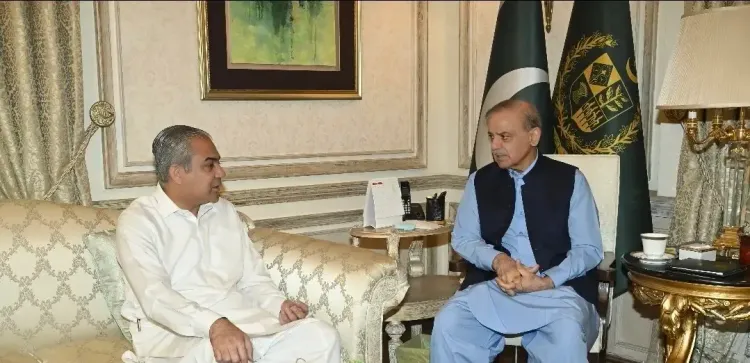
Pakistan's debate over creating new provinces — possibly as many as 12 — is less a governance conversation and more a power struggle. With the push traced to an Interior Minister seen as 'Rawalpindi's man', Sindh's legislature openly defying division, and PML-N's Defence Minister contradicting his own cabinet's centralisation record, the episode lays bare how military calculus, not public service, is driving Pakistan's constitutional imagination.
Key Takeaways
Interior Minister Mohsin Naqvi sparked the new-provinces debate in September 2026 , calling Pakistan's current administrative system 'collapsed.' The Sindh Provincial Assembly passed a formal resolution rejecting any division of the province; Chief Minister Murad Ali Shah issued a direct personal warning against it.
PPP Chairman Bilawal Bhutto challenged Naqvi to debate the issue in parliament rather than at business forums.
Defence Minister Khwaja Asif now backs a proposal for up to 12 provinces , despite serving in a cabinet that passed the 26th and 27th Constitutional Amendments that critics say centralised power.
PM Shehbaz Sharif and Punjab CM Maryam Nawaz have stayed silent, reportedly to protect the Sharif family's grip on Punjab politics.
Analysts warn that redrawing boundaries in Balochistan risks entrenching ethnic divisions regardless of how new units are configured.
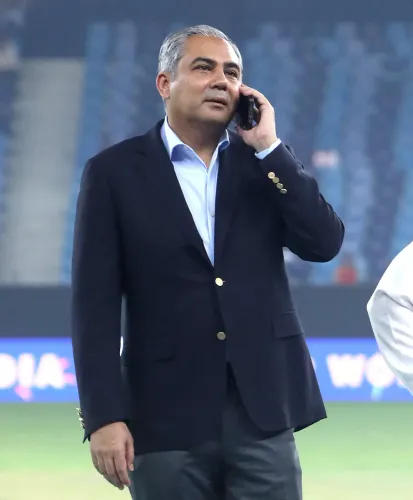
A simmering political controversy over the possible creation of new administrative units in Pakistan has deepened since Interior Minister Mohsin Naqvi first raised the prospect in September 2026, triggering sharp pushback from provincial governments, opposition parties, and analysts who question whether the push is driven by genuine governance concerns or by the country's powerful military establishment.
How the Debate Began
Naqvi's framing was stark. 'The system we are living under has collapsed. Problems cannot be solved through it,' he said, making the case for restructuring Pakistan's existing provincial architecture. The statement opened a Pandora's box — critics immediately raised questions about which new units would be carved out, on what basis, and whether fresh administrative boundaries could resolve the same dysfunction that plagues existing ones.
Some analysts warned that any redrawing of provincial lines risks inflaming ethnic tensions that Pakistan's federal structure has historically struggled to contain. The debate has since drawn in virtually every major political force in the country, each with its own calculations.
Sindh and PPP Push Back Hard
The opposition from Sindh has been particularly fierce. The Sindh Provincial Assembly passed a formal resolution rejecting, in its words, 'any proposal, plan, scheme or constitutional arrangement, by whatever name or description, which seeks to divide Sindh, alter its existing territorial limits, or create any new province out of its territory.'
Chief Minister Murad Ali Shah went further, issuing a direct challenge to proponents of the plan — widely perceived as being close to the military establishment — warning that the province would not be divided 'as long as even one member among us is alive.'
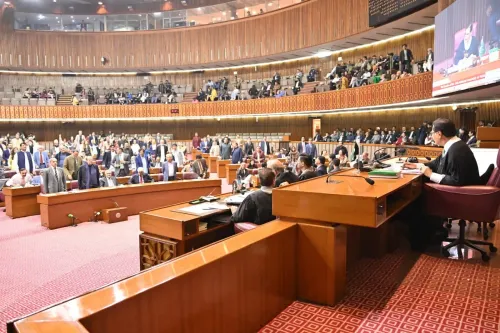
Pakistan People's Party (PPP) Chairman Bilawal Bhutto also confronted Naqvi directly, saying the Interior Minister 'rarely comes to the National Assembly' and should bring the debate to parliament rather than business forums.
PML-N's Silence and Contradictions
Within the ruling coalition, the response from the Pakistan Muslim League-N (PML-N) has been conspicuously divided. Prime Minister Shehbaz Sharif and Punjab Chief Minister Maryam Nawaz have remained silent — analysts suggest this is because any division of Punjab, including the long-pending demand to carve out South Punjab as a separate province, would directly erode the Sharif family's political dominance.
Yet Defence Minister Khwaja Asif, a senior PML-N figure regarded as close to the military establishment, has begun advocating for new provinces. Asif, who earlier criticised Naqvi for raising the issue outside parliament, has since said, 'If there is a proposal for 12 provinces, then make 12 provinces, but do not create them on the basis of language, ethnicity, or political interests.'
Critics have flagged an internal contradiction in Asif's position: he decries the concentration of authority in provincial capitals while serving in a cabinet that passed the 26th and 27th Constitutional Amendments — legislation that, critics argue, dramatically centralised power and further empowered the military, with minimal parliamentary debate.
The Military Dimension
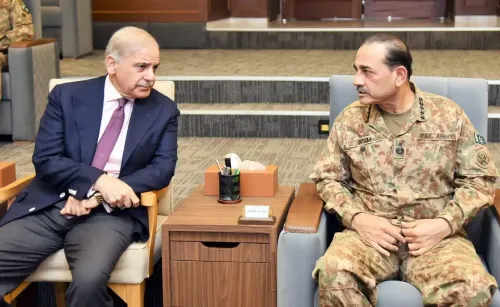
For several analysts, the province-creation push is less about administrative efficiency and more about reconfiguring political power in ways that suit Army Chief General Asim Munir and the broader establishment. As one commentator has argued, the goal may be to build 'some reloaded form of a unitary state from the 1960s' — a structure in which civilian actors can enter public life only through mechanisms that ultimately serve military interests.
This comes amid a broader tension: the Shehbaz government, though closely aligned with the army, has reportedly carved out some space for civilian credit-taking. If economic stabilisation or diplomatic achievements — such as any role in mediating US-led regional diplomacy — are attributed to the civilian dispensation, the military's exclusive hold on policy outcomes could be diluted. Analysts suggest the establishment is wary of that scenario.
Balochistan and the Ethnic Fault Lines
The proposed restructuring faces particularly complex challenges in Balochistan. Separating Pashtun-majority areas from Baloch-majority areas risks encoding ethnic divisions into administrative boundaries. Alternatively, divisions along geographic lines — such as a Makran Division, Central Balochistan, and Northern Balochistan — would still place mixed populations together, an outcome likely to be rejected by both Baloch and Pashtun nationalists.
The question of Pakistan-occupied Kashmir (PoK) adds another unresolved layer: Pakistan's ruling elite has yet to devise any mechanism for accommodating PoK within any potential restructuring, even as it insists the territory remains central to its position on the Kashmir issue.
For now, the debate remains confined to vague proposals, with no credible implementation framework in sight. Whether the notion of 12 new provinces materialises or is periodically floated as political leverage, the trajectory of Pakistan's governance debate will be shaped by institutional power — not public interest.
Point of View
Whose grievances are being instrumentalised rather than addressed. Unless the conversation shifts to genuine devolution of fiscal and administrative power — not just a multiplication of boundary lines — Pakistan's governance crisis will simply be replicated at a smaller scale.
NationPress
16 Nov 2026
Frequently Asked Questions
What is Pakistan's new provinces debate about?
The debate concerns a proposal, initiated by Interior Minister Mohsin Naqvi in September 2026, to create new administrative units — possibly up to 12 provinces — to replace or supplement Pakistan's existing four provinces. Naqvi argued the current system had 'collapsed' and could no longer deliver governance. The proposal has sparked fierce opposition from Sindh and the PPP, divisions within the ruling PML-N, and widespread concern that it is driven by military rather than public-interest considerations.
Why is Sindh opposed to the new provinces plan?
The Sindh Provincial Assembly passed a formal resolution rejecting any proposal that would divide the province or alter its territorial limits. Chief Minister Murad Ali Shah personally warned that Sindh would not be divided 'as long as even one member among us is alive.' The opposition reflects deep concerns that division could weaken PPP's political base and stoke ethnic tensions within the province.
What role is Pakistan's military playing in the provinces debate?
Interior Minister Mohsin Naqvi is widely regarded as a figure backed by the military establishment, and Defence Minister Khwaja Asif — who also openly supported a 'hybrid model' of military involvement in governance — has begun advocating for up to 12 provinces. Analysts argue the restructuring push is designed to create a political architecture that serves military interests and limits genuine civilian autonomy.
Why has Prime Minister Shehbaz Sharif stayed silent on the issue?
PM Shehbaz Sharif and Punjab CM Maryam Nawaz have both avoided commenting on the new-provinces proposal, reportedly because any division of Punjab — including the long-standing demand for a separate South Punjab — would dilute the Sharif family's dominant political position in Pakistan's most populous province.
What are the risks of creating new provinces in Balochistan?
Balochistan presents some of the most complex challenges. Dividing it along ethnic lines — separating Pashtun-majority from Baloch-majority areas — risks formalising ethnic fault lines. Dividing it geographically, such as into a Makran Division, Central Balochistan, and Northern Balochistan, would still leave mixed populations together, a configuration likely unacceptable to both Baloch and Pashtun nationalists. No credible framework for resolving these tensions has been proposed.