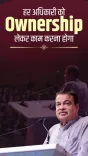
Shekhawat at SCO Civilizational Dialogue Forum Inaugural at Purana Qila
Synopsis
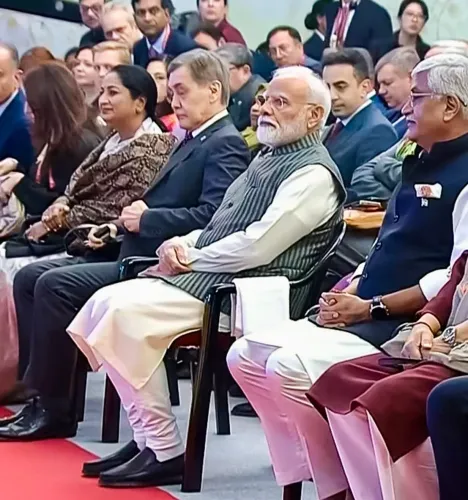
Union Culture and Tourism Minister Gajendra Singh Shekhawat joined PM Modi at Purana Qila, New Delhi, for the inaugural SCO Civilizational Dialogue Forum on 20 November 2026, a platform to deepen cultural ties among SCO member states.
Key Takeaways
The first SCO Civilizational Dialogue Forum was inaugurated at Purana Qila, New Delhi on 20 November 2026 .
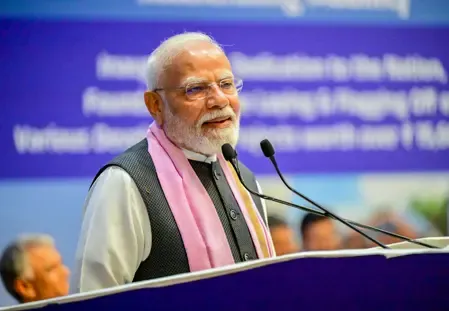
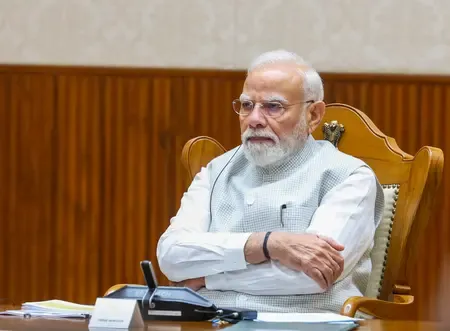
Prime Minister Narendra Modi presided over the ceremony; the forum was launched on his initiative.
Union Culture and Tourism Minister Gajendra Singh Shekhawat and Delhi Chief Minister Rekha Gupta attended the inauguration.
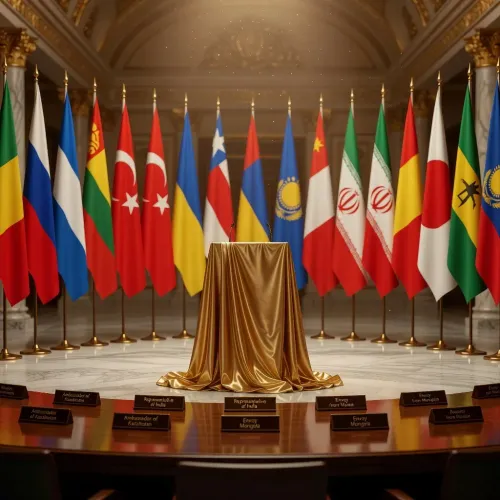
The forum aims to foster shared cultural heritage, people-to-people ties, and regional cooperation among SCO member states .
India has been a full SCO member since 2017 and has consistently pushed a cultural diplomacy track within the bloc.
The venue choice — Purana Qila , a 16th-century fort — underscores India's strategy of using historic monuments as soft-power stages.
India's ancient philosophy of Vasudhaiva Kutumbakam — 'the world is one family' — found a new multilateral stage on Friday, 20 November 2026, when the first-ever SCO Civilizational Dialogue Forum was inaugurated at Purana Qila, New Delhi, with Prime Minister Narendra Modi presiding over the ceremony. Union Culture and Tourism Minister Gajendra Singh Shekhawat attended the landmark opening, sharing the dais with Delhi Chief Minister Rekha Gupta as the two-millennia-old fort became a symbol of exactly the civilizational continuity the forum seeks to celebrate.
A 16th-century fort hosts a 21st-century idea
Purana Qila — the 'Old Fort' built in the 16th century, believed by archaeologists to stand on the site of ancient Indraprastha — was no accidental choice of venue. India has consistently used its historic monuments as diplomatic stages, letting stone-and-mortar antiquity speak before a word is said. The selection of Purana Qila for the SCO forum extends that soft-power grammar to a Eurasian multilateral audience.
Minister Shekhawat noted in his post that the forum, launched on Prime Minister Modi's initiative, will serve as a platform for 'jansaamany ke beech aapsi judav, paraspara vishwas aur kshetriya sahayog' — people-to-people connection, mutual trust, and regional cooperation — among SCO member states.
India's SCO cultural track: a decade in the making
India became a full member of the Shanghai Cooperation Organisation in 2017, joining an Eurasian bloc whose founding 2001 mandate covered security and economic cooperation but left ample room for cultural engagement. Over the nine years since accession, New Delhi has steadily broadened its SCO participation beyond the security track, pushing for people-to-people and heritage dimensions that align with its civilizational foreign-policy narrative.
Prime Minister Modi has invoked Vasudhaiva Kutumbakam — the Sanskrit phrase from the Maha Upanishad — at the UN General Assembly and multiple G20 gatherings, framing India not merely as a rising economic power but as a civilizational anchor for global dialogue. The SCO Civilizational Dialogue Forum is the institutional expression of that idea inside a Eurasian multilateral framework.
What the forum is designed to do
According to Shekhawat, the forum's mandate spans four interlocking goals: understanding the shared cultural heritage of SCO member states, deepening knowledge of historical ties and traditions, fostering people-to-people bonds, and building regional cooperation on a foundation of mutual trust. That framing places culture not as an ornamental add-on to the SCO agenda but as a connective tissue binding security and economic tracks to something more durable.
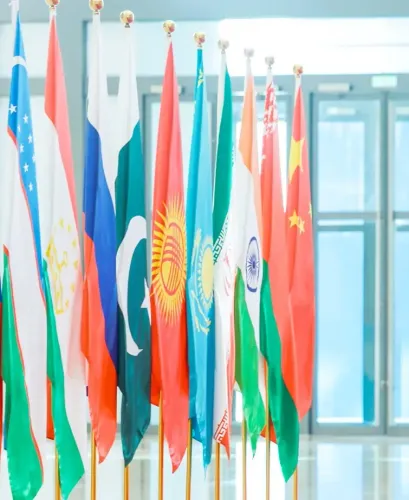
The SCO currently includes India, China, Russia, Pakistan, Kazakhstan, Kyrgyzstan, Tajikistan, Uzbekistan, Iran, and Belarus — a bloc that spans radically different civilizational traditions. A dialogue forum that holds those diversities in respectful conversation is both an ambitious project and, if it delivers, a rare one.
Soft power, hard geography
India's choice to anchor this forum in a civilizational narrative carries strategic weight. At a moment when the SCO's security dimension is complicated by India-Pakistan tensions and India-China border friction, a cultural track offers a lane where New Delhi can lead without confrontation. It also lets India project the Ministry of Culture's institutional capacity — alongside @MinOfCultureGoI, @tourismgoi, and the Sangeet Natak Akademi — to an international audience that rarely sees those bodies in a multilateral light.
The kicker, as any diplomat in the room would know: forums are only as consequential as the agreements they produce. The SCO Civilizational Dialogue Forum's first test will be whether its inaugural energy translates into concrete cultural-exchange pacts, joint heritage initiatives, and follow-up meetings that keep the conversation alive past the ceremony.
Point of View
New Delhi elevates soft power to a strategic instrument. For Minister Shekhawat's ministry, an international multilateral stage is a rare opportunity to demonstrate institutional heft beyond domestic tourism campaigns. The forum's durability, however, will depend on whether the Modi government sustains diplomatic momentum or allows it to remain a one-time ceremonial gesture.
NationPress
20 Nov 2026
Frequently Asked Questions
What is the SCO Civilizational Dialogue Forum?
The SCO Civilizational Dialogue Forum is a new platform within the Shanghai Cooperation Organisation, launched on Prime Minister Modi's initiative, to promote cultural exchange, shared heritage, people-to-people ties, and regional cooperation among SCO member states. Its first edition was inaugurated at Purana Qila, New Delhi, on 20 November 2026.
Where was the first SCO Civilizational Dialogue Forum held?
The inaugural forum was held at Purana Qila — the historic 16th-century fort in New Delhi — chosen to reflect India's civilizational continuity and its practice of using heritage monuments as diplomatic venues.
Who attended the SCO Civilizational Dialogue Forum inauguration?
Prime Minister Narendra Modi presided over the inauguration. Union Culture and Tourism Minister Gajendra Singh Shekhawat and Delhi Chief Minister Rekha Gupta were among the dignitaries present.
When did India join the SCO?
India became a full member of the Shanghai Cooperation Organisation in 2017, since when it has broadened its engagement to include cultural and people-to-people dimensions alongside traditional security and economic tracks.
What does Vasudhaiva Kutumbakam mean and why is it significant in this context?
Vasudhaiva Kutumbakam is a Sanskrit phrase meaning 'the world is one family,' drawn from the ancient Maha Upanishad. Prime Minister Modi has invoked it at international forums including the UN General Assembly; it now anchors India's civilizational framing within the SCO Civilizational Dialogue Forum.