PM Modi Inaugurates SCO Civilisational Dialogue Forum
Synopsis
Prime Minister Modi inaugurated the first SCO Civilisational Dialogue Forum on 20 November 2026, institutionalising India's push to broaden the Eurasian bloc's agenda into heritage and people-to-people ties. Culture Minister Shekhawat broadcast the live event on X.
Key Takeaways
PM Narendra Modi inaugurated the first-ever SCO Civilisational Dialogue Forum on 20 November 2026 .
The forum marks a formal expansion of the Shanghai Cooperation Organisation's agenda from security and economics into cultural and heritage cooperation.
India joined the SCO as a full member at the 2017 Astana Summit and has led efforts to widen its scope.
Union Culture and Tourism Minister Gajendra Singh Shekhawat flagged the inauguration live on X, underscoring his ministry's role in India's SCO cultural outreach.
India hosted the SCO Summit in 2023 , placing cultural connectivity alongside the traditional security agenda for the first time.
Outcomes to watch include joint heritage programmes, tourism corridors, and cultural exchange agreements among SCO member states.
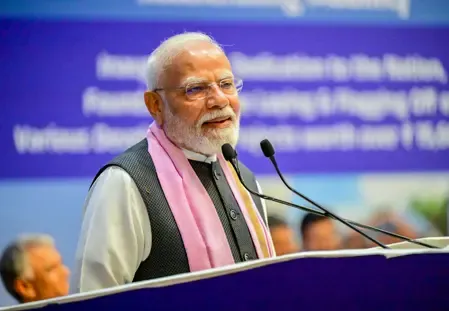
India stepped into new diplomatic territory on Friday, 20 November 2026, as Prime Minister Narendra Modi inaugurated the first-ever Shanghai Cooperation Organisation (SCO) Civilisational Dialogue Forum — a landmark moment that extends the bloc's agenda well beyond security and trade into the deeper architecture of shared heritage. Union Culture and Tourism Minister Gajendra Singh Shekhawat flagged the live event on X, drawing attention to the historic inauguration.
A New Forum at the Heart of the SCO
The SCO, founded in 2001, has long been anchored in security cooperation and economic integration among its Eurasian member states — a bloc that today encompasses roughly half the world's population. India became a full member at the Astana Summit in 2017, and has since worked steadily to widen the alliance's aperture. The Civilisational Dialogue Forum is the most explicit expression yet of that push: a dedicated multilateral space for member nations to engage on shared histories, heritage corridors, and people-to-people ties.
The forum's very name carries strategic weight. 'Civilisational dialogue' frames India's SCO engagement not as a junior partner in a security arrangement, but as a civilisational anchor — drawing on millennia of connections with Central Asia along ancient Silk Road routes. For New Delhi, this is soft power with a structural home.
India's Cultural Diplomacy inside the SCO
India's 2023 SCO Summit chairmanship had already signalled this direction, with connectivity and cultural linkages placed alongside the traditional security agenda. The Civilisational Dialogue Forum now institutionalises that impulse. Minister Shekhawat, as the custodian of India's culture and tourism brief, sits at the centre of this effort — his ministry the natural engine for the heritage exchanges, joint archaeological initiatives, and diaspora linkages that such a forum could unlock across member states including China, Russia, Pakistan, Kazakhstan, Uzbekistan, Kyrgyzstan, Tajikistan, and Iran.
Prime Minister Modi has consistently woven cultural diplomacy into India's multilateral playbook — from promoting International Yoga Day at the United Nations to championing India's presidency of the G20 under the 'One Earth, One Family, One Future' theme. The SCO Civilisational Dialogue Forum is, in many ways, the next chapter of that strategy: binding neighbours through the past to build trust for the future.
What the Forum Could Unlock
Analysts watching India's SCO trajectory will now focus on what concrete outcomes emerge from this inaugural session — joint cultural exchange programmes, heritage site listings, academic tie-ups between member-state universities, or shared digital archives of civilisational artefacts. The forum's first meeting sets the template. If it produces binding commitments rather than declaratory communiqués, it could become one of the SCO's most consequential non-security pillars.
India has skin in this game beyond symbolism. Tourism corridors linking Indian heritage sites with Buddhist circuits in Central Asia, or the ancient connections between Rajasthan and the Silk Road, are not merely cultural talking points — they are economic opportunities waiting for a multilateral framework to activate them.
The world's largest multilateral civilisational conversation has just been called to order. The question is what it builds.
Point of View
New Delhi subtly repositions itself as a bridge within a bloc that includes strategic rivals China and Pakistan. For the Modi government, this also feeds a domestic narrative — that India's ancient civilisational heritage is a living diplomatic instrument. The long-term test is whether the forum produces durable exchange architecture or remains a prestige event on the SCO calendar.
NationPress
20 Nov 2026
Frequently Asked Questions
What is the SCO Civilisational Dialogue Forum?
The SCO Civilisational Dialogue Forum is a newly inaugurated multilateral platform within the Shanghai Cooperation Organisation dedicated to cultural, heritage, and people-to-people exchanges among member states. PM Modi inaugurated its first edition on 20 November 2026 .
When did India join the SCO?
India became a full member of the Shanghai Cooperation Organisation at the Astana Summit in 2017 , joining the Eurasian security and economic alliance as one of its largest members by population and GDP.
What is Gajendra Singh Shekhawat's role in the SCO forum?
Gajendra Singh Shekhawat is India's Union Minister of Culture and Tourism and is responsible for the country's cultural diplomacy, making his ministry the primary driver of India's engagement with the SCO's new civilisational dialogue agenda.
What was India's SCO chairmanship theme in 2023?
During its 2023 SCO Summit chairmanship , India emphasised connectivity and cultural linkages alongside the bloc's traditional security agenda, laying the groundwork for a dedicated civilisational dialogue forum.
What could come out of the SCO Civilisational Dialogue Forum?
Potential outcomes include joint cultural exchange programmes, shared heritage site initiatives, tourism corridor agreements between member states, academic partnerships, and digital archives linking the civilisational histories of SCO nations.