Gadkari warns officials, engineers, contractors on public assets

Synopsis
Nitin Gadkari declared public property a 'sacred trust' and issued a zero-tolerance warning against negligence or misconduct by officials, engineers, and contractors responsible for building and maintaining India's road infrastructure.
Key Takeaways
Nitin Gadkari posted a stern warning on 20 November 2026 framing public assets as an amanat — a trust held on the people's behalf, not personal property.
He directed every official, engineer, and contractor involved in public works to work with 'full responsibility and ownership.' The minister stated clearly that any 'irregularity or negligence' will not be tolerated and that 'strict action' will follow.
The warning is consistent with the accountability framework built into the Bharatmala Pariyojana , launched in 2015 , which introduced quality monitoring and penalty clauses for highway contracts.
The Ministry of Road Transport and Highways oversees a national highway network exceeding 1.46 lakh kilometres , making field-level accountability a persistent challenge.
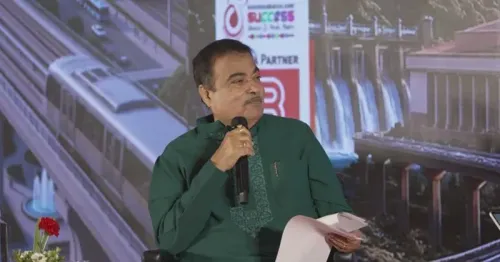
Public infrastructure is a trust, not a resource to be mishandled — and the people who build and maintain it will be held accountable. Union Road Transport and Highways Minister Nitin Gadkari issued a sharp warning on Friday, 20 November 2026, making clear that negligence or misconduct in public works will draw strict action.
Posting on X, Gadkari wrote in Hindi: 'जनता की संपत्ति हमारी निजी संपत्ति नहीं, बल्कि एक अमानत है।' — 'Public property is not our personal asset; it is a trust held on behalf of the people. All of us are merely its trustees.' He added that every official, engineer and contractor involved in the creation and maintenance of public assets must work with 'full responsibility and ownership', and that 'any irregularity or negligence with public property will not be tolerated — strict action will be taken against those responsible.'
The 'trusteeship' standard Gadkari is invoking
The framing is deliberate. By casting public property as an amanat — an Urdu-Hindi word for a sacred deposit or trust — Gadkari raises the moral bar beyond contractual compliance. Officials are not employees executing a job; they are fiduciaries. That framing directly addresses the most common failure mode in Indian infrastructure: projects delivered on paper but not in reality, where corners get cut and quality leaks away long before an audit catches up.
The warning lands across a wide chain of responsibility — from NHAI engineers supervising site work, to private contractors billing the government, to the ministry officials who sign off on completion certificates.
Bharatmala's accountability architecture — and its limits
The Bharatmala Pariyojana, launched in 2015, introduced structured quality-monitoring protocols and contractual penalty clauses specifically to address substandard highway execution. The programme represented a systematic attempt to price in accountability from the design stage rather than chase it after the fact.
Yet periodic warnings from the ministry — including this one — signal that the gap between policy architecture and field-level discipline persists. Technology-based monitoring, third-party quality audits, and stiffer penalty clauses have all been part of the toolkit. The minister's public statement amplifies that toolkit with political weight: the message is that the tolerance for drift has narrowed.
What officials and contractors should expect next
Gadkari's posts of this character have historically preceded ministry-level circulars, internal reviews, or project-site audits. Whether this November warning is triggered by a specific project failure or is a broader governance signal ahead of annual performance reviews is not confirmed. But the direction is unambiguous: quality and ownership are non-negotiable, and the minister has flagged 'strict action' — not a review committee.
India's national highway network now spans over 1.46 lakh kilometres, and the sheer scale of the programme means accountability cannot be managed by oversight alone — it has to be internalised. That, in essence, is the minister's demand.
When a minister tells the entire construction ecosystem that public assets are a sacred trust and that they are merely its stewards, the next question is always the same: who is watching to make sure the message lands on the ground, not just on a timeline?
Point of View
Making negligence a breach of public faith rather than merely a procedural lapse. With Bharatmala's execution phase generating both headline successes and persistent quality complaints, this kind of zero-tolerance signalling serves a dual purpose — discipline for insiders, credibility signalling for the public. The real test, as always, is whether ministry-level warnings translate into verifiable disciplinary outcomes rather than remaining rhetorical checkpoints.
NationPress
20 Nov 2026
Frequently Asked Questions
What did Nitin Gadkari say about public property in his November 2026 post?
Gadkari said public property is not anyone's personal asset but an amanat — a sacred trust — and that all officials, engineers, and contractors are merely its trustees, warning that negligence or irregularities will not be tolerated and will attract strict action.
Who does Gadkari's warning apply to?
The warning is directed at every officer, engineer, and contractor involved in the construction and maintenance of public infrastructure, including NHAI engineers and private highway contractors.
What is the Bharatmala Pariyojana and how does it relate to accountability?
Bharatmala Pariyojana, launched in 2015, is India's flagship national highway construction programme that introduced structured quality-monitoring protocols and contractual penalty clauses for highway contractors to enforce execution standards.
What action can contractors and officials face for substandard work on highways?
Gadkari has warned of 'strict action' against those responsible for any irregularity or negligence — this can include contractual penalties, blacklisting, and disciplinary proceedings under ministry and NHAI frameworks.
Why does the government keep issuing warnings about highway quality?
India's national highway network exceeds 1.46 lakh kilometres, and at that scale the gap between policy standards and field-level execution persists. Periodic high-profile warnings from the minister are used to reinforce accountability norms and signal political will to the entire project ecosystem.