Stalin backs Prof Kalaiarasan, slams pre-dawn police summons
Synopsis
DMK president M. K. Stalin publicly backed Professor Kalaiarasan on 31 October 2026 after the academic was summoned by police over a fake-identity comment, calling pre-dawn police action undemocratic and demanding accountability for both the fake-account conspirators and the officials who overstepped.
Key Takeaways
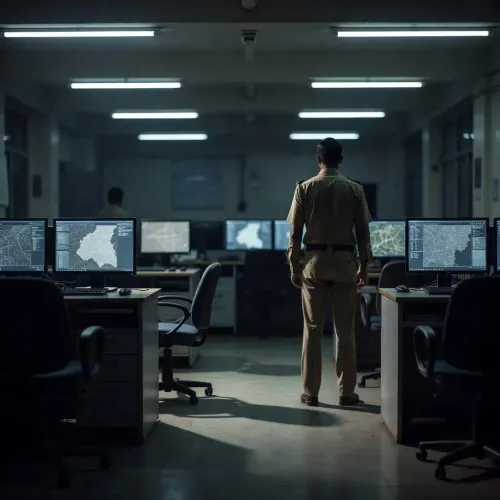
Professor Kalaiarasan was summoned by Tamil Nadu Police in the early hours over a comment posted from a fake online identity.
Stalin publicly congratulated the professor for speaking out against the summons on 31 October 2026 .
Stalin stated that criticism must be answered with ideas, not police action, invoking the phrase 'ஜனநாயகத்தின் மாண்பு' — the dignity of democracy.
He demanded the government identify the 'virtual mischief-makers' behind the fake identity and take action against officials who overstepped their authority.
The incident echoes a recurring pattern in Tamil Nadu politics around police summons linked to online commentary.
No official government response had been issued at the time of Stalin's post.
A pre-dawn police summons over a comment posted under a fake social-media identity has ignited a sharp political flashpoint in Tamil Nadu — and DMK president M. K. Stalin has come out swinging in defence of the academic at the centre of it. On Saturday, 31 October 2026, Stalin posted in Tamil on X, saluting Professor Kalaiarasan for speaking out against what he called a grave injustice, and demanding accountability from the state.
Translating his own charge, Stalin wrote: 'கேள்விகள் இல்லாத சமுதாயத்தை உருவாக்குவது நல்லாட்சியல்ல' — 'Creating a society without questions is not good governance; building an administration that answers questions is.' He added that criticism must be met with ideas, not police action — and that correcting one's own mistakes is the true dignity of democracy.
A fake ID, an early morning knock, a professor's arrest
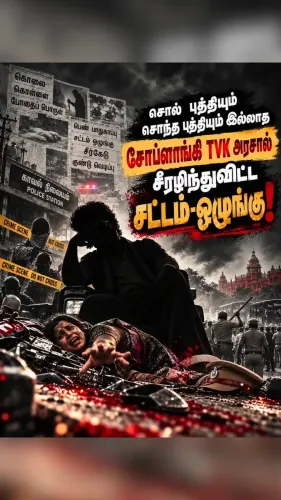
According to Stalin's post, police used a comment posted from a fake online identity as the stated pretext to summon Professor Kalaiarasan for questioning in the early hours of the morning. The professor subsequently went public about the experience, framing it as an injustice. Stalin offered him public congratulations for raising his voice, describing the action as 'speaking up for rights against the wrong done to him.'
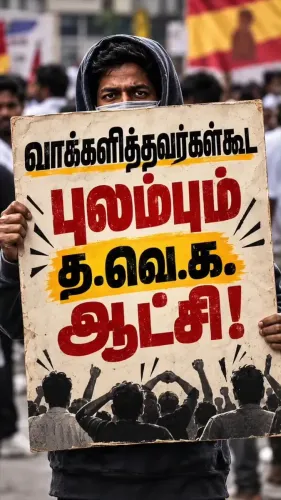
The incident fits a recurring pattern in Tamil Nadu's political landscape: disputes over where legitimate policing of fake accounts ends and where the chilling effect on critics and academics begins. Successive governments — including those led by the DMK's rivals — have faced similar accusations of deploying law enforcement selectively against online commentary that proves politically inconvenient.
Stalin's twin demand: catch the conspirators, punish the officials
Stalin's statement carries a double edge. He called on the government — notably, not naming it directly — to both identify the 'virtual mischief-makers' who orchestrated the scheme and to take action against the officials who overstepped their authority. The Tamil phrase he used, 'அத்துமீறிய அதிகாரிகள்' ('officials who transgressed their limits'), signals that his criticism is aimed not just at the political class but at the enforcement machinery itself.
The Dravidian movement's intellectual tradition — stretching from C. N. Annadurai to M. Karunanidhi — has long cast itself as the defender of rational inquiry and free expression against authoritarian overreach. Stalin's framing draws directly on that lineage, invoking democratic dignity ('ஜனநாயகத்தின் மாண்பு') as the standard against which this pre-dawn summons must be judged.
What the government does next
The political pressure now lands squarely on Tamil Nadu's administration to respond in two directions simultaneously: pursue the fake-account operators who triggered the chain of events, and examine whether the officials who executed the early-morning summons acted within lawful bounds. Academic and civil-society voices are likely to amplify the call. The government's silence — or action — will define whether this episode becomes a benchmark or a footnote.
Point of View
He neatly sidesteps any charge of blanket anti-police sentiment while putting the government on the defensive on two fronts. The framing — 'good governance answers questions, it does not silence them' — is calibrated to resonate far beyond Tamil Nadu, signalling that democratic accountability will be a central DMK campaign theme. How the state responds will test whether the episode is contained quickly or becomes a sustained civil-liberties flashpoint.
NationPress
31 Oct 2026
Frequently Asked Questions
Who is Professor Kalaiarasan and why was he summoned by police?
Professor Kalaiarasan is an academic who was called in for police questioning, reportedly because of a comment made under a fake social-media identity. M. K. Stalin has described the summons as unjust and an overreach by officials.
What did M. K. Stalin say about the Professor Kalaiarasan case?
Stalin praised Kalaiarasan for speaking out, called the pre-dawn police summons undemocratic, and demanded that the government both expose the fake-account conspirators and take action against the officials who overstepped their authority.
Is a pre-dawn police summons over a social-media comment legal in India?
Indian law requires that summons be issued in accordance with due process; pre-dawn questioning has historically attracted scrutiny from courts and civil-liberties bodies. Stalin's post implicitly raises this procedural concern without making a specific legal claim.
What is DMK's historical position on police action against dissent?
The DMK, rooted in the Dravidian movement, has consistently positioned itself as a defender of free expression. Leaders from C. N. Annadurai to M. Karunanidhi criticised police action against critics as contrary to democratic norms.
What action has the Tamil Nadu government taken following Stalin's statement?
As of Stalin's post on 31 October 2026, no official government response had been recorded. Stalin's statement is directed at the state administration, calling on it to act against both the fake-account operators and the officials involved.