Stalin calls TVK govt a 'wake-up call' ahead of DMK women's protest
Synopsis
DMK president M. K. Stalin has announced a DMK Women's Wing protest for 31 October 2026, accusing the ruling TVK government of destroying law and order and branding it a spineless administration that needs a 'wake-up call' from the streets.
Key Takeaways
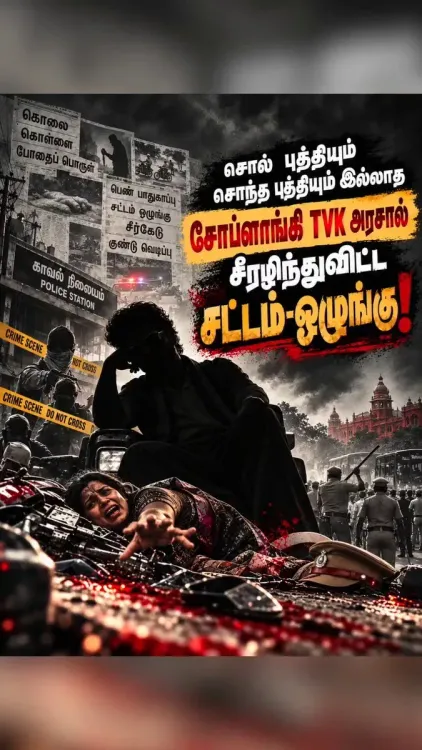
Stalin posted a sharp Tamil-language attack on the TVK government on 30 October 2026 , tagging it #TVKfails .
He accused the administration of having 'neither its own sense nor the ability to take advice' and ruining law and order.
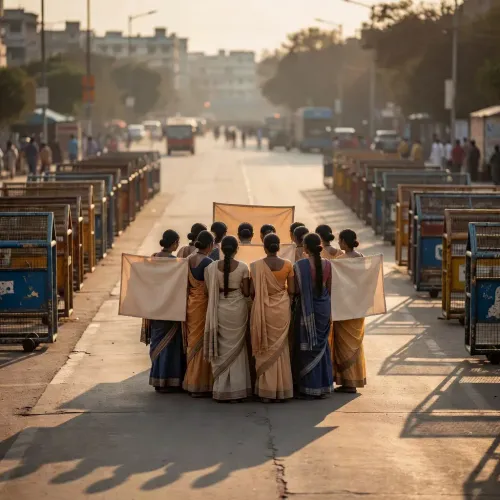
The DMK Women's Wing is scheduled to hold a protest on 31 October 2026 as a declared 'wake-up call' for the ruling government.
Stalin personally called out the Chief Minister for 'sleeping at the wheel' of governance.
The TVK government had not issued a public response at the time of publication.
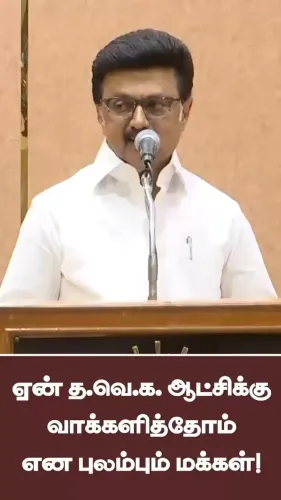
With a hashtag that declares #TVKfails and language that pulls no punches, DMK president M. K. Stalin launched a pointed broadside against the ruling TVK government in Tamil Nadu on Friday, 30 October 2026, announcing that the party's women's wing will take to the streets the very next day to signal that the administration's grip on law and order has slipped dangerously.
Writing in Tamil, Stalin described the TVK government as a soplangki (spineless, drifting) administration that has 'ruined law and order with neither its own sense nor the ability to take advice.' The protest by the DMK Women's Wing, he declared, would serve as a 'wake-up call for a government running amok' — and a lesson for those who 'do not know how to govern.'
The charge: a law-and-order indictment
Stalin's post frames the demonstration not as a routine political rally but as a governance accountability exercise. The Tamil phrase he deploys — thariketu oadum ('running without restraint, like a loom with a broken shuttle') — is a culturally loaded idiom Tamil audiences read as a verdict on administrative chaos, not mere partisan sniping. His reference to the Chief Minister 'sleeping at the wheel' sharpens the personal accountability angle.
DMK Women's Wing as a political pressure tool
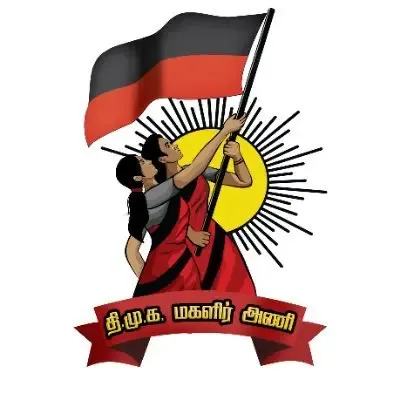
The DMK Women's Wing has historically been one of the party's most visible street-mobilisation units, routinely deployed when leadership wants to dramatise a political point without making it appear purely factional. By putting women at the front of this protest, Stalin signals breadth of social concern — the implicit message being that the administration's failures are hurting ordinary households, not just political rivals.
Tamil Nadu's Dravidian political tradition has long treated organised street protest as legitimate democratic theatre. Both the DMK and its rivals have used mass demonstrations as pressure valves and public-opinion gauges for decades. Stalin's move fits squarely into that playbook — but the combative phrasing and the sharp hashtag suggest the DMK wants this moment to travel well beyond state borders and into national political conversation.
What the TVK government's next move will reveal
The TVK government had not issued a formal counter-statement as of publication. Whether it dismisses the protest as opposition theatre or offers a substantive defence of its law-and-order record will determine how much oxygen this exchange consumes in the coming news cycle. A non-response risks letting Stalin's framing go unchallenged; a sharp counter risks elevating the protest further.
The DMK, in opposition at the state level, is betting that visible, organised discontent on the streets can do what assembly debates alone cannot — force the ruling dispensation to answer questions it would rather defer.
Point of View
Then make the ruling party's silence or response equally costly. By deploying the Women's Wing rather than a general party rally, the DMK frames the protest around social impact, making it harder for the TVK government to dismiss it as factional rivalry. The hashtag #TVKfails signals a deliberate attempt to build a persistent, searchable counter-narrative. Whether the TVK administration engages substantively or stonewalls will be the real indicator of its political confidence going into what are likely to be consequential months ahead.
NationPress
30 Oct 2026
Frequently Asked Questions
Why is DMK protesting against the TVK government?
DMK president M. K. Stalin has accused the TVK government of failing to maintain law and order and running a spineless administration. The party's Women's Wing protest on 31 October 2026 is intended as a public pressure campaign to highlight these governance failures.
What is the DMK Women's Wing protest about on 31 October 2026?
The DMK Women's Wing protest, announced by Stalin on 30 October 2026, targets the TVK state government over what the party calls a breakdown in law and order. Stalin described it as a 'wake-up call' for the ruling administration.
What does the hashtag TVKfails mean?
#TVKfails is the hashtag used by M. K. Stalin in his 30 October 2026 post to summarise the DMK's charge that the TVK government has comprehensively failed on governance and law and order in Tamil Nadu.
What did Stalin say about the Tamil Nadu Chief Minister?
Stalin accused the Chief Minister of 'sleeping at the wheel,' implying the administration is inattentive and directionless. He said the DMK's protest would attempt to 'wake up' both the Chief Minister and the broader governance machinery.
Is M. K. Stalin currently the Chief Minister of Tamil Nadu?
As of October 2026, M. K. Stalin is the president of the DMK and is in opposition at the state level in Tamil Nadu, where the TVK party holds power.