CM Sai: Bastar Walks Peace Path With Health, Education Push
Synopsis
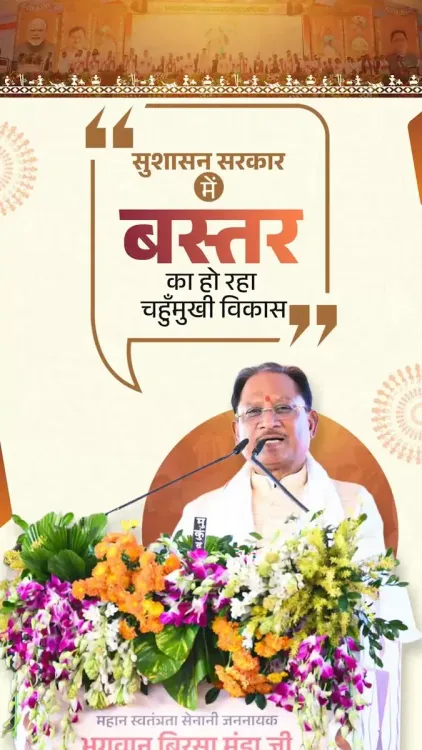
On Janjatiya Gaurav Diwas, CM Vishnu Dev Sai declared Bastar free from Naxalism and highlighted three development pillars — Education City, a 34-lakh-strong health mission, and a new bus connectivity scheme — as proof of the region's transformation.
Key Takeaways
CM Vishnu Dev Sai addressed the Janjatiya Gaurav Diwas celebrations at Dashara Maidan, Dharamjaygarh, Raigarh on 15 November 2026 .
He declared Bastar is now moving on the path of 'peace and development', free from Naxalism.
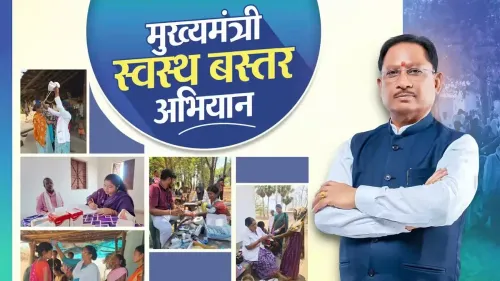
The Mukhyamantri Swastha Bastar Abhiyan has reportedly screened more than 34 lakh (3.4 million) people for health conditions.
An Education City initiative is being cited as expanding schooling access for children in the tribal region.
The Mukhyamantri Bus Seva Yojana is extending public bus connectivity to routes previously without any transport.
Janjatiya Gaurav Diwas is observed annually on 15 November , the birth anniversary of tribal icon Birsa Munda , institutionalised nationally in 2021 .
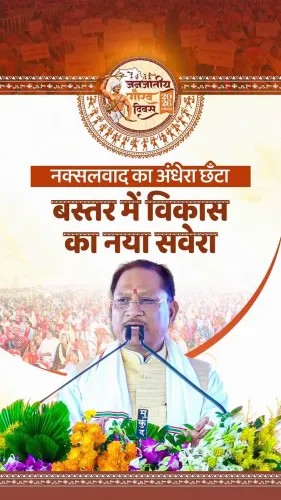
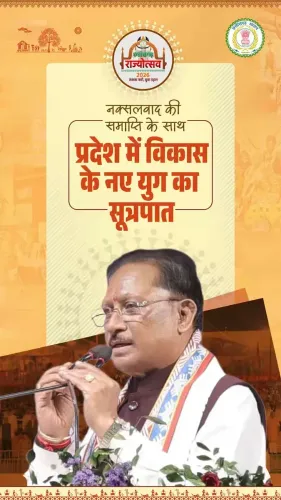
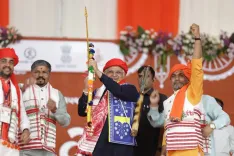
A region once synonymous with Naxal ambushes and enforced isolation is now being spoken of in a starkly different register. On Sunday, 15 November 2026 — Janjatiya Gaurav Diwas — Chief Minister Vishnu Dev Sai stood at Dashara Maidan, Dharamjaygarh, Raigarh and declared that Bastar is breaking free from Naxalism and marching toward peace and development.
What CM Sai Said at Dharamjaygarh
Speaking at the Janjatiya Gaurav Diwas celebrations, CM Sai outlined a cluster of government initiatives reshaping life in the tribal heartland. The statement — issued by the Chief Minister's Office of Chhattisgarh — declared: 'aaj Bastar Naxalvad se mukt hokar shanti aur vikas ki raah par aage badh raha hai' ('today Bastar, freed from Naxalism, is moving forward on the path of peace and development').
Three flagship programmes were foregrounded. First, an Education City initiative aimed at expanding quality schooling access for children in the region. Second, the Mukhyamantri Swastha Bastar Abhiyan, under which the government claims more than 34 lakh (3.4 million) people have undergone health check-ups. Third, the Mukhyamantri Bus Seva Yojana, designed to extend bus connectivity to routes that previously had no public transport at all.
Janjatiya Gaurav Diwas and Why Bastar Is the Centrepiece
Janjatiya Gaurav Diwas falls on 15 November every year — the birth anniversary of tribal icon Birsa Munda — and was instituted by the central government in 2021 to honour tribal freedom fighters and celebrate indigenous culture. Chhattisgarh, carved out of Madhya Pradesh in 2000, carries one of India's largest tribal populations, concentrated heavily in its southern districts that form the Bastar division.
Bastar has been the epicentre of left-wing extremism for decades, its dense forests providing cover for Naxal operations and its road-less terrain leaving villages cut off from hospitals, schools and markets. The choice to anchor the state's Janjatiya Gaurav Diwas address in Raigarh — spotlighting Bastar's transformation — is a deliberate political and symbolic act: development as proof of peace.
Development as the Anti-Naxal Strategy
The governance playbook CM Sai described is not new, but its scale and sequencing matter. Successive Chhattisgarh administrations — across party lines — have combined security operations with welfare infrastructure in Naxal-affected zones, betting that roads, clinics and classrooms reduce the insurgency's recruitment pool faster than counter-operations alone. What is notable here is the specific pairing: a mass health screening touching 3.4 million residents across a region that lacked basic clinic access, and a bus service plugging connectivity gaps that isolated entire communities.
The Education City concept adds another layer — concentrating quality educational infrastructure to prevent the talent drain that has historically left tribal youth with limited options. Together, the three programmes signal a state government trying to make 'development dividend' tangible and measurable, not merely rhetorical.
What to Watch in Bastar Now
The government's own numbers — 34 lakh health screenings — will face scrutiny as independent assessments of scheme coverage emerge. The pace of Education City rollout and the actual reach of new bus routes into previously unreachable villages will be the real indicators of whether the transformation CM Sai described is structural or still aspirational. With Janjatiya Gaurav Diwas lending national attention to tribal governance, those accountability questions will only get louder.
Bastar's story is shifting. The question is whether the infrastructure of peace can outrun the memory of conflict — and whether the numbers on the government's ledger match what families in the forest villages actually feel.
Point of View
And a national BJP political narrative that frames security gains in Bastar as a governance achievement worth showcasing. The pairing of a mass health campaign number — 34 lakh screenings — with a connectivity scheme is a classic development-as-counter-insurgency argument, rooted in the long-standing national policy that combining security operations with welfare infrastructure is the only durable answer to left-wing extremism. What elevates this beyond routine ceremony is the specificity: named schemes, a concrete number, and a physical venue in a district that serves as a bridge between the insurgency-hit south and the more stable north. The schemes' actual coverage and sustainability will determine whether this marks a turning point or a milestone in an ongoing struggle.
NationPress
15 Nov 2026
Frequently Asked Questions
What is Janjatiya Gaurav Diwas and why is it celebrated on 15 November?
Janjatiya Gaurav Diwas is observed on 15 November every year to honour tribal freedom fighters and celebrate indigenous culture. The date marks the birth anniversary of tribal icon Birsa Munda . It was institutionalised by the central government in 2021 .
What is the Mukhyamantri Swastha Bastar Abhiyan?
The Mukhyamantri Swastha Bastar Abhiyan is a Chhattisgarh government health mission focused on the Bastar region. The state government claims more than 34 lakh (3.4 million) people have undergone health check-ups under this scheme.
What is the Mukhyamantri Bus Seva Yojana in Chhattisgarh?
The Mukhyamantri Bus Seva Yojana is a state scheme aimed at providing bus connectivity to routes in Chhattisgarh — particularly in tribal and remote areas like Bastar — that previously had no public transport services.
Is Bastar really free from Naxalism?
Chief Minister Vishnu Dev Sai declared on 15 November 2026 that Bastar is 'freed from Naxalism and moving on the path of peace and development.' Independent verification of Naxal incident data and scheme coverage will be the key measure of how complete or sustained this transformation is.
Who is Vishnu Dev Sai and when did he become Chief Minister of Chhattisgarh?
Vishnu Dev Sai is the Chief Minister of Chhattisgarh from the BJP , elected in December 2023 . His administration has placed a strong emphasis on tribal welfare and development initiatives in former Naxal-affected areas.