CM Dhami: Modi govt taking historic steps for tribal welfare
Synopsis
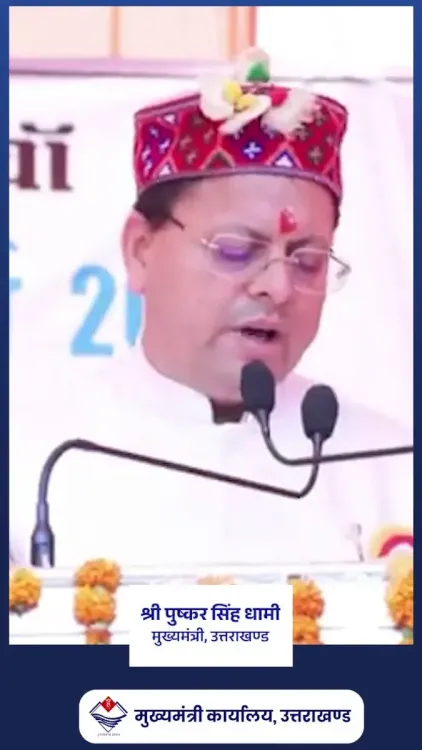
Chief Minister Pushkar Singh Dhami, in a statement shared by the Uttarakhand CMO on 9 June 2026, said PM Modi's government is taking historic first-ever steps for tribal uplift. The remark underscores Uttarakhand's alignment with central schemes like PM JANMAN and Vanbandhu Kalyan Yojana targeting Scheduled Tribe communities.
Key Takeaways
The Uttarakhand CMO posted a statement by CM Pushkar Singh Dhami on 9 June 2026 crediting PM Modi's government with historic tribal welfare measures.
CM Dhami described the steps as 'first-ever' in India for the uplift of tribal society, though no specific scheme was named in the post.
Uttarakhand has significant Scheduled Tribe populations in districts including Uttarkashi , Chamoli , and Pithoragarh .
Central schemes relevant to the state include the Vanbandhu Kalyan Yojana (2014) and the PM JANMAN mission (2021) for Particularly Vulnerable Tribal Groups.
The Tribal Sub-Plan budget allocation has grown consistently since 2014, with states encouraged to align plans with central guidelines.
Uttarakhand's Van Panchayat system is a key potential delivery channel for central tribal welfare programmes at the local level.
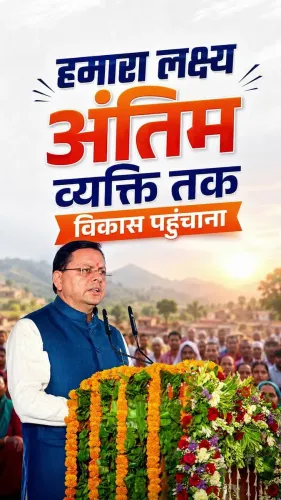
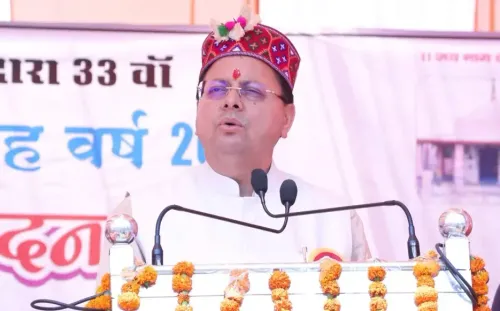
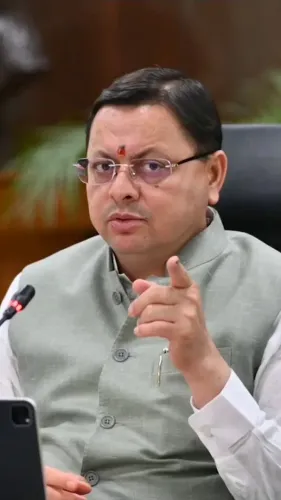
The Chief Minister's Office of Uttarakhand on Tuesday, 9 June 2026 shared a statement by Chief Minister Pushkar Singh Dhami crediting the central government with taking unprecedented steps for the uplift of tribal communities across India under Prime Minister Narendra Modi's leadership.
Context
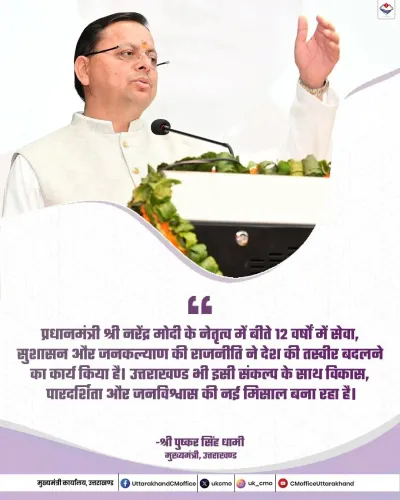
CM Dhami stated, 'Pradhan Mantri Shri Narendra Modi ji ke netritva mein desh mein pehli baar janjatiya samaj ke utthan ke liye aitihasik kadam uthaye ja rahe hain' — translating to: 'Under the leadership of Prime Minister Narendra Modi, historic steps are being taken for the first time in the country for the uplift of tribal society.' The statement was posted on the official CMO account alongside a video, though the specific policy or event being referenced was not named in the post.
Uttarakhand has a notable Scheduled Tribe population concentrated in Himalayan districts including Uttarkashi, Chamoli, and Pithoragarh. The state's tribal communities have historically faced challenges around land rights, forest access, and connectivity.
Policy Backdrop
The Ministry of Tribal Affairs, created in 1999, was significantly expanded after 2014 with the introduction of targeted schemes under the National Democratic Alliance government. The Vanbandhu Kalyan Yojana, launched in 2014, aimed at improving infrastructure, education, and livelihoods in tribal areas across states, including hill states like Uttarakhand.
The Forest Rights Act, 2006, and rules framed in 2012 provided legal recognition of land and forest rights to Scheduled Tribes, forming the foundation for subsequent central programmes. More recently, the PM JANMAN mission, introduced in 2021, brought a focused framework for Particularly Vulnerable Tribal Groups (PVTGs) covering housing, health, and connectivity.
Since 2014, successive Union Budgets have increased allocations under the Tribal Sub-Plan, and states have been encouraged to align annual plans with central guidelines — a pattern particularly relevant for forested and Himalayan regions such as Uttarakhand.
Stakeholders and Impact
The primary beneficiaries of tribal welfare programmes in Uttarakhand are Scheduled Tribe communities residing in remote hill districts, many of whom depend on forest resources and Van Panchayats for their livelihoods. Improved convergence between state and central schemes could mean better access to housing, health services, and economic opportunities for these groups.
Uttarakhand's own Van Panchayat system — a community-based forest governance model — has the potential to serve as a delivery channel for central tribal welfare initiatives, should the state choose to align its programmes more closely with missions such as PM JANMAN.
What's Next
Attention will now turn to the state-level rollout of any tribal welfare measures announced in the 2025-26 Union Budget and how Uttarakhand plans to integrate them with existing state programmes. CM Dhami's public endorsement of the Centre's tribal agenda signals that the state government is likely to position itself as an active implementation partner in the months ahead.
As Uttarakhand approaches its next cycle of state planning, the convergence of central missions with local Van Panchayat structures and PVTG outreach will be a key indicator of whether the 'historic steps' described by the Chief Minister translate into measurable outcomes for tribal communities on the ground.
Point of View
' Dhami is simultaneously building a political narrative ahead of any state-level announcements and signalling to tribal constituencies that the state is an active partner in their development. The absence of a specific scheme or number in the post, however, means the statement remains aspirational rather than accountability-linked. The real test will come in how Uttarakhand's budget allocations and Van Panchayat integration with PM JANMAN evolve over the 2025-26 cycle.
NationPress
23 Oct 2026
Frequently Asked Questions
What did CM Pushkar Singh Dhami say about tribal welfare?
CM Dhami stated that under PM Modi's leadership, historic and first-ever steps are being taken for the uplift of tribal society in India. The statement was posted by the official Uttarakhand CMO account on 9 June 2026.
Which tribal welfare schemes has the Modi government launched?
Key central schemes include the Vanbandhu Kalyan Yojana (2014) for tribal infrastructure and livelihoods, and the PM JANMAN mission (2021) targeting Particularly Vulnerable Tribal Groups with housing, health, and connectivity support.
Which districts in Uttarakhand have large tribal populations?
Scheduled Tribe communities in Uttarakhand are concentrated in Himalayan districts including Uttarkashi, Chamoli, and Pithoragarh, where forest-based livelihoods and Van Panchayats play an important role.
What is the PM JANMAN mission?
PM JANMAN, introduced in 2021, is a central mission specifically focused on Particularly Vulnerable Tribal Groups (PVTGs), providing targeted support in housing, healthcare, and connectivity in remote tribal areas.
What is the Van Panchayat system in Uttarakhand?
Van Panchayats are community-based forest governance bodies in Uttarakhand that manage local forest resources. They are considered a key delivery channel for central tribal welfare and forest rights programmes in the state.