CM Dhami Flags 128 Tribal Villages for Special Development Push
Synopsis
Uttarakhand Chief Minister Pushkar Singh Dhami has announced that 128 tribal villages have been identified for special, holistic development schemes, while sharply criticising Congress governments for treating tribal communities as a vote bank rather than a development priority.
Key Takeaways
128 tribal villages in Uttarakhand have been identified by the Dhami government for targeted, comprehensive development.
CM Dhami accused Congress governments of viewing tribal communities solely as a vote bank.
Uttarakhand is home to five Scheduled Tribes including the Bhotia , Jaunsari , and Tharu communities.
The state's tribal welfare approach aligns with the Centre's Vanbandhu Kalyan Yojana launched in 2014 .
Progress on the village-level schemes is expected to be scrutinised in upcoming state budget sessions and tribal welfare reviews.
Uttarakhand Chief Minister Pushkar Singh Dhami on Monday, June 8, 2026, accused Congress governments of treating tribal communities as a vote bank while asserting that his administration has identified 128 tribal villages across the state for targeted, comprehensive development under special schemes.
Posting in Hindi on X, CM Dhami stated: 'Kaangres ki sarkaron ne janjaatiya samaaj ko keval votebank ke roop mein dekha' ['Congress governments viewed tribal society only as a vote bank, whereas our government is working with resolve for their respect, protection and all-round development']. He added that 128 tribal villages in the state have been identified and special schemes are being run for their holistic development.
Context
Uttarakhand, carved out of Uttar Pradesh in 2000, is home to five Scheduled Tribes — including the Bhotia, Jaunsari, and Tharu communities — concentrated largely in the state's remote Himalayan border districts. These communities have historically faced gaps in infrastructure, livelihood support, and access to government services. CM Dhami's statement frames the village-identification exercise as a structural departure from what the BJP characterises as the previous Congress approach.
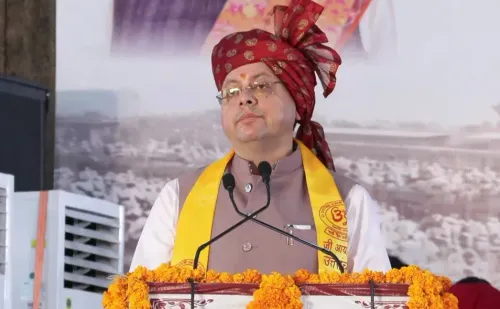
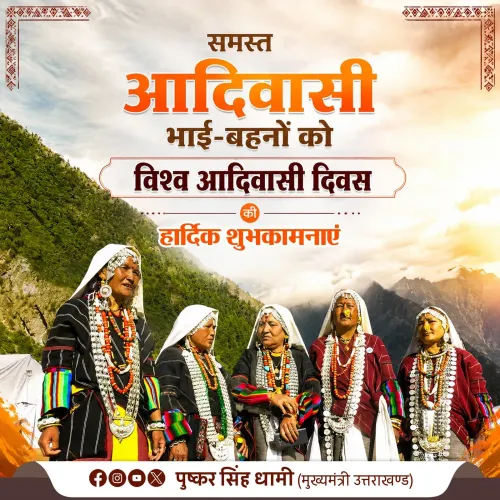
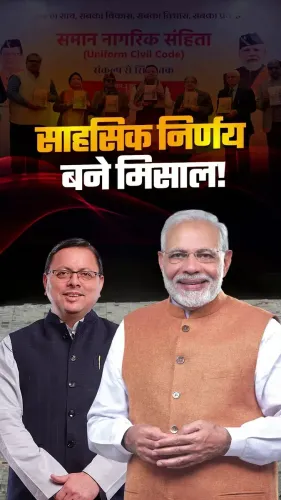
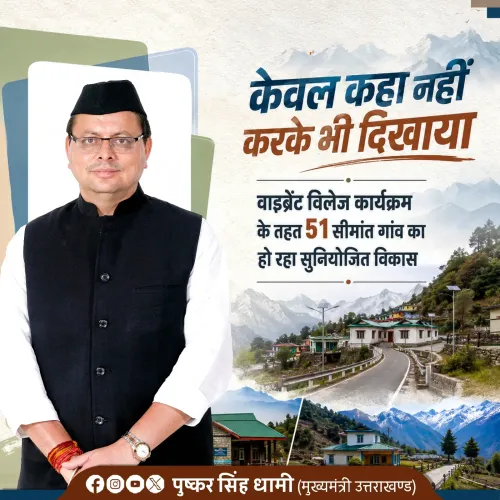
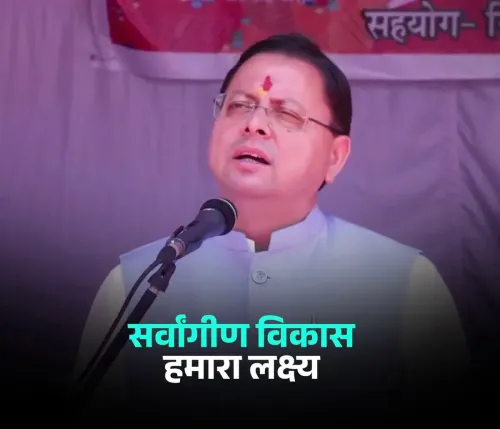
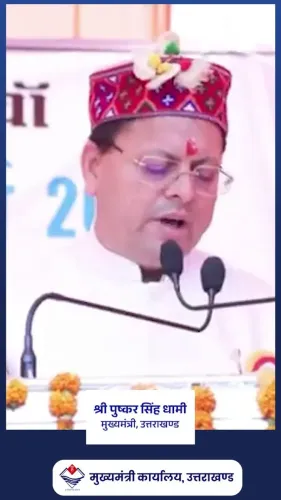
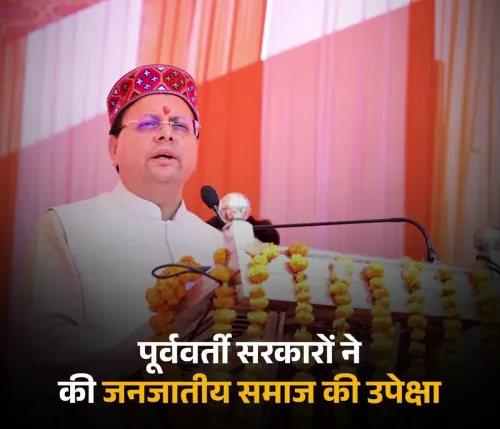
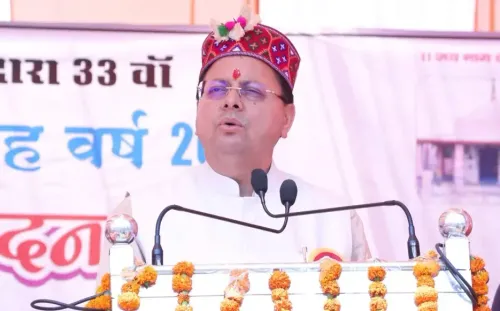
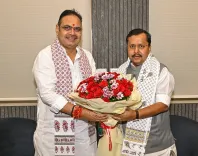
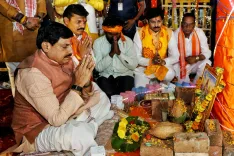
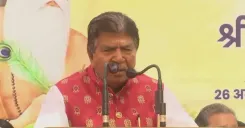
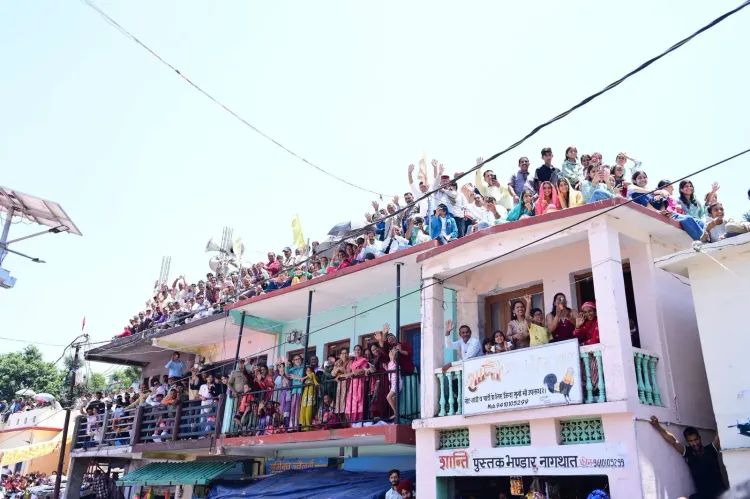
The post is a reply to @pushkardhami's own handle, suggesting it is part of a thread expanding on tribal welfare commitments. The accompanying four images, while not described in detail, appear to provide visual documentation of the government's outreach or scheme activities in tribal areas.
Policy Backdrop
The Centre's Vanbandhu Kalyan Yojana, launched in 2014, was designed to accelerate socio-economic development in tribal areas by ensuring last-mile delivery of government schemes. Uttarakhand's state government has aligned its own tribal welfare architecture with this central framework. The Forest Rights Act, 2006, also recognised individual and community rights of tribal and forest-dwelling communities over traditional lands, forming a legal backbone for land-linked welfare measures.
The Tribal Sub-Plan mechanism, introduced during the Fifth Five Year Plan, mandates proportional budget allocations for Scheduled Tribe areas. BJP governments at both the state and central levels have increasingly used village-level targeting as a visible governance metric, framing it as corrective action against decades of neglect.
Stakeholders and Impact
The primary beneficiaries are residents of Scheduled Tribe communities across Uttarakhand's tribal belts, particularly in districts bordering Nepal and Tibet where infrastructure deficits are most acute. If implemented at scale, village-specific schemes covering infrastructure, livelihood, and cultural preservation could meaningfully alter development indices in these pockets.
The statement also carries political weight ahead of future assembly cycles, as tribal voters in Uttarakhand — while numerically smaller than in states like Jharkhand or Chhattisgarh — occupy strategically significant constituencies. The Congress has not yet responded to Dhami's characterisation of its record.
What's Next
The credibility of the 128-village initiative will be tested in subsequent state budget sessions and annual tribal welfare reviews, where civil society groups and opposition benches are expected to seek itemised progress reports. Observers will watch whether scheme outlays for these villages are reflected in Uttarakhand's upcoming budget allocations and whether independent audits confirm on-ground delivery.
With tribal welfare increasingly becoming a competitive political arena across India, CM Dhami's public commitment to a specific village count raises the stakes — and the accountability bar — for his administration's delivery record through the remainder of its term.
Point of View
Village-level interventions against a Congress legacy cast as performative. By anchoring the claim to a specific number — 128 villages — the statement moves beyond rhetoric into a measurable commitment, which sharpens both its political appeal and its accountability risk. This fits a broader national pattern where BJP-ruled states have increasingly used granular tribal outreach as an electoral differentiator, particularly in Himalayan and forest-fringe constituencies. The absence of a Congress rebuttal so far leaves Dhami's narrative unchallenged in the immediate news cycle, but independent verification of scheme delivery will be the real test.
NationPress
26 Oct 2026
Frequently Asked Questions
Which tribal communities live in Uttarakhand?
Uttarakhand is home to five Scheduled Tribes: the Bhotia, Jaunsari, Tharu, Buksa, and Raji communities, largely concentrated in the state's Himalayan border districts.
What is the Vanbandhu Kalyan Yojana?
The Vanbandhu Kalyan Yojana is a central government scheme launched in 2014 to accelerate socio-economic development in tribal areas by ensuring last-mile delivery of government programmes.
What has CM Dhami said about tribal development in Uttarakhand?
CM Pushkar Singh Dhami announced on June 8, 2026, that 128 tribal villages have been identified for special holistic development schemes, and accused Congress governments of treating tribal communities only as a vote bank.
What is the Tribal Sub-Plan in India?
The Tribal Sub-Plan is a central planning mechanism introduced during the Fifth Five Year Plan that mandates proportional budget allocations specifically for Scheduled Tribe areas.
How many tribal villages has the Uttarakhand government identified for development?
The Uttarakhand government, under CM Pushkar Singh Dhami, has identified 128 tribal villages for targeted, comprehensive development under special schemes.