CM Dhami: 51 Border Villages Being Developed Under Vibrant Village Programme
Synopsis
Uttarakhand CM Pushkar Singh Dhami says 51 border villages are being developed under the Vibrant Village Programme, with roads, health, education, and livelihood facilities being strengthened to bring frontier communities into the development mainstream and curb out-migration.
Key Takeaways
51 border villages in Uttarakhand are being developed under the Vibrant Village Programme , according to CM Dhami.
Infrastructure focus spans roads, education, health, communication, tourism, and livelihoods .
The goal is to make border villages self-reliant centres so residents do not need to migrate for opportunities.
The Vibrant Villages Programme was launched under the Union Budget 2022-23 for northern border states.
Uttarakhand shares borders with China and Nepal , giving the programme both developmental and strategic significance.
The programme builds on the earlier Border Area Development Programme (BADP) with a stronger economic activation mandate.
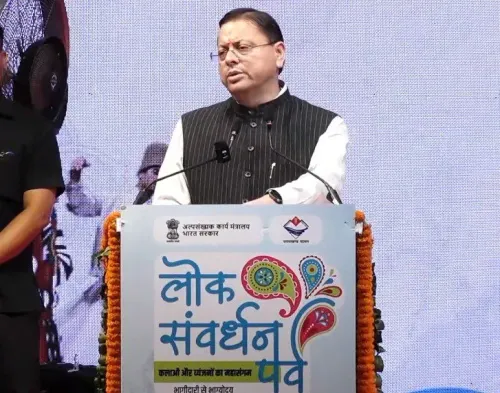
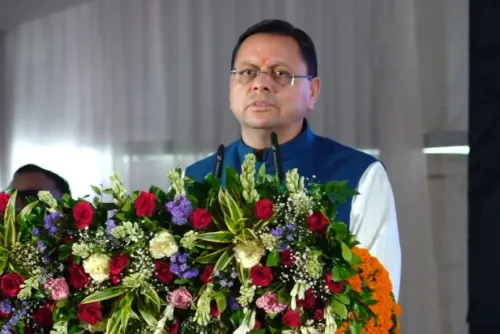
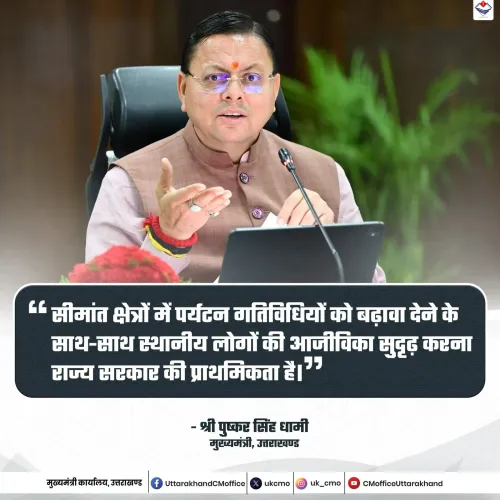
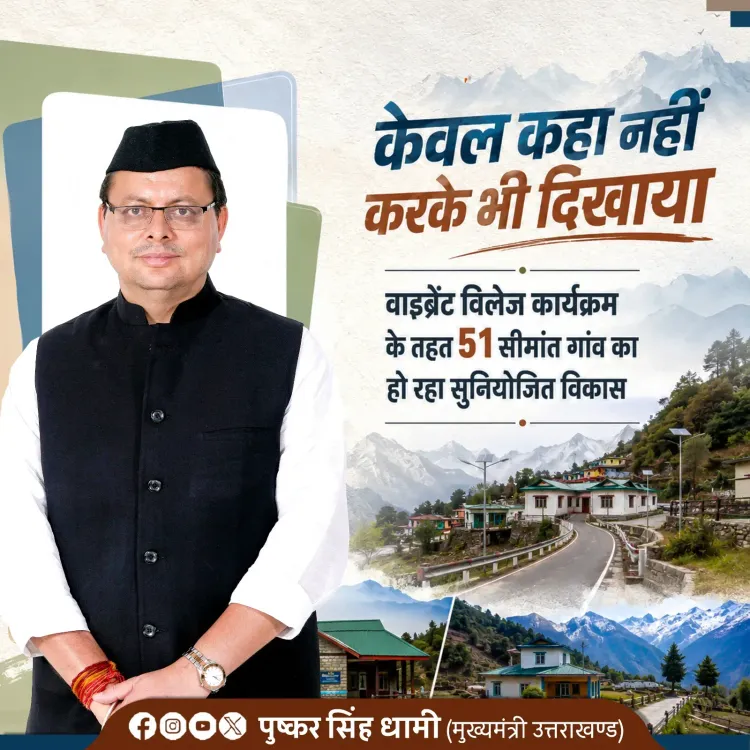
Uttarakhand Chief Minister Pushkar Singh Dhami on Monday, 22 June 2026, announced that 51 border villages across the state are being developed in a planned and comprehensive manner under the Vibrant Village Programme, with work ongoing to strengthen road, education, health, communication, tourism, and livelihood infrastructure in these frontier areas.
Context
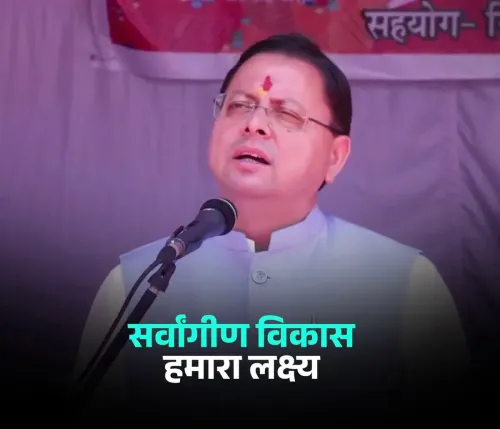
In his post on X, CM Dhami stated — 'वाइब्रेंट विलेज कार्यक्रम के तहत प्रदेश के 51 सीमांत गांवों का सुनियोजित एवं समग्र विकास सुनिश्चित किया जा रहा है' — ('Under the Vibrant Village Programme, planned and comprehensive development of 51 border villages of the state is being ensured'). He added that the goal is to establish these villages as 'strong centres of development, prosperity, and self-reliance' so that residents can access better opportunities and facilities within their own villages.
The statement underscores the state government's push to bring frontier communities into the mainstream of development, reversing a long-standing pattern of out-migration from Uttarakhand's high-altitude border zones.
Policy Backdrop
The Vibrant Villages Programme was announced in the Union Budget 2022-23 as a central government initiative targeting comprehensive development of villages along India's northern borders, particularly in Uttarakhand, Himachal Pradesh, Sikkim, Arunachal Pradesh, and Ladakh. The scheme covers roads, housing, renewable energy, television and telephone connectivity, and tourism infrastructure.
It builds on the legacy of the Border Area Development Programme (BADP), but with a sharper focus on economic activation rather than only physical infrastructure. Uttarakhand shares sensitive borders with both China and Nepal, making the strategic dimension of the programme particularly significant for the state.
Stakeholders and Impact
The primary beneficiaries are residents of remote border villages in districts such as Chamoli, Pithoragarh, Uttarkashi, and Chamoli — areas that have historically suffered from poor connectivity and limited public services, driving younger populations toward plains cities. Improved roads and health facilities directly address the reasons families leave these villages.
Tourism and livelihood components of the programme are intended to create local economic opportunities, reducing dependence on seasonal migration. Strengthening state presence in these villages also carries strategic value for India's border management framework.
What's Next
The pace of implementation across Uttarakhand's border districts and any fresh central allocations in upcoming budgets will be key indicators of the programme's trajectory. CM Dhami's public communication signals that border village development will remain a visible political and administrative priority for the state government.
If the model of infrastructure-led retention succeeds in Uttarakhand, it could inform how other Himalayan states approach their own border village challenges under the same national programme.
Point of View
Even as independent verification of on-ground progress remains pending. Strategically, border village development in Uttarakhand sits at the intersection of social welfare and national security, making it a policy area where central and state governments are aligned in visibility and intent. The broader arc points toward India using infrastructural density in border zones as both a welfare instrument and a soft assertion of territorial presence.
NationPress
20 Sept 2026
Frequently Asked Questions
What is the Vibrant Village Programme in Uttarakhand?
The Vibrant Village Programme is a central government scheme announced in the Union Budget 2022-23 for the comprehensive development of villages along India's northern borders. In Uttarakhand, it targets infrastructure, connectivity, health, education, tourism, and livelihood facilities in remote border villages.
How many border villages are being developed under the Vibrant Village Programme in Uttarakhand?
According to CM Pushkar Singh Dhami, 51 border villages in Uttarakhand are being developed under the programme.
Why is border village development important for Uttarakhand?
Uttarakhand shares borders with China and Nepal. Its border villages have historically faced out-migration due to poor roads, limited health and education facilities, and lack of livelihood options. Development programmes aim to retain populations and strengthen India's presence in these strategic areas.
What facilities are being provided under the Vibrant Village Programme?
The programme focuses on roads, education, health, communication, tourism infrastructure, and livelihood support, with the aim of connecting border communities to the development mainstream.
What is the difference between the Vibrant Village Programme and the Border Area Development Programme?
The Border Area Development Programme (BADP) was an earlier central scheme focused primarily on physical infrastructure in border areas. The Vibrant Village Programme builds on it with a broader mandate that includes economic activation, tourism, and livelihood creation to reduce out-migration.