PaxSilica AI alliance grows to 24 countries under Trump push
Synopsis
The Trump administration's PaxSilica alliance has quietly grown to 24 member countries, with 35 nations signing onto an AI joint statement — and a $50 million Panama logistics deal, a Stanford manufacturing school, and a Philippines economic zone already in motion. It is Washington's most concrete attempt yet to build a US-aligned global technology order before international AI norms are locked in.
Key Takeaways
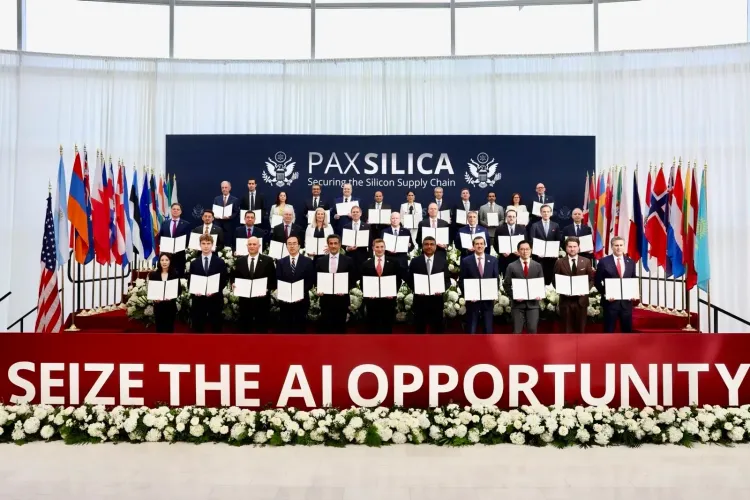
The US-led PaxSilica alliance has expanded to 24 member countries , with 35 nations signing a joint statement on AI as of 26 June .
Under Secretary of State Jacob Helberg confirmed the expansion and described PaxSilica as a flexible, two-way partnership.
Flagship projects include PAX Pass — a $50 million AI logistics package for Panama — and the Foundry School developed with Stanford University .
An economic security zone in the Philippines is also under way to accelerate industrial investment.
The Trump administration has positioned AI as an economic opportunity driver, contrasting with more restrictive regulatory approaches elsewhere.
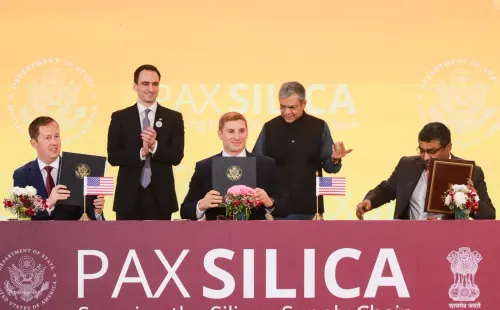
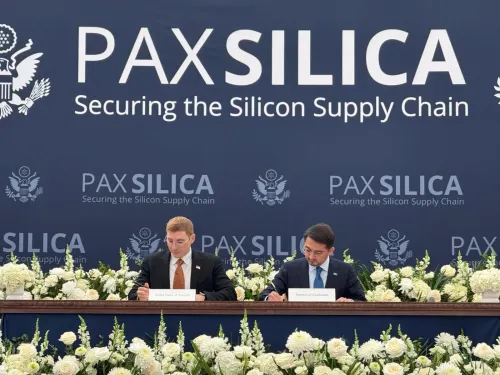
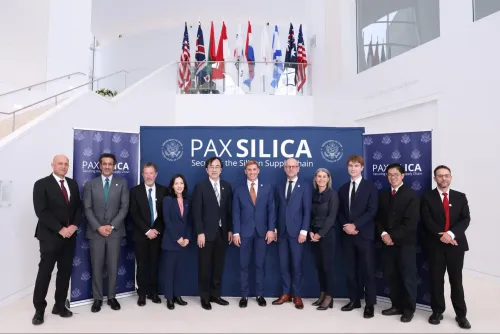
The US-led PaxSilica alliance has expanded to 24 member countries, with 35 nations endorsing a joint statement on artificial intelligence, as the Trump administration intensifies efforts to build a global coalition centred on AI, advanced manufacturing, and economic security. The expansion was confirmed on 26 June by senior State Department officials.
What PaxSilica Is and How It Works
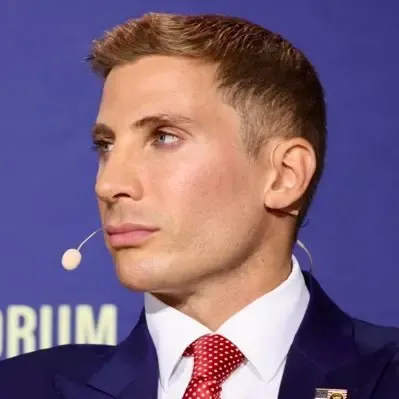
Under Secretary of State for Economic Affairs Jacob Helberg described PaxSilica as a deliberately flexible partnership, designed to allow member countries to help shape its priorities rather than follow a top-down agenda. 'One of the benefits of PAX is that it remains very flexible, and it really is meant to be a two-way street between ourselves as well as all of our members,' Helberg said.
The alliance operates on two parallel tracks: delivering concrete, on-the-ground projects and fostering broader policy conversations on technology and economic security. Helberg emphasised that membership would continue to grow 'in a way that promotes the goals that we're trying to achieve — sensible approaches to broad policy conversations and tangible outcomes.'
Key Projects Already Under Way
Helberg cited three flagship initiatives as evidence of the alliance's practical orientation. First, PAX Pass — a $50 million foreign assistance package for Panama to deploy an AI-powered logistics platform. Second, the launch of Foundry School, developed in partnership with Stanford University, to build an advanced manufacturing curriculum eventually shared with leading higher-education institutions across the PaxSilica network. Third, an economic security zone in the Philippines aimed at accelerating industrial investment.
Helberg added that the Stanford collaboration would produce 'a world-class seminar on advanced manufacturing,' with plans to disseminate the curriculum broadly across partner-country universities.
Washington's View: AI as Opportunity, Not Risk
The Trump administration has framed artificial intelligence as an engine of economic growth rather than a technology requiring strict constraint — a posture that sets it apart from more cautious regulatory approaches gaining ground in the European Union and elsewhere. 'We view it as incredibly important that people appreciate that there's no ceiling to technology, that innovation means increased productivity and means a growing pie,' Helberg said.
He said the United States was 'incredibly motivated' to ensure the benefits of AI reach entrepreneurs and young people in partner countries, citing Kazakhstan, Argentina, and Costa Rica as examples of nations where new services, companies, and applications could emerge from access to these technologies.
Broader Strategic Context
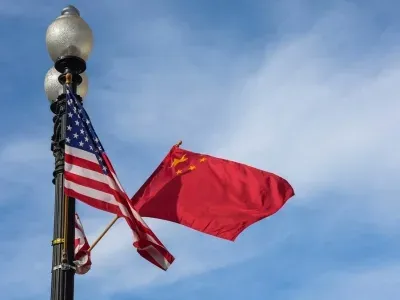
Technology diplomacy and economic security have become central pillars of the Trump administration's foreign policy, with PaxSilica positioned as a vehicle to strengthen cooperation on critical technologies and resilient supply chains. This comes amid intensifying US-China competition over semiconductor supply chains and AI standards, with Washington seeking to anchor partner countries within a US-aligned technology ecosystem before global norms are set.
Notably, the alliance's membership count — 24 full members and 35 joint-statement signatories — suggests a two-tier structure, with the broader endorsement group serving as a pipeline for deeper integration. How quickly that second tier converts into full membership will be a key indicator of the initiative's momentum in the months ahead.
Point of View
35 endorsers) is deliberate: it creates a funnel that rewards alignment with US technology norms. The real test is whether the concrete projects — Panama's logistics platform, the Stanford curriculum, the Philippines zone — deliver visible outcomes fast enough to keep the second tier from drifting toward rival frameworks. The administration's pro-growth, no-ceiling framing on AI also puts it on a collision course with the EU's risk-based regulatory model, and partner countries will eventually have to choose which standard they build their digital infrastructure around.
NationPress
25 Sept 2026
Frequently Asked Questions
What is the PaxSilica alliance?
PaxSilica is a US-led international coalition focused on artificial intelligence, advanced manufacturing, and economic security. As of 26 June, it counts 24 full member countries, with 35 nations having signed a joint statement on AI opportunity.
Who leads the PaxSilica initiative for the United States?
Under Secretary of State for Economic Affairs Jacob Helberg is the primary US official overseeing PaxSilica. He described the alliance as a flexible, two-way partnership in which member countries help shape its priorities.
What are the key projects under PaxSilica?
Three flagship projects have been announced: PAX Pass, a $50 million foreign assistance package for Panama to deploy an AI logistics platform; Foundry School, an advanced manufacturing curriculum developed with Stanford University; and an economic security zone in the Philippines to accelerate industrial investment.
How does the Trump administration view artificial intelligence?
The Trump administration views AI as a driver of economic opportunity rather than a technology requiring strict regulation. Officials have argued there is 'no ceiling to technology' and that innovation expands productivity and overall prosperity.
Why does PaxSilica matter for countries like India?
PaxSilica represents Washington's effort to build a US-aligned global technology and supply-chain ecosystem ahead of the setting of international AI norms. Countries that join gain access to US-backed projects, curricula, and investment zones, but also align more closely with American technology standards in a landscape where US and EU regulatory approaches are diverging.