Pax Silica Summit 2026: South Korea, India join AI and chip supply chain push in Washington
Synopsis
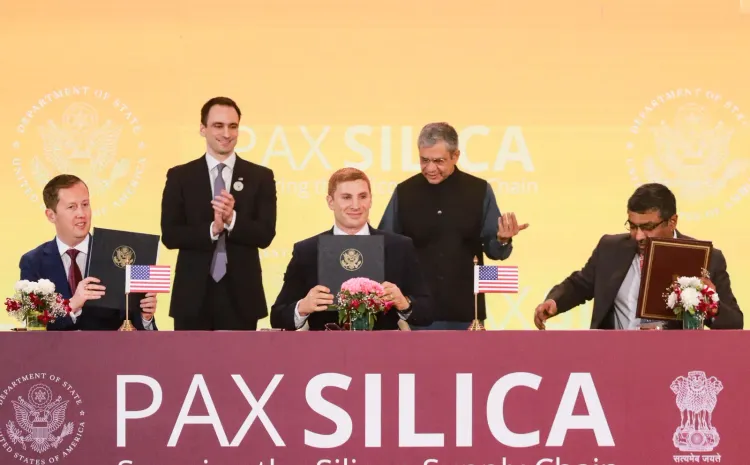
The 2026 Pax Silica Summit in Washington just got bigger — 10 new members signed on, taking the US-led tech coalition to 24 countries. South Korea's Vice FM pitched Seoul's chip strategy while India backed a sweeping new AI declaration covering semiconductors, critical minerals, and energy. The bloc is quietly becoming the West's answer to tech supply chain dependence.
Key Takeaways
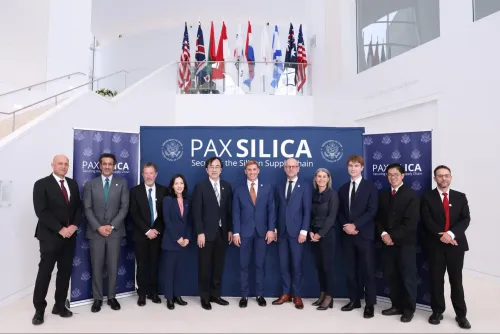
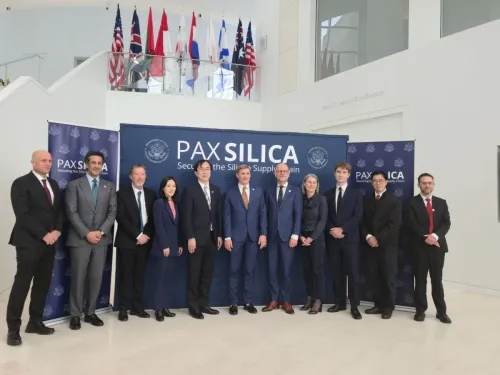
Vice Foreign Minister Kim Jina represented South Korea at the 2026 Pax Silica Summit in Washington , held Thursday–Friday, 26–27 June 2026 .
Kim outlined Seoul's semiconductor industry strategy and urged partners to build a stable, predictable business environment for chip supply chains.
India joined the US and 34 other countries in endorsing the Joint Statement on AI Opportunity , covering semiconductors, critical minerals, energy, and AI infrastructure.
State Department announced 10 new signatories — including Germany, the EU, Argentina and Kazakhstan — expanding Pax Silica membership to 24 countries and economies .
The summit's two days focused on AI innovation ecosystems (Day 1) and fair competition policy frameworks (Day 2).
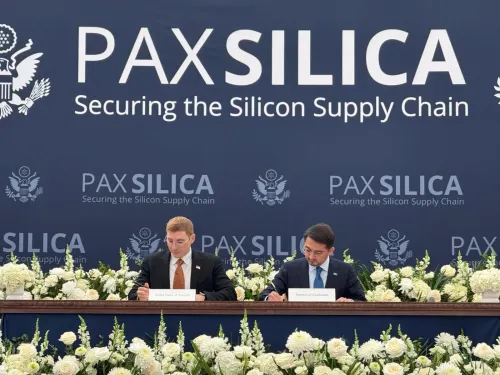
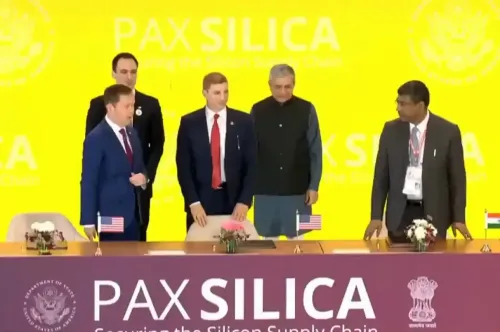
South Korea's Vice Foreign Minister Kim Jina attended the 2026 Pax Silica Summit in Washington this week, joining partner nations in deliberations on artificial intelligence cooperation and semiconductor supply chain resilience, the South Korean foreign ministry confirmed on Saturday, 27 June 2026. The summit, hosted by the U.S. State Department, brought together more than 20 partner nations under a US-led strategic coalition dedicated to securing the global technology supply chain.
What the Summit Covered
The two-day event — held from Thursday to Friday — was the second edition of the Pax Silica Summit. Attendees included representatives from Australia, Finland, India, Japan and Britain, among others. The first day centred on intergovernmental and industry cooperation to build an ecosystem that facilitates AI innovation. The second day pivoted to policy frameworks aimed at bolstering AI innovation alongside efforts to ensure fair competition across the sector.
What South Korea Brought to the Table
During a dedicated session, Vice Minister Kim outlined South Korea's national strategy for supporting its semiconductor industry — one of the world's most consequential, anchored by players such as Samsung and SK Hynix. She urged partner nations to collaborate in building a stable and predictable business environment to jointly ensure the resilience of semiconductor supply chains. Kim also reaffirmed Seoul's commitment to contributing to an innovation-friendly global business environment involving AI supply chains, according to the ministry.
India and 34 Nations Back New AI Declaration
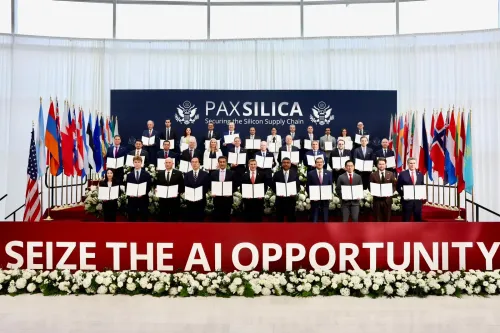
India joined the United States and 34 other countries in endorsing a new declaration on artificial intelligence unveiled at the summit. The Joint Statement on AI Opportunity commits participating countries to a pro-growth, pro-innovation approach to AI, while promoting trusted partnerships across critical minerals, semiconductors, energy, advanced manufacturing and AI infrastructure.
Pax Silica Expands to 24 Members
The U.S. State Department announced that 10 new partners had signed the Pax Silica Declaration at the summit, expanding the initiative's membership from 14 to 24 countries and economies. The new signatories are Argentina, Chile, Costa Rica, El Salvador, the European Union, Germany, Greece, Kazakhstan, the Netherlands and Panama. This expansion signals a concerted effort by Washington to widen its trusted technology coalition beyond its traditional Indo-Pacific and European allies.
Why This Matters
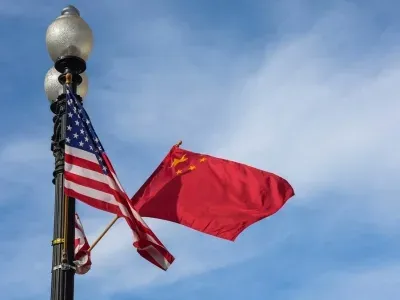
The Pax Silica framework sits at the intersection of geopolitics and industrial policy. Semiconductors and AI infrastructure have become central to national security calculus globally, with the US seeking to counter supply chain vulnerabilities exposed during the COVID-19 pandemic and amplified by US-China tech tensions. Notably, South Korea's participation carries particular weight given its dominant position in memory chip manufacturing, while India's endorsement of the AI declaration aligns with its own ambitions to build a domestic semiconductor ecosystem. The initiative's rapid membership growth — from launch to 24 members — reflects the urgency partner nations attach to de-risking technology supply chains.
Point of View
Making its public alignment with a US-curated supply chain coalition a meaningful signal. India's endorsement of the AI declaration, meanwhile, fits a pattern of New Delhi extracting technology commitments from Washington while keeping its strategic autonomy intact. The real test is whether these declarations translate into binding procurement preferences, export controls coordination, or joint fab investments — or whether Pax Silica remains a statement of intent without enforcement architecture.
NationPress
26 Sept 2026
Frequently Asked Questions
What is the Pax Silica Summit?
The Pax Silica Summit is a US-led strategic initiative and coalition of partner nations focused on securing the global technology supply chain, particularly in semiconductors and artificial intelligence. The 2026 edition was the second summit, hosted by the U.S. State Department in Washington.
Why did South Korea attend the Pax Silica Summit?
South Korea's Vice Foreign Minister Kim Jina attended to present Seoul's national strategy for supporting its semiconductor industry and to urge partner nations to build a stable, predictable business environment for chip supply chains. South Korea's dominance in memory chip manufacturing makes its participation strategically significant.
What is the Joint Statement on AI Opportunity?
It is a declaration endorsed by India, the United States, and 34 other countries at the 2026 Pax Silica Summit, committing signatories to a pro-growth, pro-innovation approach to AI. It promotes trusted partnerships across critical minerals, semiconductors, energy, advanced manufacturing, and AI infrastructure.
Which countries are the new members of Pax Silica?
The 10 new signatories announced at the 2026 summit are Argentina, Chile, Costa Rica, El Salvador, the European Union, Germany, Greece, Kazakhstan, the Netherlands, and Panama, bringing total membership to 24 countries and economies.
How does Pax Silica affect India?
India joined the US and 34 other countries in backing the new AI declaration at the summit, aligning itself with a US-curated coalition on semiconductor and AI supply chains. This fits India's broader strategy of securing technology partnerships while building its own domestic semiconductor ecosystem.