India-Thailand bilateral trade surges 12.6% to $21.49 billion in FY26
Synopsis
India-Thailand trade crossed $21.49 billion in FY26 — a 12.6% jump — as both sides met in Nonthaburi to push on AITIGA reforms, UPI-PromptPay linkage, and new investment frameworks. Thailand alone accounts for over 16% of India's entire ASEAN trade, making this partnership a cornerstone of India's Act East strategy.
Key Takeaways
India-Thailand bilateral trade grew 12.6% year-on-year to $21.49 billion in FY 2025-26 .
Thailand accounted for 16.7% of India's total trade with ASEAN during the fiscal year.
The 14th India-Thailand Joint Trade Committee meeting was held on 16 November 2026 in Nonthaburi, Thailand .
Both sides discussed linking India's UPI with Thailand's PromptPay system for fintech cooperation.
Key sectors highlighted for investment include EVs, semiconductors, pharmaceuticals, AYUSH , and food processing .
Both countries urged early conclusion of the ongoing AITIGA review to improve market access.
India and Thailand recorded bilateral trade of $21.49 billion in FY 2025-26, marking a 12.6% year-on-year increase, as officials from both nations pledged to deepen their economic partnership at a high-level meeting on Monday, 16 November 2026. The figures underscore a strengthening commercial relationship between Asia's fifth-largest economy and one of Southeast Asia's key trading hubs.
Key Developments at the Joint Trade Committee Meeting
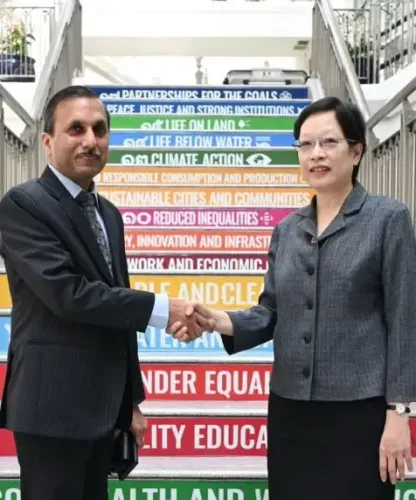
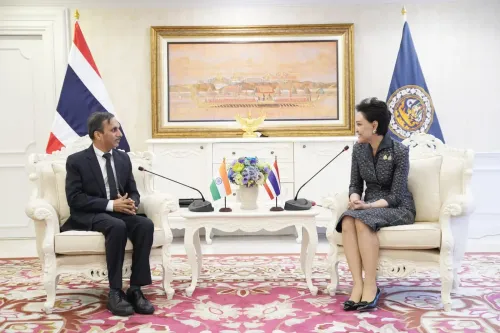
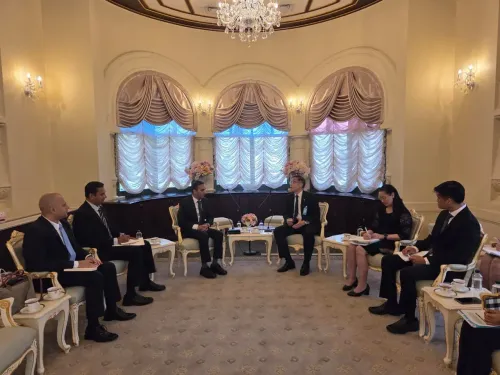
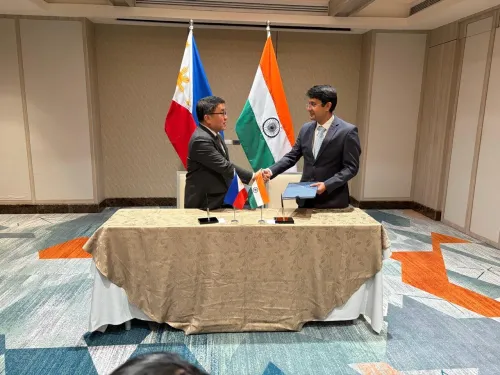
The growth figures were highlighted at the 14th Meeting of the India-Thailand Joint Trade Committee (JTC), held at the Ministry of Commerce in Nonthaburi, Thailand. The session was co-chaired by Nitin Kumar Yadav, Additional Secretary in India's Department of Commerce, and Chotima Iemsawasdikul, Director-General of Thailand's Department of Trade Negotiations. Officials on both sides acknowledged the JTC's role in sustaining commercial and investment momentum between the two countries.
Notably, Thailand accounted for 16.7% of India's total trade with ASEAN during the fiscal year, reinforcing its position as India's most significant bilateral trade partner within the bloc.
Sectors and Investment Opportunities on the Table
India showcased investment prospects across a broad range of sectors, including infrastructure and logistics, automotive and electric vehicles, food processing, agro-industry, electronics, semiconductors, tourism, hospitality, and wellness. Thailand, in turn, presented its economic outlook and investment promotion framework, anchored by its 'Co-Creation Co-Investment' approach. India welcomed the proposal and indicated it would examine it further in consultation with relevant ministries and departments.
Deeper collaboration opportunities were also explored in pharmaceuticals, healthcare, AYUSH and traditional medicine, textiles, plastics and petrochemicals, gems and jewellery, and services. Strengthening ties between trade promotion organisations featured prominently on the agenda as well.
Trade Agreement Utilisation and Non-Tariff Barriers
Both delegations discussed ways to increase utilisation of the ASEAN-India Trade in Goods Agreement (AITIGA) and the India-Thailand Early Harvest Scheme. They explored creating a formal mechanism for the annual exchange of bilateral trade and trade preference utilisation data, aimed at identifying expansion opportunities and resolving implementation challenges.
The two sides underscored the urgency of concluding the ongoing review of AITIGA and stressed the need to ensure effective market access for businesses. Discussions addressed traders' concerns on access for agricultural, livestock, and marine products, sanitary and phytosanitary measures, certification procedures, quality regulations, and the removal of non-tariff barriers — perennial friction points in India-ASEAN trade flows.
Financial Connectivity and Fintech Cooperation
Financial cooperation featured prominently in the deliberations. Both countries reviewed progress on payment and financial connectivity initiatives, including plans to link India's Unified Payments Interface (UPI) with Thailand's PromptPay system. The meeting also covered local currency settlement mechanisms and enhanced fintech cooperation between the Reserve Bank of India (RBI) and the Bank of Thailand.
This comes amid India's broader push to internationalise UPI across the Indo-Pacific, with similar linkages already operational in Singapore, UAE, and Sri Lanka. A UPI-PromptPay bridge would add a significant ASEAN economy to that network.
The 15th JTC meeting is expected to track implementation progress on the commitments made at Nonthaburi, with both governments under pressure to translate strong headline trade numbers into tangible gains for businesses on the ground.
Point of View
But the deeper story is structural: India and Thailand have been talking up AITIGA utilisation for years, and non-tariff barriers in agriculture and marine products remain stubbornly unresolved. The UPI-PromptPay linkage is the genuinely new move here — if executed, it could reduce transaction friction for the thousands of small and medium businesses that drive this trade. The 'Co-Creation Co-Investment' proposal from Thailand also signals Bangkok is looking for more than a buyer-seller relationship. India's willingness to 'examine it further' is diplomatic hedging; the real test is whether it converts to a framework before the next JTC meeting.
NationPress
16 Nov 2026
Frequently Asked Questions
How much did India-Thailand bilateral trade grow in FY26?
India-Thailand bilateral trade rose 12.6% year-on-year to $21.49 billion in FY 2025-26, according to figures shared at the 14th Joint Trade Committee meeting in Nonthaburi, Thailand.
What is the India-Thailand Joint Trade Committee?
The India-Thailand Joint Trade Committee (JTC) is a bilateral mechanism that facilitates commercial and investment ties between the two countries. The 14th meeting was held on 16 November 2026 in Nonthaburi and was co-chaired by senior trade officials from both nations.
What is the significance of Thailand in India's ASEAN trade?
Thailand accounted for 16.7% of India's total trade with ASEAN in FY 2025-26, making it India's single most important bilateral trade partner within the bloc.
What is the UPI-PromptPay linkage discussed at the meeting?
India and Thailand discussed connecting India's Unified Payments Interface (UPI) with Thailand's PromptPay real-time payment system to enable seamless cross-border transactions and local currency settlement. The initiative is part of a broader fintech cooperation effort between the Reserve Bank of India and the Bank of Thailand.
What sectors did India highlight for investment with Thailand?
India showcased opportunities in infrastructure and logistics, automotive and electric vehicles, food processing, agro-industry, electronics, semiconductors, tourism, hospitality, wellness, pharmaceuticals, AYUSH, textiles, plastics, petrochemicals, and gems and jewellery.