Shekhawat launches Sanskriti, AI cultural search in 22 languages

Synopsis
Union Culture Minister Gajendra Singh Shekhawat has launched Sanskriti, an AI-enabled search assistant that unifies around 65 government cultural platforms — covering archives, manuscripts, monuments and museums — and delivers answers in all 22 scheduled Indian languages with official source references.
Key Takeaways
Sanskriti is the Ministry of Culture's new AI-powered search assistant, announced on 16 November 2026 .
It aggregates content from around 65 government digital cultural platforms into a single interface.
Users can query in any language and receive answers across all 22 scheduled Indian languages .
Responses carry official source references , keeping the information trail transparent.
The platform covers archives, manuscripts, museums, monuments, art forms and intangible cultural heritage.
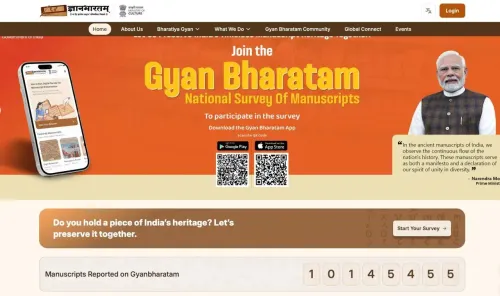
The initiative builds on the National Mission for Manuscripts (2003) , the government's earliest large-scale digitisation push.
India's sprawling cultural archive — manuscripts, monuments, museums, art forms — has long been scattered across dozens of government portals, invisible to the curious student typing a question in Tamil or the researcher hunting a Rajasthani miniature painting. Union Culture and Tourism Minister Gajendra Singh Shekhawat moved to change that on Monday, 16 November 2026, announcing Sanskriti, the Ministry of Culture's new AI-powered search assistant designed to bring it all within a single query.
One interface, 65 platforms, every scheduled language
Shekhawat described Sanskriti as an 'AI-enabled search assistant' that aggregates content from around 65 digital platforms maintained by the Ministry of Culture and affiliated institutions — covering archives, manuscripts, museums, monuments, art forms and intangible heritage. Users can pose questions in their own language and receive answers across all 22 scheduled Indian languages, with responses linked to official source references so the information trail stays transparent and verifiable.
The minister framed the launch as 'a smarter, simpler and more accessible way to connect with India's cultural legacy,' adding the hashtag #CultureUnitesAll. The platform targets a wide audience: heritage researchers, school and university students, domestic and inbound tourists, and diaspora communities seeking a credible gateway to India's past.
From scattered repositories to a unified cultural grid
The ambition behind Sanskriti stretches back more than two decades. The National Mission for Manuscripts, launched in 2003, seeded the first large-scale government effort to digitise India's ancient texts and archival collections. What followed was a steady accumulation of specialised portals — museum catalogues, monument databases, intangible heritage registers — each valuable on its own but navigated only by those who already knew where to look.
Sanskriti is the Ministry's most explicit attempt yet to collapse that fragmentation. The multilingual AI layer is particularly significant: it plugs the cultural domain into the government's broader push to make digital services genuinely usable in India's linguistic diversity, not just in English or Hindi. For a country where the 2011 census recorded over 19,500 mother tongues, that is not a cosmetic feature — it is the difference between access and exclusion.
What heritage researchers and tourists will watch for
The real test of Sanskriti will be in the depth and freshness of its indexed content — whether a researcher querying a rare Odia palm-leaf manuscript or a tourist tracing Chola bronze iconography gets a genuinely useful, sourced answer, or a polished dead end. User adoption figures and feedback in the months following launch will indicate whether the platform delivers on its aggregation promise or remains underutilised like earlier standalone portals.
Further integration with state government databases and institutional collections — universities, private trusts, archaeological surveys — would significantly widen the grid. The Ministry has not yet signalled a timeline for such expansions.
India's cultural data is vast, ancient and multilingual. Sanskriti's launch is the moment the government bets that artificial intelligence can finally make all of it findable.
Point of View
With multilingual access as the centrepiece. For the BJP government, it also serves a soft-power and cultural-nationalism narrative: making India's heritage legible and accessible on its own linguistic terms, not filtered through colonial or Anglophone frameworks. The platform's credibility will ultimately rest on content depth and update frequency, not the launch announcement. If Sanskriti sustains momentum beyond the press cycle, it could set a template for other ministries wrestling with fragmented digital assets.
NationPress
16 Nov 2026
Frequently Asked Questions
What is Sanskriti, the Ministry of Culture's AI assistant?
Sanskriti is an AI-enabled search platform launched by the Ministry of Culture that aggregates information from around 65 government digital repositories — including archives, manuscripts, museums and monuments — and delivers answers in all 22 scheduled Indian languages with official source references.
Which languages does Sanskriti support?
Sanskriti supports all 22 languages listed in the Eighth Schedule of the Indian Constitution, allowing users to ask questions in their own language and receive responses accordingly.
Who launched the Sanskriti cultural AI platform?
Union Culture and Tourism Minister Gajendra Singh Shekhawat announced the launch of Sanskriti on 16 November 2026 via an official post on X.
How many platforms does Sanskriti bring together?
According to the Ministry's announcement, Sanskriti integrates information from around 65 digital platforms maintained by the Ministry of Culture and affiliated bodies.
What can I find on the Sanskriti culture platform?
Sanskriti covers a wide range of India's cultural assets — ancient manuscripts, archival records, museum collections, heritage monuments, classical and folk art forms, and intangible cultural heritage — all searchable through a single AI-driven interface.