India pushes for balanced AITIGA review at ASEAN-India meet in Manila
Synopsis
At the ASEAN-India Economic Ministers Consultation in Manila, India pushed hard for a balanced renegotiation of the 2009 AITIGA — a deal critics say has long favoured ASEAN exports over Indian ones. With bilateral trade now at $128.38 billion, the outcome of the review could reshape how India integrates economically with its most important regional neighbourhood.
Key Takeaways
India attended the ASEAN-India Economic Ministers Consultation in Manila on 24 September 2026 .
The delegation, led by Nitin Kumar Yadav of the Department of Commerce , called for a balanced, effective, and trade-facilitative outcome to the AITIGA review .
India-ASEAN bilateral trade stood at $128.38 billion in 2025–26 , representing 10.55% of India's total global trade.
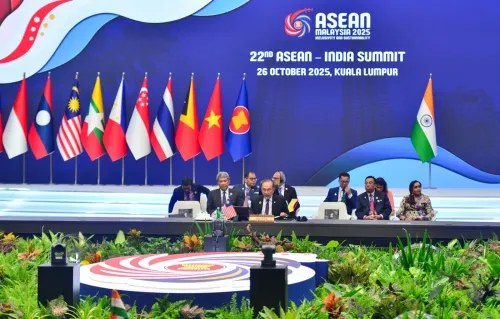
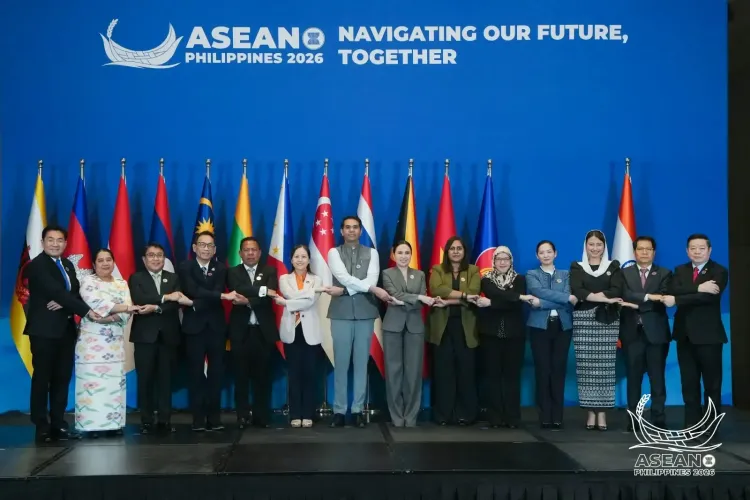
All 11 ASEAN member states and EAS partners — including India, China, the US, Japan, and Australia — participated in the meetings.
The ASEAN Secretariat briefed delegates on the regional economic outlook for 2027 , including trade and investment implications.
India's delegation also participated in the ASEAN-India Business Forum 2026 and met Indian businesses operating in the Philippines .
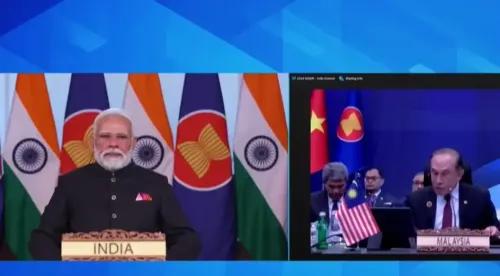
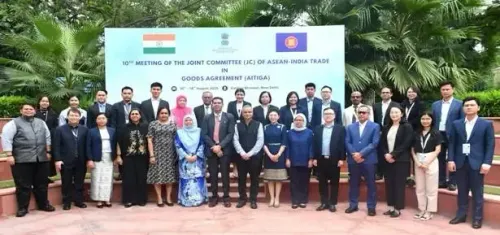
India on Thursday, 24 September 2026 reaffirmed its commitment to mutually beneficial trade partnerships at the ASEAN-India Economic Ministers Consultation held in Manila, with the review of the ASEAN-India Trade in Goods Agreement (AITIGA) at the centre of deliberations, according to a Commerce Ministry statement.
India's Core Demand: Balance and Effectiveness
The Indian delegation, led by Nitin Kumar Yadav, Additional Secretary at the Department of Commerce, stressed that the ongoing AITIGA review must produce an outcome that is balanced, effective, user-friendly, and trade facilitative for businesses. New Delhi reiterated that the review must address existing trade asymmetries — a persistent concern given India's structural trade deficit with several ASEAN economies.
The focus on 'mutual benefit' is not incidental. India has long argued that the original AITIGA, signed in 2009, has disproportionately favoured ASEAN exports into India while Indian goods and services have faced greater friction accessing ASEAN markets. The review, now in an advanced phase, is meant to correct that imbalance.
Trade at $128.38 Billion — and Growing
Bilateral trade between India and ASEAN reached $128.38 billion in 2025–26, with the bloc accounting for 10.55% of India's total global trade. These numbers underscore both the scale of the partnership and the stakes involved in getting the revised agreement right. ASEAN is India's fourth-largest trading partner and a key pillar of its Act East Policy.
Broader Ministerial Engagement
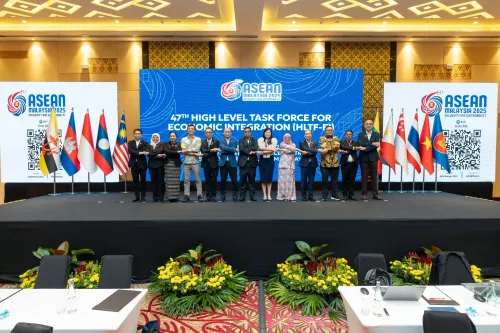
Economic Ministers or their representatives from all 11 ASEAN member states — Brunei, Cambodia, Indonesia, Laos, Malaysia, Myanmar, Philippines, Singapore, Thailand, Timor-Leste, and Vietnam — participated in the meetings. East Asia Summit (EAS) partners, including India, Australia, China, Japan, New Zealand, South Korea, Russia, and the United States, were also represented.
On the sidelines, the Indian delegation met with Indian businesses operating in the Philippines and discussed barriers faced in exporting commodities and services — a practical step toward turning ministerial commitments into on-the-ground trade relief.
Energy Security and Industrial Clusters on the Agenda
The Economic Research Institute for ASEAN and East Asia (ERIA) presented a paper titled 'Powering the EAS Region's Next Wave of Growth: An Integrated Approach to Energy Security and Industrial Clusters', which outlined a framework linking energy infrastructure, digital demand, industrial policy, and coherent trade investment rules. The ASEAN Secretariat also briefed delegates on the regional and global economic outlook for 2027, including anticipated implications for trade and investment flows.
The Indian delegation additionally participated in the ASEAN-India Business Forum 2026, held on Wednesday, which brought together government and private sector representatives to map commercial opportunities across the region.
What Comes Next
The trajectory of the AITIGA review will be closely watched. With India seeking greater market access and rectification of trade imbalances, and ASEAN economies keen to preserve existing advantages, bridging the gap will require sustained negotiation. The Manila consultations are expected to feed into formal trade negotiations scheduled over the coming months, with a revised agreement viewed as critical to deepening India's economic integration with Southeast Asia.
Point of View
But the deficit embedded within it is what drives New Delhi's push. The real question is whether India can convert its negotiating leverage — as one of ASEAN's largest non-member partners — into concrete tariff and non-tariff concessions, or whether the review will, as past rounds have, produce process without outcome. With China also at the table as an EAS partner, India's ability to deepen ASEAN ties carries clear strategic as well as commercial weight.
NationPress
24 Sept 2026
Frequently Asked Questions
What is the AITIGA review and why is India pushing for changes?
The ASEAN-India Trade in Goods Agreement (AITIGA), originally signed in 2009, governs tariff and trade terms between India and the ten ASEAN nations. India is pushing for its review because the current agreement is seen as creating trade asymmetries — ASEAN goods access the Indian market more easily than Indian goods access ASEAN markets. New Delhi wants the revised agreement to be balanced, effective, and trade facilitative for Indian businesses.
How large is India-ASEAN trade?
Bilateral trade between India and ASEAN reached $128.38 billion in 2025–26, with ASEAN accounting for 10.55% of India's total global trade. This makes ASEAN one of India's most significant trading partners and a central pillar of its Act East Policy.
Who represented India at the Manila consultations?
The Indian delegation was led by Nitin Kumar Yadav, Additional Secretary at the Department of Commerce. The delegation also participated in the ASEAN-India Business Forum 2026 and held separate meetings with Indian businesses operating in the Philippines.
Which countries participated in the ASEAN-India Economic Ministers Consultation?
All 11 ASEAN member states — Brunei, Cambodia, Indonesia, Laos, Malaysia, Myanmar, Philippines, Singapore, Thailand, Timor-Leste, and Vietnam — participated. East Asia Summit partners, including India, Australia, China, Japan, New Zealand, South Korea, Russia, and the United States, were also represented.
What happens next in the AITIGA review process?
The Manila consultations are expected to feed into formal trade negotiations scheduled over the coming months. A revised AITIGA is seen as critical to deepening India's economic integration with Southeast Asia, though bridging differences over market access and trade imbalances will require continued negotiation.