Vaishnaw: Tech Partnerships Opening Doors for Indian Youth
Synopsis
Union Minister Ashwini Vaishnaw says India's global technology partnerships in semiconductors, AI, and supercomputing are opening new doors for youth, anchoring a message in the government's Rs 76,000 crore semiconductor mission, National Supercomputing Mission, and the India-US iCET framework.
Key Takeaways
Union Minister Ashwini Vaishnaw stated on 23 May 2026 that India's global technology partnerships are creating opportunities for youth in semiconductors, AI, and supercomputing.
The India Semiconductor Mission was approved in 2021 with a Rs 76,000 crore outlay to build a domestic chip ecosystem.
The National Supercomputing Mission , launched in 2015 , targets 70 supercomputers across Indian research institutions through C-DAC and MeitY .
The India-US iCET framework, established in 2023 , aligns semiconductor supply chains, AI, and quantum cooperation between the two nations.
The National AI Mission focuses on large-scale AI infrastructure and skilling through public-private partnerships.
Upcoming Union Budget allocations and bilateral technology dialogues are key milestones to watch for translating partnerships into youth employment.
Union Minister Ashwini Vaishnaw on Saturday, 23 May 2026 highlighted that India's expanding global technology partnerships in semiconductors, artificial intelligence, and supercomputing are generating new opportunities for the country's youth, signalling the government's continued push to position young Indians at the centre of its strategic technology agenda.
Context
Vaishnaw, who holds charge of the Ministries of Railways, Information and Broadcasting, and Electronics and Information Technology, posted on X that 'India's global technology partnerships in semiconductors, AI and supercomputing are creating new opportunities for youth.' The statement comes as India deepens bilateral and multilateral technology engagements that span chip manufacturing, high-performance computing, and AI infrastructure.
The minister's post carries a tricolour flag — a recurring signifier in government communication underscoring national pride in technology self-reliance. The message aligns with the Atmanirbhar Bharat framework, which seeks to reduce import dependence in strategic sectors and build domestic manufacturing and research capacity.
Policy Backdrop
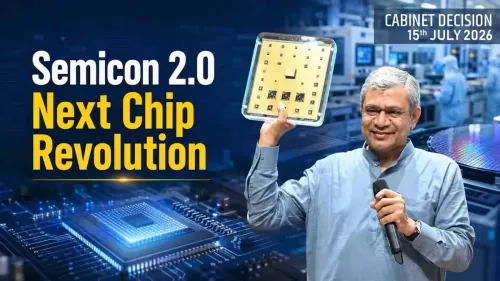
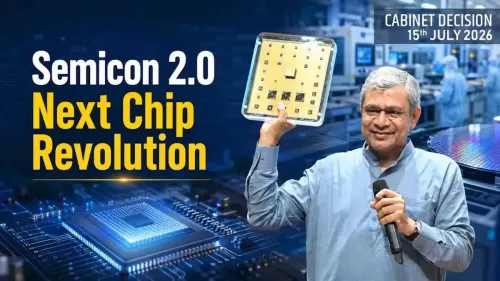
Three major government programmes form the structural backbone of the partnerships Vaishnaw references. The India Semiconductor Mission, approved in 2021 with an outlay of Rs 76,000 crore, was designed to attract chip fabrication and design investments through incentives and factory approvals, creating a domestic ecosystem that can absorb engineering graduates at scale.
The National Supercomputing Mission, launched in 2015, targets the installation of 70 supercomputers across research institutions by 2025 through C-DAC and the Ministry of Electronics and Information Technology (MeitY), building high-performance computing capacity that supports both scientific research and AI workloads. Alongside these, the National AI Mission aims to construct large-scale AI infrastructure through public-private partnerships, with dedicated skilling components intended to channel talent into applied AI roles.
On the international front, the India-US Initiative on Critical and Emerging Technology (iCET), established in 2023, provides a formal framework for aligning semiconductor supply chains, AI research, and quantum cooperation between the two countries — one of the most consequential bilateral technology arrangements India has signed in recent years.
Stakeholders and Impact
The primary beneficiaries identified in the minister's framing are Indian youth — particularly engineering and technology graduates who stand to enter roles in chip design, semiconductor fabrication, AI application development, and high-performance computing. India's large annual output of STEM graduates makes the country a natural candidate for absorbing skilled employment generated by these partnerships.
Industry stakeholders — domestic electronics manufacturers, global semiconductor firms with India operations, and AI startups — also stand to gain from the policy environment these partnerships create, as aligned supply chains and shared R&D frameworks lower barriers to collaboration and investment.
What's Next
Analysts and industry observers will watch for rollout milestones from the semiconductor units already approved under the India Semiconductor Mission, as well as the next phase of National Supercomputing Mission installations. Upcoming Union Budget allocations and bilateral technology dialogues — particularly under the iCET umbrella — are expected to provide the next set of concrete signals on how these partnerships translate into on-ground opportunities for India's workforce.
As India's technology ambitions grow more integrated with global supply chains, the government's ability to convert partnership frameworks into tangible employment and research pipelines for youth will be the defining measure of success.
Point of View
A politically resonant narrative ahead of potential budget and bilateral announcements. The emphasis on 'opportunities for youth' connects macro-level geopolitical partnerships to a domestic constituency that is both economically aspirational and electorally significant. This sits within a broader government pattern of converting foreign policy wins in technology into domestic political capital, positioning the BJP-led administration as the architect of India's emergence as a global tech power. The proof, however, will lie in how quickly approved semiconductor units and supercomputing installations generate actual jobs and research roles at scale.
NationPress
6 Oct 2026
Frequently Asked Questions
What is the India Semiconductor Mission?
The India Semiconductor Mission is a government programme approved in 2021 with a Rs 76,000 crore outlay to attract semiconductor manufacturing and chip design investments to India, building a domestic ecosystem and creating skilled employment opportunities.
What is iCET and how does it benefit India?
iCET — the India-US Initiative on Critical and Emerging Technology — is a bilateral framework established in 2023 that aligns India and the United States on semiconductor supply chains, artificial intelligence, and quantum cooperation, opening research and industry collaboration channels for Indian institutions and companies.
What is the National Supercomputing Mission?
The National Supercomputing Mission, launched in 2015, aims to install 70 indigenous supercomputers across Indian research institutions by 2025 through C-DAC and MeitY, building high-performance computing capacity for science, research, and AI applications.
How do India's technology partnerships create jobs for youth?
India's partnerships in semiconductors, AI, and supercomputing create demand for engineers and researchers in chip design, fabrication, AI development, and high-performance computing — sectors where India's large STEM graduate pool can find structured employment through skilling pipelines linked to these missions.
What did Ashwini Vaishnaw say about technology and youth?
Union Minister Ashwini Vaishnaw posted on X on 23 May 2026 that 'India's global technology partnerships in semiconductors, AI and supercomputing are creating new opportunities for youth,' underlining the government's push to connect strategic tech diplomacy with domestic employment outcomes.