Modi, Indonesia's Prabowo agree to boost counter-terrorism, cyber cooperation
Synopsis
The Modi-Prabowo summit in Jakarta went well beyond diplomatic pleasantries — it produced a sweeping counter-terrorism framework targeting terror financing, online radicalisation, and FATF compliance, backed by a forthcoming MoU and a third Security Dialogue. For India, it is a significant deepening of its Indo-Pacific security architecture with Southeast Asia's largest nation.
Key Takeaways
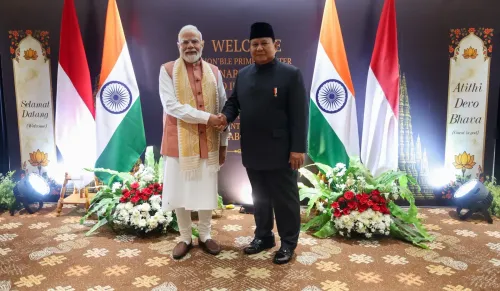
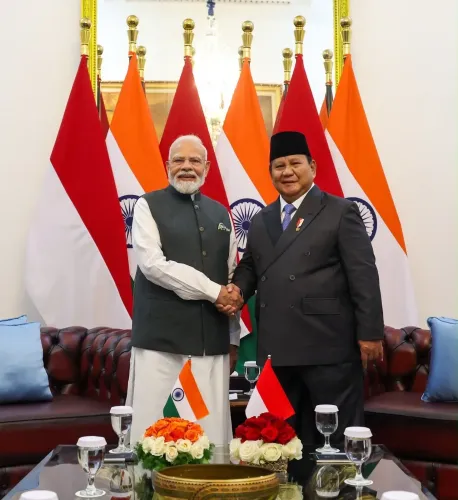
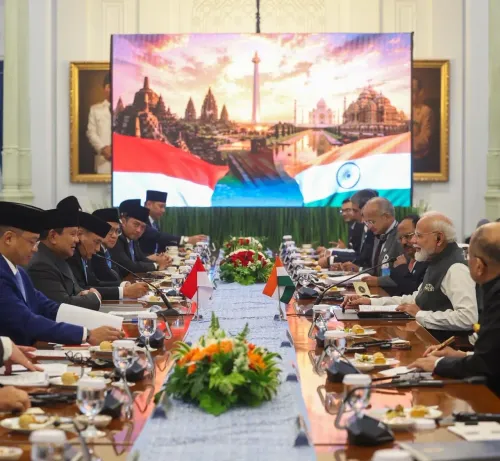
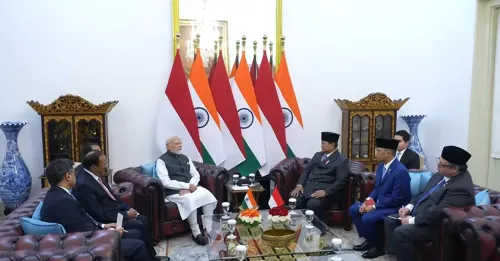
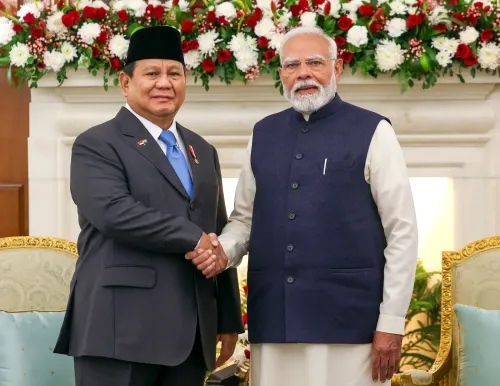
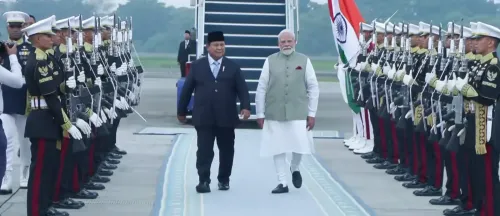
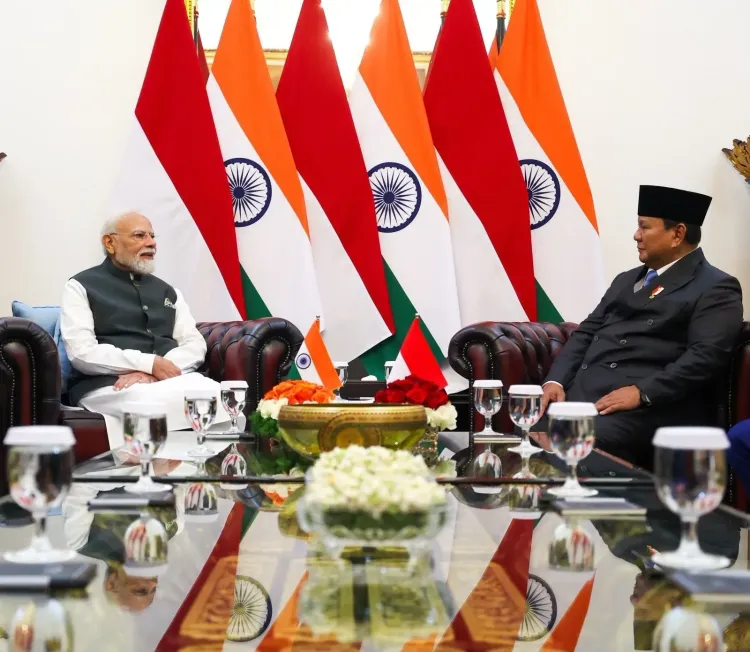
PM Modi and Indonesian President Prabowo Subianto met at Merdeka Palace, Jakarta on 7 July and jointly condemned terrorism in all its forms.
Both sides agreed to cooperate on counter-terrorist financing , AML/CFT standards , online radicalisation, and PVE programmes .
An MoU on Counter Terrorism Cooperation between India and Indonesia is to be signed in the near future.
The third India-Indonesia Security Dialogue (IISD) is planned as a platform for comprehensive security discussions.
Cooperation in cyber security, AI, digital public infrastructure, CERT , and critical information protection was also agreed upon.
Broader talks covered trade, agriculture, food security, health, space , and maritime cooperation .
Prime Minister Narendra Modi and Indonesian President Prabowo Subianto on Tuesday, 7 July jointly condemned terrorism in all its forms and pledged to deepen bilateral cooperation in preventing and countering terrorism and violent extremism, following high-level talks at Merdeka Palace in Jakarta. The summit produced a comprehensive India-Indonesia Joint Statement covering counter-terrorism, cyber security, trade, and emerging technologies.
Key Counter-Terrorism Commitments
The two leaders called for a zero-tolerance approach to terrorism and reaffirmed their commitment to disrupting terror financing channels. The Joint Statement outlined cooperation across counter-terrorist financing, enforcement of internationally agreed Anti-Money Laundering and Countering Financing of Terrorism (AML/CFT) standards, and prevention of the misuse of new and emerging technologies for terrorist purposes.
Both sides also agreed to address terrorist recruitment — including online radicalisation through digital platforms — and to strengthen cooperation on countering radicalisation and Prevention of Violent Extremism (PVE) programmes. Modi and Subianto specifically called for action against globally proscribed terrorists and terror entities listed under the UN Security Council 1267 Sanctions Committee.
MoU on Counter-Terrorism and Security Dialogue
The Joint Statement noted the two governments had welcomed the early conclusion of a Memorandum of Understanding (MoU) on Cooperation in Counter Terrorism, to be signed in the near future. The leaders also welcomed the planned convening of the third India-Indonesia Security Dialogue (IISD) as a dedicated platform to address security concerns comprehensively.
Recognising the linkages between terrorism and transnational organised crime, both sides agreed to enhance cooperation — including through sharing of information and best practices — in accordance with their respective domestic laws and international obligations. Cooperation in bilateral and multilateral forums, including the United Nations and the Financial Action Task Force (FATF), was also reaffirmed.
Cyber Security and Emerging Technologies
Beyond counter-terrorism, both leaders agreed to explore cooperation in the cyber sector, covering policy dialogue, capacity building, digital public infrastructure, financial technology, artificial intelligence, digital forensics, and Computer Emergency Response Team (CERT) cooperation. Protection of critical information infrastructure was also flagged as a priority area.
In a post on X, Modi described the discussions as productive, noting that India-Indonesia relations had 'acquired new momentum and greater depth' in recent years. He added that the two nations had agreed to work closely in space, telecommunications, artificial intelligence, Digital Public Infrastructure and other emerging technologies going forward.
Broader Bilateral Agenda
Earlier in the day, talks at Istana Merdeka covered a wide range of sectors including trade, human resource development, agriculture, food security, and health services. As two of the Indo-Pacific's major maritime nations, defence, security, and maritime cooperation also featured prominently in the bilateral agenda.
The summit underscores a broader strategic convergence between the world's largest democracy and Southeast Asia's largest economy at a time when regional security architectures are under increasing pressure. The outcome documents and the forthcoming MoU signing will be closely watched by both ASEAN partners and Western allies tracking India's Indo-Pacific engagement.
Point of View
CERT cooperation, UN 1267 enforcement, and an imminent MoU. What is less clear is the enforcement architecture: both nations have historically differed on how broadly to define 'violent extremism', and Indonesia's domestic political sensitivities around Islamist groups have complicated past security cooperation. The third IISD and the MoU signing will be the real tests of whether this joint statement translates into actionable intelligence-sharing or remains aspirational. For India, locking in Indonesia — ASEAN's largest economy — as a counter-terrorism partner is a strategic win, but the details of implementation will matter far more than the headline commitments.
NationPress
6 Oct 2026
Frequently Asked Questions
What did PM Modi and President Prabowo Subianto agree on in Jakarta?
The two leaders agreed to enhance cooperation in counter-terrorism, counter-terrorist financing, online radicalisation, cyber security, and emerging technologies during their summit at Merdeka Palace in Jakarta on 7 July. They also welcomed the early conclusion of an MoU on Counter Terrorism Cooperation to be signed in the near future.
What is the India-Indonesia Security Dialogue (IISD)?
The India-Indonesia Security Dialogue is a bilateral platform dedicated to discussing comprehensive security issues between the two nations. The third edition of the IISD was welcomed by both leaders at the Jakarta summit as a forum to address terrorism, organised crime, cyber threats, and defence cooperation.
How will India and Indonesia cooperate on counter-terrorism financing?
Both countries agreed to promote internationally agreed Anti-Money Laundering and Countering Financing of Terrorism (AML/CFT) standards and to disrupt terror financing channels. They also reaffirmed cooperation through multilateral bodies including the United Nations and the Financial Action Task Force (FATF).
What cyber security cooperation was agreed between India and Indonesia?
The two sides agreed to cooperate on policy dialogue, capacity building, digital public infrastructure, artificial intelligence, digital forensics, Computer Emergency Response Team (CERT) cooperation, and protection of critical information infrastructure. Financial technology and digital skills capacity building were also included.
What other areas did Modi and Prabowo discuss beyond security?
Beyond security, the leaders discussed trade, human resource development, agriculture, food security, health services, space, telecommunications, and maritime cooperation. Both nations are major maritime powers in the Indo-Pacific, and defence and maritime cooperation featured prominently in the bilateral agenda.