CM Revanth Reddy meets CPI delegation, defends maize procurement
Synopsis
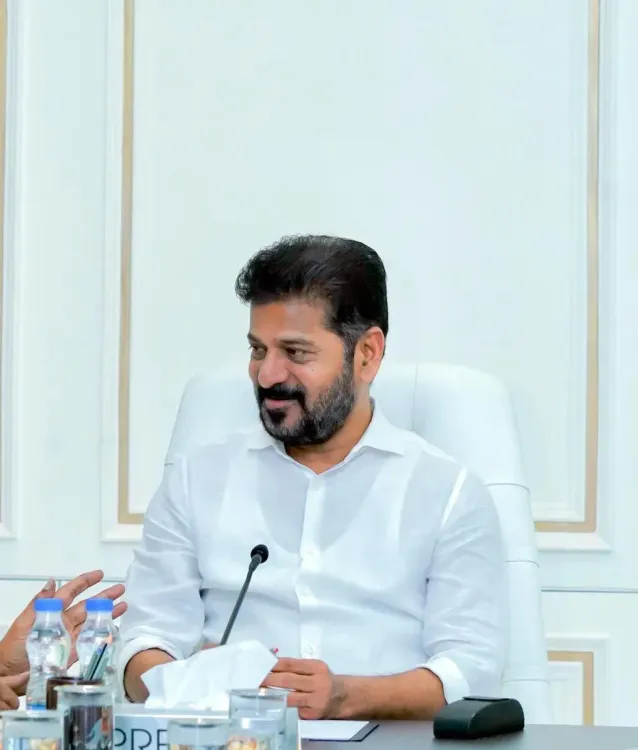
A CPI delegation led by MLA Kunamaneni Sambasiva Rao met Telangana CM Revanth Reddy at the state secretariat on 25 May 2026, thanking him for raising minimum wages. The CM defended the state's decision to procure maize independently, saying farmer welfare takes priority even if the government bears losses.
Key Takeaways
A CPI delegation led by MLA Kunamaneni Sambasiva Rao met CM Revanth Reddy at the Dr.
Ambedkar Telangana State Secretariat on 25 May 2026 .
The delegation formally thanked the Chief Minister for the state government's decision to raise minimum wages for workers.
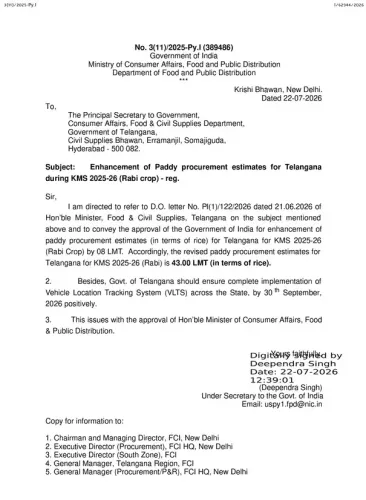
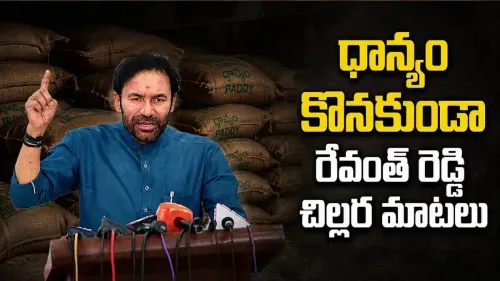
CM Revanth Reddy stated the state is procuring paddy without central government support and is also buying maize despite the central government declining to do so.
The Chief Minister said the government is willing to absorb losses to ensure farmers do not face hardship from unsold maize stocks.
Rajya Sabha member Vem Narender Reddy and several senior CPI leaders attended the meeting alongside the delegation.
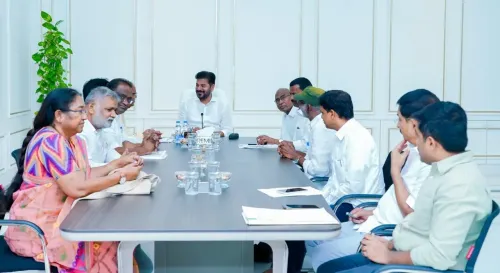
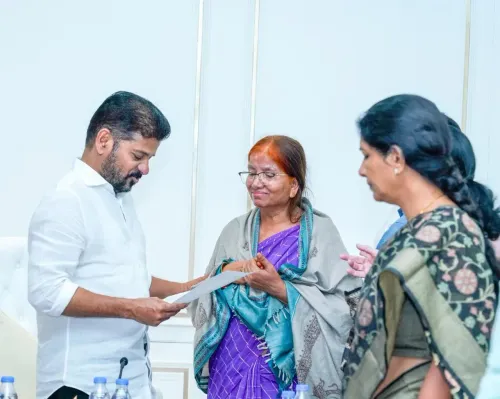
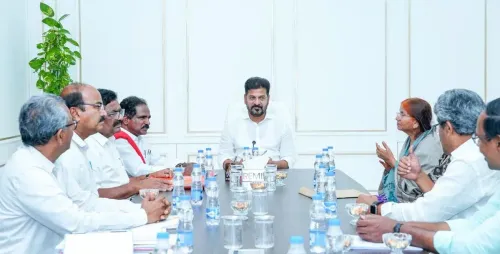
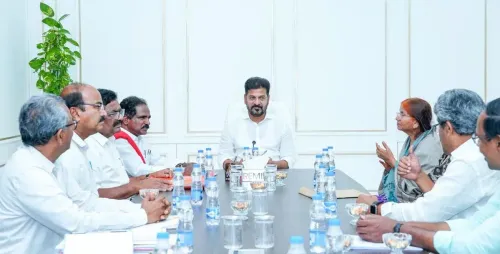
The Chief Minister's Office of Telangana announced on Monday, 25 May 2026 that a Communist Party of India (CPI) delegation met Chief Minister A. Revanth Reddy at the Dr. B.R. Ambedkar Telangana State Secretariat in Hyderabad. The delegation, led by CPI MLA Kunamaneni Sambasiva Rao, thanked the Chief Minister for the state government's decision to raise minimum wages for workers.
Context
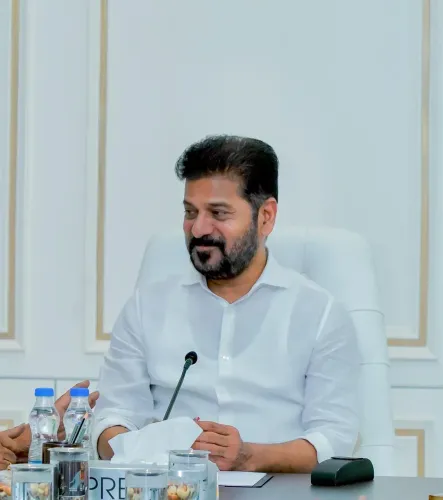
During the meeting, CM Revanth Reddy addressed concerns around farmers, stating that the state is procuring paddy even without the cooperation of the central government. He noted that maize output in the state has been strong this season but that the central government has not stepped in to purchase it. 'Even if the government incurs losses, farmers should not face hardship — that is why we are procuring maize,' the Chief Minister was quoted as saying.
The delegation included CPI MLC Satyam, leaders Chada Venkat Reddy, Pashya Padma, E. Narasimha, Bagam Hemantha Rao, Shankar, and Bala Narasimha, as well as VS Bose. Rajya Sabha member Vem Narender Reddy was also present at the meeting.
Policy Backdrop
Telangana has periodically revised minimum wages for scheduled employments under the Minimum Wages Act, with revisions gaining momentum after the change of government in December 2023 when the Congress came to power. State-led grain procurement has been a feature of Telangana's agrarian policy since the 2014-15 season, designed to supplement central purchases when off-take by the Food Corporation of India falls short of farmer demand.
The friction between state and central procurement agencies over coarse cereals such as maize reflects a wider pattern across India, where states ruled by parties other than the one at the Centre have often stepped in with their own buying operations to prevent distress sales by farmers.
Stakeholders and Impact
The minimum-wage revision directly benefits agricultural and industrial labourers across Telangana, a constituency that left parties like the CPI have historically championed. For maize farmers, the state's commitment to procurement — even at a financial cost to the exchequer — provides a price floor that would otherwise be absent given the central government's current stance.
The CPI's decision to publicly thank the Chief Minister signals a degree of political alignment between the ruling Congress government and the left on labour and agrarian issues, which could carry weight in future legislative business and in rural constituencies where the CPI retains organisational presence.
What's Next
Attention will now turn to the Kharif 2026 procurement calendar and whether the Telangana government allocates supplementary budget funds to sustain maize purchases without central reimbursement. Any parliamentary questions during the upcoming monsoon session on central maize procurement policy could further sharpen the political debate. The state's ability to absorb procurement costs without fiscal strain will be a key test of the government's commitment to the promise made to farmers in this meeting.
Point of View
While the Chief Minister gains public validation from an ideologically credible partner. Revanth Reddy's framing of maize procurement as a state duty despite central non-cooperation is a calibrated move in the ongoing federal tug-of-war over agricultural support, a theme that has energised opposition-ruled states across India. By absorbing procurement costs, Telangana positions itself as farmer-first even at fiscal risk, which carries electoral weight in agrarian districts. The CPI's visible endorsement also nudges the narrative away from intra-Congress tensions and toward a broader progressive coalition image for the government.
NationPress
9 Oct 2026
Frequently Asked Questions
Why did the CPI delegation meet CM Revanth Reddy?
The CPI delegation met CM Revanth Reddy primarily to thank him for the Telangana government's decision to increase minimum wages for workers. They also discussed issues related to farmers, including paddy and maize procurement.
What did CM Revanth Reddy say about maize procurement in Telangana?
CM Revanth Reddy said that maize output in Telangana has been strong but the central government is not purchasing it. He stated that the state government is procuring maize on its own, even if it means incurring losses, to ensure farmers do not face hardship.
Who led the CPI delegation that met the Telangana Chief Minister?
The CPI delegation was led by CPI MLA Kunamaneni Sambasiva Rao. It also included CPI MLC Satyam, several party leaders, and Rajya Sabha member Vem Narender Reddy.
Where did the CPI delegation meet CM Revanth Reddy?
The meeting took place at the Dr. B.R. Ambedkar Telangana State Secretariat in Hyderabad, which houses the Chief Minister's office.
What is Telangana's stance on paddy procurement without central support?
CM Revanth Reddy stated that Telangana is procuring paddy even without cooperation from the central government, continuing the state's practice of independent grain procurement to support farmers when central agency off-take falls short.