5 Congress MPs including Chidambaram backed UPI MDR framework in Parliament
Synopsis
The Congress party's public attack on UPI fees hits a credibility wall: five of its own MPs, including P. Chidambaram, signed off on a parliamentary committee report urging a tiered MDR framework for UPI — with no dissent recorded. The episode exposes a sharp gap between party rhetoric and its lawmakers' positions inside Parliament.
Key Takeaways
Five Congress MPs — P.
Chidambaram , Manish Tewari , Gaurav Gogoi , Kishori Lal , and K.
Gopinath — backed a tiered UPI MDR framework when the Standing Committee on Finance adopted its report on 12 August .
The committee urged the Department of Financial Services to notify and operationalise the tiered MDR model 'without delay,' warning that delays threaten cybersecurity and fraud-prevention investments.
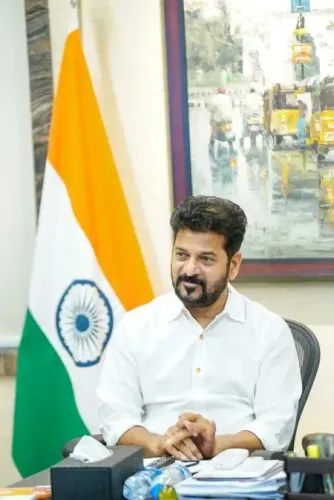
Rahul Gandhi publicly criticised the Centre over fees on UPI transactions above ₹2,000 , directly contradicting his party colleagues' committee position.
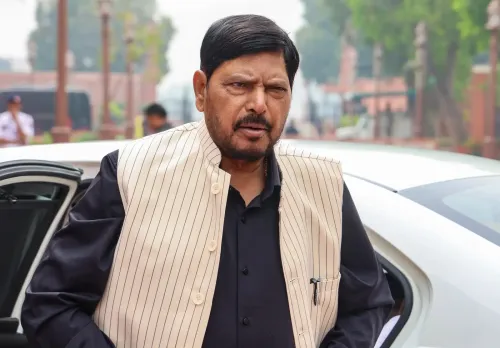
Union Minister Ramdas Athawale called Gandhi's allegation that the decision was taken under US pressure 'completely baseless.' BJP MP Gulam Ali Khatana accused the Congress of trying to create fear among citizens over the UPI charge issue.
New Delhi, 16 September 2026: Even as Lok Sabha Leader of Opposition Rahul Gandhi attacked the Centre over its decision to levy fees on Unified Payments Interface (UPI) transactions above ₹2,000, five sitting Congress MPs — including former Finance Minister P. Chidambaram and former Union Minister Manish Tewari — had already backed a tiered Merchant Discount Rate (MDR) framework for UPI inside Parliament, with no dissent recorded.
What the Parliamentary Committee Recommended
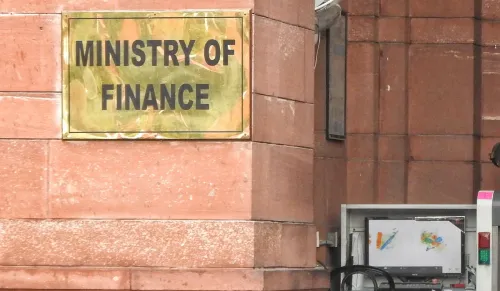
The Standing Committee on Finance this year pressed for a tiered MDR/revenue framework for UPI, stating it should be 'notified and operationalised without delay.' The five Congress MPs — P. Chidambaram, Manish Tewari, Gaurav Gogoi, Kishori Lal, and K. Gopinath — were part of the committee and were present on 12 August when the report was formally adopted. The published minutes record no dissent from any of them.
According to the committee's findings, 'establishing a viable revenue mechanism is critical to ensuring that the UPI ecosystem achieves financial sustainability without perpetually straining the Government exchequer.' The panel further recommended that the Department of Financial Services concurrently explore a self-reliant, tiered revenue model even as the proposed three-year multi-year scheme and cashback components work to democratise digital payments in untapped Tier 3–6 cities.
The Committee's Concern Over Delays
The committee noted that legislative enabling provisions for a tiered MDR structure have already been brought forward, consistent with its earlier push for a viable revenue model. In its assessment, any further delay in notifying and operationalising this framework leaves payment service providers 'heavily dependent on inadequate subsidies, thereby threatening critical investments in cybersecurity, fraud prevention, and network infrastructure.' The panel's language signals urgency rarely seen in parliamentary committee reports on digital payments.
NDA's Pushback on Gandhi's Allegations
On Wednesday, National Democratic Alliance (NDA) leaders firmly rejected Rahul Gandhi's concerns, including his allegation that the UPI fee decision was taken under pressure from the United States. Union Minister Ramdas Athawale called the claim 'completely baseless,' arguing that the decision on UPI transactions of up to ₹2,000 was fair and would not burden small vendors and businesses.
'Rahul Gandhi's allegation that this step was taken under US pressure is completely baseless. Rahul Gandhi is adept at spreading falsehoods and habitually makes misleading claims on various issues. America has nothing to do with this decision,' Athawale said.
Bharatiya Janata Party (BJP) MP Gulam Ali Khatana also defended the government's position, accusing the Congress of deliberately stoking fear among the public on the UPI charges issue.
Why This Contradiction Matters
The divergence between the Congress party's public posture and the position its own MPs endorsed inside a parliamentary committee raises pointed questions about political consistency. The MDR debate is not new — UPI's zero-MDR regime, while popular with consumers, has long been flagged by banks, fintech firms, and payment aggregators as financially unsustainable without continued government subsidy. The committee's endorsement of a tiered model reflects that structural concern. Whether the political controversy triggered by Gandhi's remarks reshapes the party's formal stance remains to be seen.
Point of View
Including a former Finance Minister, endorse a tiered MDR framework inside a parliamentary committee, only to have the party's most prominent face attack the same policy in public, is a significant internal contradiction. What this episode actually reveals is how poorly India's opposition has handled the UPI sustainability debate: the financial case for some form of MDR on high-value transactions is sound, and the committee report reflects industry consensus. Purely populist opposition risks delaying a reform that even Congress technocrats quietly support.
NationPress
17 Sept 2026
Frequently Asked Questions
Which Congress MPs supported the UPI MDR framework in Parliament?
Five Congress MPs — P. Chidambaram, Manish Tewari, Gaurav Gogoi, Kishori Lal, and K. Gopinath — were part of the Standing Committee on Finance that endorsed a tiered MDR framework for UPI. The report was adopted on 12 August with no dissent recorded from any of them.
What is the UPI MDR framework recommended by the parliamentary committee?
The Standing Committee on Finance recommended a tiered Merchant Discount Rate (MDR) / revenue framework for UPI to make the ecosystem financially self-sustaining. It called on the Department of Financial Services to notify and operationalise this model without delay, warning that continued reliance on government subsidies threatens investment in cybersecurity and fraud prevention.
Why is Rahul Gandhi opposing UPI fees?
Rahul Gandhi criticised the Centre's decision to impose charges on UPI transactions above ₹2,000, calling it a burden on users. He also alleged, without providing evidence, that the decision was taken under US pressure — a claim NDA leaders have rejected as baseless.
What did the NDA government say about the UPI fee decision?
Union Minister Ramdas Athawale defended the move, saying transactions up to ₹2,000 would remain unaffected and that small vendors and businesses would not face difficulties. He dismissed Gandhi's US-pressure allegation as 'completely baseless.' BJP MP Gulam Ali Khatana separately accused the Congress of trying to spread fear over the issue.
What is the current status of UPI's MDR policy in India?
UPI currently operates under a zero-MDR regime for most transactions, sustained by government subsidies. The Standing Committee on Finance has now recommended moving to a calibrated, tiered MDR structure — particularly for high-value transactions — to ensure long-term financial sustainability of the payments ecosystem.