MDR on UPI not a tax, says Mohandas Pai; 96% transactions unaffected

Synopsis
Aarin Capital Chairman TV Mohandas Pai has made the clearest industry case yet for UPI's proposed MDR: 96% of transactions are exempt, the charge mirrors credit-card processing fees, and without it, scaling UPI from 24 billion to 50 billion transactions may cost depositors instead of merchants. The debate now shifts to whether India's small-business ecosystem agrees.
Key Takeaways
TV Mohandas Pai , Chairman of Aarin Capital and former Infosys CFO, backed the proposed MDR on UPI on Wednesday in Bengaluru .
96 per cent of UPI transactions will be unaffected — P2P payments and all transactions below Rs 2,000 are fully exempt.
A 0.4 per cent MDR applies only to merchant transactions exceeding Rs 2,000 .
Pai argued MDR is a service fee paid to banks and payment providers — not a government tax — comparable to credit-card processing charges.
UPI transaction volumes are projected to grow from 24 billion to 50 billion within two years, requiring major infrastructure investment.
Rajasthan Finance Commission Chairman Arun Chaturvedi also backed the move, citing India's global leadership in digital payments.
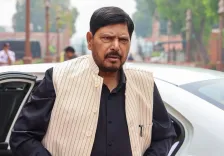
TV Mohandas Pai, Chairman of Aarin Capital and former CFO and board member at Infosys, on Wednesday backed the proposed Merchant Discount Rate (MDR) on UPI transactions, asserting that 96 per cent of all UPI payments will remain completely unaffected by the charges. Speaking to reporters in Bengaluru, Pai sought to address public concern over the levy, drawing a clear distinction between a service fee and a tax.
Why Most UPI Users Will Not Feel the Pinch
Pai explained that the structure of the proposed MDR is designed to spare the overwhelming majority of users. 'Roughly 70 per cent of all payments are person-to-person (P2P) — which carries no charges whatsoever. The remaining payments below Rs 2,000 are also completely exempt. Only transactions above Rs 2,000 will be subject to a nominal MDR,' he said.
He further noted that even those crossing the Rs 2,000 threshold have a practical workaround. 'If someone needs to make a payment of Rs 2,500, most people will simply split it into two smaller payments — by paying Rs 1,500 and Rs 1,000 — and remain below the Rs 2,000 threshold,' Pai explained.
MDR Is Not a Tax — Here Is the Distinction
Pai was emphatic that the MDR charge should not be conflated with a government-imposed tax. 'It is important to clarify that MDR is not a tax. It is a payment made to the banks and payment providers, similar to how credit cards work,' he said. He drew a direct parallel: when merchants accept credit cards, they already pay a processing fee to the card company and the issuing bank. The proposed UPI MDR, he argued, follows the same commercial logic.
This comes amid growing debate over whether introducing any charge on UPI could dent India's digital payments momentum — a concern that Pai's remarks appear aimed at directly countering.
The Infrastructure Upgrade Argument
A central plank of Pai's defence of the MDR is the mounting cost of maintaining and scaling UPI's backend. He pointed out that UPI once recorded transaction failure rates as high as 15 per cent to 30 per cent during sudden volume surges. With transaction volumes projected to grow from 24 billion to 50 billion within two years, the entire IT infrastructure must be overhauled to support real-time processing at scale.
'Who is going to fund that upgrade? If banks bear the entire cost, it ultimately impacts depositors. Instead, the cost will now be shared by merchants who directly benefit from offering online payments,' Pai stated. He added that the financial losses and capital investments required to sustain the existing infrastructure have already been substantial.
Broader Industry and Official Backing
Rajasthan Finance Commission Chairman Arun Chaturvedi also voiced support, noting that India has earned global recognition as the leading nation in digital payments by volume. 'India has established its identity in economic transactions globally,' Chaturvedi said, adding that the world is appreciating India's emergence as the foremost UPI-powered economy.
The proposed 0.4 per cent MDR applies specifically to merchant transactions exceeding Rs 2,000 — a targeted levy that proponents argue will generate the revenue needed to future-proof a payments network that now underpins hundreds of millions of daily transactions.
What Comes Next
The MDR debate is likely to intensify as the government and the Reserve Bank of India weigh the trade-off between sustaining infrastructure investment and preserving the near-zero-cost model that drove UPI's mass adoption. Merchant bodies and small-business associations are expected to scrutinise the implementation closely, particularly around enforcement of the Rs 2,000 exemption threshold.
Point of View
Yet it sidesteps the real concern: small merchants operating on razor-thin margins will feel even a 0.4 per cent levy acutely, especially if the Rs 2,000 threshold is not rigorously enforced. The infrastructure argument is legitimate — UPI's failure rates and the coming volume surge are real engineering problems — but the burden-sharing calculus needs to be transparent. If banks have long cross-subsidised UPI on the expectation of eventual monetisation, that arrangement should be disclosed, not quietly unwound through a merchant levy framed as routine maintenance.
NationPress
16 Sept 2026
Frequently Asked Questions
What is MDR on UPI and who does it apply to?
MDR (Merchant Discount Rate) on UPI is a proposed charge of 0.4 per cent on merchant transactions exceeding Rs 2,000. It does not apply to person-to-person (P2P) payments or any transaction below Rs 2,000, meaning roughly 96 per cent of all UPI transactions remain exempt.
Why is TV Mohandas Pai saying MDR is not a tax?
Pai argues that MDR is a service fee paid directly to banks and payment providers — not collected by the government — similar to the processing fee merchants already pay when accepting credit cards. He says the distinction is important to prevent public misunderstanding of the charge's nature and purpose.
Why is the MDR on UPI being introduced now?
According to Pai, UPI's infrastructure requires a major upgrade to handle projected volume growth from 24 billion to 50 billion transactions within two years. He says the cost of this upgrade must be shared by merchants who benefit from digital payments, rather than being absorbed entirely by banks — which would ultimately affect depositors.
Can users avoid the MDR charge on UPI?
Yes, according to Pai. Since only transactions above Rs 2,000 attract the charge, a payment of, say, Rs 2,500 can be split into two smaller amounts — such as Rs 1,500 and Rs 1,000 — both of which fall below the threshold and are therefore exempt.
What was UPI's transaction failure rate before infrastructure improvements?
UPI previously recorded transaction failure rates as high as 15 per cent to 30 per cent during sudden surges in volume, according to Pai. With volumes set to double in two years, he argues the entire IT backend must be upgraded — and the MDR is intended to help fund that work.