NDA hits back at Rahul Gandhi over UPI charges, dismisses 'US pressure' claim
Synopsis
The NDA's wall-to-wall pushback against Rahul Gandhi's 'US pressure' charge on UPI fees reveals how politically charged India's payments infrastructure has become. With NPCI revising MDR on transactions above ₹2,000 — and the Finance Ministry forced to publicly deny foreign influence — what began as a technical fee tweak has turned into a full-blown sovereignty debate.
Key Takeaways
NDA leaders on 16 September 2026 rejected Rahul Gandhi's claim that the UPI fee change was driven by US pressure , calling it baseless.
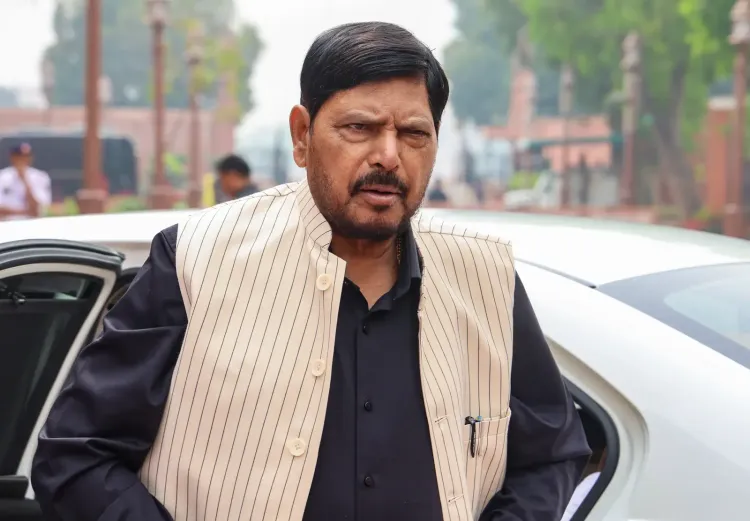
Union Minister Ramdas Athawale defended the 0.4% MDR on UPI transactions above ₹2,000 , saying it is not a burden on small vendors.
NPCI revised its MDR framework on Tuesday: transactions above ₹2,000 at select merchants now attract charges; small merchants and low-value transactions remain at zero MDR.
The Finance Ministry posted on X that UPI decisions are made independently, rejecting foreign-influence claims.
Gandhi alleged on X that American payment companies had long opposed India's zero-MDR policy and that the government had shifted course in their favour.
UPI has been operational since 2016 and is the world's largest real-time interoperable payment system.
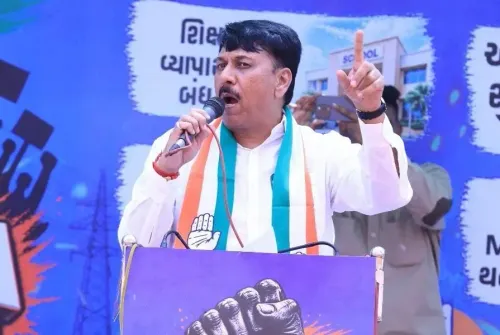
New Delhi, 16 September 2026 — National Democratic Alliance (NDA) leaders on Wednesday mounted a coordinated defence of the government's revised UPI transaction fee framework, rejecting Lok Sabha Leader of Opposition Rahul Gandhi's allegation that the change was made under pressure from the United States and calling his claims baseless.
What the NDA Leaders Said
Union Minister Ramdas Athawale said the decision — which introduces a 0.4% Merchant Discount Rate (MDR) on select UPI transactions above ₹2,000 — was fair and would not burden small vendors. 'For transactions up to ₹2,000, small vendors and businesses face no issues. However, if their business transactions exceed ₹2,000, charging a nominal 0.4 per cent fee is not a huge burden. For instance, on transactions up to ₹75,000, they only have to pay around ₹300,' Athawale said.
Athawale directly dismissed Gandhi's 'US pressure' allegation. 'Rahul Gandhi's allegation that this step was taken under US pressure is completely baseless. America has nothing to do with this decision,' he said.
BJP MP Gulam Ali Khatana accused the Indian National Congress (INC) of attempting to manufacture fear. 'Congress should look within itself and see what it did during its time. There is no burden on the poor regarding UPI charges. However, when you use a facility and make bulk transactions, institutions should receive some consideration,' Khatana said.
BJP Spokesperson Invokes Congress History
BJP National Spokesperson Guru Prakash went further, accusing Gandhi of harbouring what he termed a 'Trump phobia' and drawing a historical parallel with former Prime Minister Indira Gandhi. 'Rahul Gandhi ji has developed a Trump phobia, an America phobia. Every decision that is made is under pressure from America. Indira Gandhi ji used to say, 'America's hand is involved', and she even called Jayaprakash Narayan ji a CIA agent,' Guru Prakash said.
He also invoked a statement attributed to veteran Congress leader P. Chidambaram, arguing the party had previously questioned the practicality of digital payments for small vendors. 'Chidambaram ji used to say, 'If UPI payments come and payments are made through technology, how will a vegetable vendor manage?' Today, the world's most robust, transparent and better UPI interface is in India,' Guru Prakash added.
JD(U) and Finance Ministry Back the Move
Janata Dal (United) National Spokesperson Rajiv Ranjan sought to reassure ordinary users. 'Ordinary consumers do not need to worry too much. Generally speaking, we can say that this is a very minor increase, and even that cost will have to be borne by the merchants,' he said.
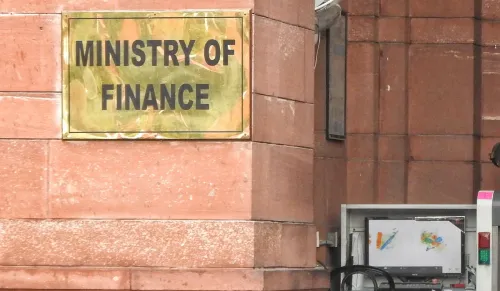
Separately, the Finance Ministry posted on social media platform X that India's digital payment decisions are made independently and debunked claims linking the MDR revision to foreign influence. 'Since its launch in 2016, UPI has grown into the world's largest real-time interoperable payment system — entirely on India's own terms,' the ministry stated.
What Rahul Gandhi Alleged
The row erupted after Gandhi on Tuesday posted on X: 'The Modi government has quietly opened the door to imposing fees on UPI.' He alleged that American payment companies had 'long opposed India's zero-MDR policy' and that the government had 'opened the path to changing the policy in exactly that direction.'
The trigger was a National Payments Corporation of India (NPCI) announcement on Tuesday revising the MDR framework for select UPI transactions. Under the revised structure, charges apply to certain merchant payments above ₹2,000, while small merchants and low-value transactions continue to enjoy zero MDR.
What Happens Next
The political battle over UPI's fee structure is likely to intensify in Parliament, with the opposition expected to press the government for clarity on the NPCI's rationale and implementation timeline. Whether the revised MDR affects consumer behaviour on India's dominant payments rail — which processed over 100 billion transactions since its 2016 launch — remains the central question ahead.
Point of View
Which made UPI the world's largest real-time payment system, been revised now, and who benefits? Gandhi's 'US pressure' framing may be politically loaded, but NPCI has yet to offer a transparent public rationale for the timing and the specific 0.4% figure. The Finance Ministry posting a defence on X rather than issuing a detailed policy note is itself telling. India's digital payments success was built on a deliberate public-interest subsidy; any departure from that deserves more than partisan rebuttals.
NationPress
16 Sept 2026
Frequently Asked Questions
What is the UPI MDR change that sparked the political row?
The National Payments Corporation of India (NPCI) revised its Merchant Discount Rate (MDR) framework, introducing a charge on select UPI transactions above ₹2,000 at certain merchants. Small merchants and low-value transactions continue to operate under zero MDR, as before.
What did Rahul Gandhi allege about the UPI fee decision?
Gandhi posted on X that the Modi government had 'quietly opened the door to imposing fees on UPI' and alleged that American payment companies, which had long opposed India's zero-MDR policy, stood to benefit from the change. He described it as the government acting under foreign pressure.
How did the NDA respond to Rahul Gandhi's claims?
NDA leaders, including Union Minister Ramdas Athawale, BJP MP Gulam Ali Khatana, and BJP spokesperson Guru Prakash, called Gandhi's US-pressure allegation completely baseless. The Finance Ministry also stated on social media platform X that India's digital payment decisions are made independently.
Will ordinary UPI users have to pay more?
According to JD(U) spokesperson Rajiv Ranjan, ordinary consumers do not need to worry, as any cost increase is 'very minor' and will be borne by merchants, not end users. The zero-MDR benefit continues for small merchants and transactions below ₹2,000.
When did UPI launch and how large is it today?
UPI was launched in 2016 and has since grown into the world's largest real-time interoperable payment system, according to the Finance Ministry. The platform underpins hundreds of billions of transactions and has been central to India's digital payments push.