UPI MDR charges from Oct 15: Congress cries 'digital U-turn', AAP threatens Gujarat protests
Synopsis
A 0.4 per cent MDR on UPI merchant payments above ₹2,000 — kicking in on 15 October — has ignited political fireworks in Gujarat, with Congress alleging a ₹5,040 crore annual burden and AAP threatening street protests. The government insists 96 per cent of transactions are unaffected, but the battle over who ultimately pays is only beginning.
Key Takeaways
The Centre has introduced a 0.4 per cent MDR on specified UPI P2M transactions above ₹2,000 , effective 15 October , capped at ₹300 for transactions of ₹75,000 or more.
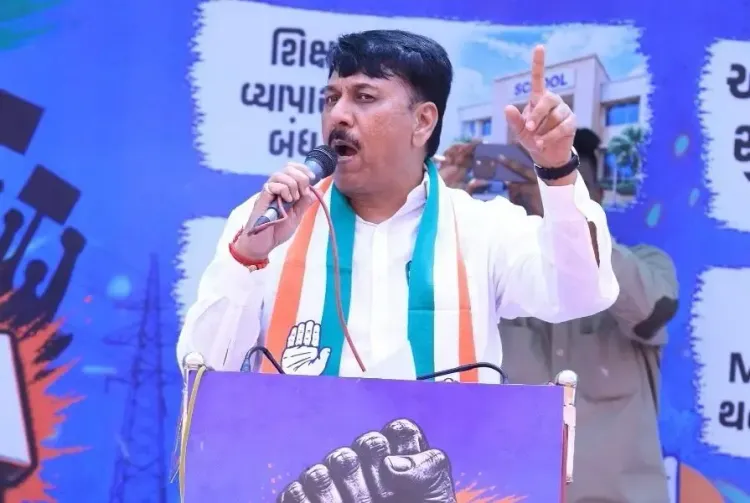
Congress leaders Randeep Singh Surjewala and Amit Chavda labelled the move a 'digital U-turn' and projected an annual burden of ₹5,040 crore on P2M transactions.
AAP's Manoj Sorathiya called it a 'royal decree' and warned of street protests in Gujarat , citing traders' thin margins of 5–7 per cent .
P2P transfers and payments up to ₹2,000 remain free; small merchants receiving up to ₹1 lakh monthly continue under a zero-MDR framework.
The Finance Ministry says MDR is a merchant-side ecosystem fee — not a consumer charge — and banks are barred from letting merchants pass it on.
The government estimates 96 per cent of merchant UPI transactions will remain unaffected by the new structure.
Opposition parties in Gujarat have launched a sharp attack on the Centre's decision to introduce a 0.4 per cent Merchant Discount Rate (MDR) on specified UPI person-to-merchant (P2M) transactions above ₹2,000, effective 15 October, warning that traders will bear the brunt and consumers could eventually foot the bill.
What the New UPI Charge Framework Says
Under the framework announced by the National Payments Corporation of India (NPCI), a 0.4 per cent MDR will apply to specified P2M transactions above ₹2,000, capped at ₹300 for transactions of ₹75,000 or more. Payments to merchants up to ₹2,000 remain free, as do all person-to-person (P2P) transfers regardless of amount.
Certain sectors attract lower charges: transactions above ₹2,000 involving railways, telecommunications, insurance, fuel, and agricultural inputs will attract a flat MDR of just ₹5. Capital-market transactions will attract 0.02 per cent, capped at ₹300. Small merchants receiving up to ₹1 lakh per month through UPI QR codes under the specified small-merchant category will continue under the zero-MDR framework.
The government estimates that approximately 96 per cent of merchant transactions will remain unaffected by the new charge structure.
Congress Calls It a 'Digital U-Turn'
In a joint statement issued on Wednesday, Gujarat Congress In-charge Randeep Singh Surjewala and State Congress President Amit Chavda accused the government of a 'digital U-turn', alleging the move betrays millions of UPI users. The Congress calculated a potential annual burden of ₹5,040 crore on P2M transactions if 5 per cent of projected 2026-27 UPI transaction value falls within the new framework.
The party also raised concerns about whether the new framework could disproportionately benefit large, foreign-backed payment companies, noting that PhonePe and Google Pay together account for roughly 80 per cent of UPI's market by value. It further cautioned that any future expansion of the rate or covered categories could substantially raise the overall burden.
AAP Warns of Street Protests
Aam Aadmi Party (AAP) Gujarat organisational general secretary Manoj Sorathiya called the move a 'royal decree' and warned his party would take to the streets if required. Sorathiya argued that India's retail traders already operate on razor-thin margins of 5 to 7 per cent, and a 0.4 per cent MDR would squeeze them further — with costs likely recovered from consumers.
He also questioned the commercial justification, noting that NPCI already runs a profitable payments infrastructure. 'UPI had helped increase digital transactions and bring financial activity into the formal economy, and the charges could encourage some users to return to cash,' he said.
What the Government Says
The Finance Ministry has clarified that MDR is neither a tax collected by the government nor a direct charge payable by consumers — it is a merchant-side fee distributed among participants in the payments ecosystem, including banks and payment-service providers. Banks have been advised to ensure merchants do not pass the MDR on to customers, while UPI applications have been barred from imposing platform or hidden charges for these payments.
The Centre has described the new system as designed to provide a sustainable revenue model for the rapidly expanding UPI ecosystem while protecting individuals and small merchants. UPI, developed by NPCI — an RBI-regulated entity — has become the backbone of India's retail digital-payments system.
What Happens Next
The revised MDR framework takes effect on 15 October, and political pressure from both the Indian National Congress (INC) and AAP is expected to intensify in the weeks ahead, particularly in Gujarat. How effectively banks and apps enforce the no-pass-through rule will be the immediate flashpoint — and the answer could determine whether the opposition's consumer-impact argument gains traction.
Point of View
Not a consumer tax — is legally accurate but politically fragile. The history of payment surcharges across markets shows that merchant costs migrate to consumers over time, regardless of regulatory prohibitions; India's informal retail sector, with its wafer-thin margins, is especially vulnerable to that transmission. The ₹5,040 crore burden figure from Congress is a projection built on assumptions, but the directional concern is real: every percentage point of MDR erodes the cost advantage that drove UPI adoption. More troubling is the structural question: NPCI's zero-MDR regime was itself a policy choice that suppressed investment in the payments stack. A course correction may be economically necessary — but introducing it without a robust enforcement mechanism for the no-pass-through rule is a governance gap the opposition will exploit relentlessly.
NationPress
16 Sept 2026
Frequently Asked Questions
What is the new UPI MDR charge announced by the government?
The government has introduced a 0.4 per cent Merchant Discount Rate (MDR) on specified UPI person-to-merchant (P2M) transactions above ₹2,000, effective 15 October. The charge is capped at ₹300 for transactions of ₹75,000 or more, and is a merchant-side fee — not a direct charge on consumers.
Will UPI payments below ₹2,000 be affected?
No. Payments to merchants up to ₹2,000 remain completely free under the new framework. All person-to-person (P2P) transfers are also exempt from MDR regardless of the amount transferred.
Why are Congress and AAP opposing the UPI MDR in Gujarat?
Congress has called it a 'digital U-turn', projecting an annual burden of ₹5,040 crore on P2M transactions and questioning whether the framework benefits large foreign-backed payment companies. AAP's Manoj Sorathiya argues it will squeeze traders operating on 5–7 per cent margins, with costs likely passed on to consumers.
Will consumers have to pay extra when using UPI?
The Finance Ministry has stated that MDR is a merchant-side charge and banks have been directed to ensure merchants do not pass it on to customers. UPI apps have also been barred from imposing platform or hidden charges. However, opposition parties argue informal enforcement of this prohibition is uncertain.
Which sectors get lower MDR rates under the new framework?
Transactions above ₹2,000 in railways, telecommunications, insurance, fuel, and agricultural inputs attract a flat MDR of just ₹5. Capital-market transactions attract 0.02 per cent, capped at ₹300. Small merchants receiving up to ₹1 lakh monthly via UPI QR codes continue under the zero-MDR framework.