UPI MDR charge: Congress MPs say Finance panel never discussed 0.4% levy
Synopsis
Congress MPs have directly challenged the government's handling of the new 0.4% UPI MDR, claiming the Parliamentary Standing Committee on Finance was never shown a specific proposal — and that government representatives gave no satisfactory answers when members pressed them. The allegation puts the legislative process itself under scrutiny, not just the policy.
Key Takeaways
NPCI has announced a 0.4 per cent MDR on UPI transactions above ₹2,000 , reversing the zero-MDR regime in place since 2020 .
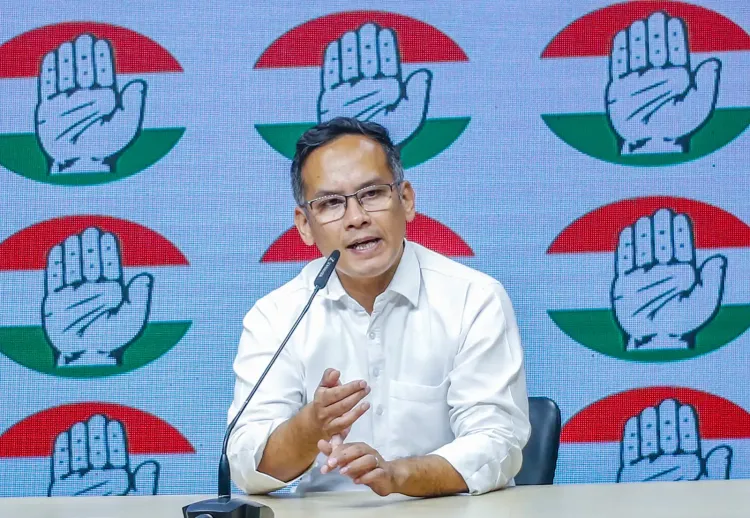
Congress MP Gaurav Gogoi alleged on X that the Parliamentary Standing Committee on Finance was never presented with a specific proposal on the charge.
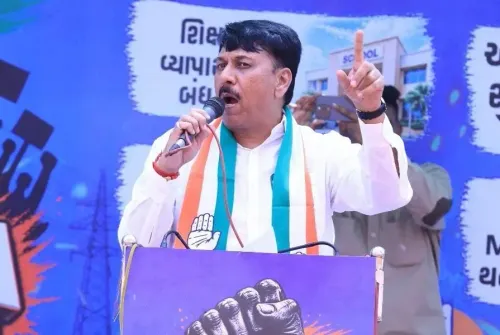
Congress MP Manish Tewari backed the claim and objected to government suggestions that committee members had supported the measure.
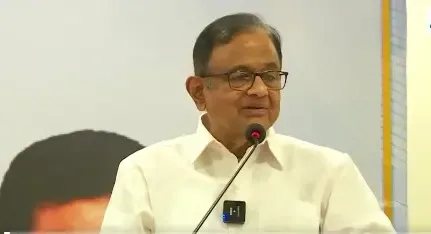
The five Congress members on the Finance Committee include P.
Chidambaram , Manish Tewari , Gaurav Gogoi , Kishori Lal , and K.
Gogoi warned the MDR will hurt small merchants, vendors, and entrepreneurs while benefiting large payment corporations.
Congress MPs on Thursday, 17 September 2026 alleged that the Parliamentary Standing Committee on Finance never deliberated on the recently announced 0.4 per cent Merchant Discount Rate (MDR) on Unified Payments Interface (UPI) transactions above ₹2,000, contradicting what they described as the government's attempt to claim committee backing for the move.
What the Congress MPs alleged
Congress MP Gaurav Gogoi, posting on X, stated that the Department of Finance had placed no specific proposal concerning a UPI-related charge before the committee when its representatives appeared before members. He said that while committee members had raised questions about the rationale for introducing MDR, government representatives did not provide specific or, in his words, 'satisfactory answers.'
'The Parliament Standing Committee on Finance has not discussed the UPI tax proposal that the Modi government has recently announced. The Department of Finance did not have any specific proposal on UPI tax when they met the members of the Finance Committee,' Gogoi said.
He further contended that the 0.4 per cent MDR — which, according to him, most merchants will have to pay to banks and payment processors on UPI receipts above ₹2,000 per transaction — would disproportionately hurt small traders, vendors, and entrepreneurs while benefiting large payment corporations.
'I reiterate that the recent UPI tax policies will hurt the small Indian merchants, vendors, entrepreneurs and help major American corporations,' he added.
Tewari backs Gogoi, cites committee privilege
Congress MP Manish Tewari corroborated Gogoi's account, asserting that the committee had not been presented with details of the proposed rate or its exemptions. He went further, raising concern about what he called the government's misuse of committee proceedings for political positioning.
'It is unfortunate that proceedings of Parliamentary Standing Committees that are supposed to be privileged are now sought to be used by the government to score brownie points,' Tewari said.
He also objected to any suggestion that certain committee members had supported the MDR proposal, calling such a characterisation 'inaccurate and fallacious' given the confidential nature of committee deliberations.
'To claim that a particular measure was supported by 'certain members' of the committee is an inaccurate and fallacious characterisation of the confidential proceedings of a Parliamentary Committee,' Tewari added.
Who was on the committee
The five Congress MPs who were part of the Parliamentary Standing Committee on Finance include former Finance Minister P. Chidambaram, Manish Tewari, Gaurav Gogoi, Kishori Lal, and K. Gopinath. Their collective pushback signals a coordinated opposition front against the MDR rollout.
Context and what it means for merchants
The National Payments Corporation of India (NPCI) announced the 0.4 per cent MDR on UPI transactions exceeding ₹2,000, a significant policy shift for a payments ecosystem that has operated largely fee-free since the government waived MDR on UPI in 2020. India currently processes billions of UPI transactions monthly, with small merchants among the heaviest users of the platform. Critics argue the charge could deter adoption at the grassroots level, particularly among street vendors and micro-enterprises for whom payment costs directly erode thin margins. This comes amid broader debate over the long-term sustainability of zero-MDR UPI, with banks and payment processors having long flagged revenue concerns. The government has not yet publicly responded to the Congress allegations regarding the committee process.
Point of View
That is not merely a political dispute — it is a question of parliamentary accountability. India's UPI ecosystem was built partly on the promise of low-cost, friction-free payments for small merchants; reintroducing MDR without transparent legislative deliberation risks eroding that trust. The government's silence on the committee process allegation is notable. What is also missing from mainstream coverage is the structural contradiction: the same administration that championed zero-MDR as a financial inclusion tool is now reversing it, with commerce-level consequences that will fall hardest on the informal economy it claimed to serve.
NationPress
17 Sept 2026
Frequently Asked Questions
What is the new MDR on UPI transactions?
The National Payments Corporation of India (NPCI) has announced a 0.4 per cent Merchant Discount Rate (MDR) on UPI transactions above ₹2,000, meaning merchants will pay this fee to banks and payment processors on qualifying receipts. This marks a significant departure from the zero-MDR framework that has been in place since 2020.
Why are Congress MPs objecting to the UPI MDR charge?
Congress MPs allege that the Parliamentary Standing Committee on Finance was never shown a specific proposal on the MDR charge, and that government representatives gave no satisfactory answers when members raised concerns about its rationale. They also argue the levy will disproportionately hurt small merchants, vendors, and entrepreneurs.
Who are the Congress members on the Parliamentary Standing Committee on Finance?
The five Congress MPs on the committee are former Finance Minister P. Chidambaram, Manish Tewari, Gaurav Gogoi, Kishori Lal, and K. Gopinath. All five are reportedly aligned in opposing the new MDR on UPI.
What did Manish Tewari say about committee proceedings?
Tewari said that parliamentary committee proceedings are confidential and privileged, and objected to what he described as the government's attempt to score political points using those proceedings. He also rejected any characterisation that certain committee members had supported the MDR proposal.
How will the 0.4% UPI MDR affect small businesses?
According to Congress MP Gaurav Gogoi, the charge will increase transaction costs for small merchants, vendors, and entrepreneurs who rely heavily on UPI for everyday payments. Critics argue the fee could deter UPI adoption at the grassroots level, where thin margins make even small additional costs significant.