UN chief Guterres calls for Security Council, IMF reform as economic power shifts
Synopsis
UN Secretary-General Guterres has called out one of global governance's most glaring contradictions: China, the world's second-largest economy, holds just 6.08% of IMF voting power, while the US retains structural dominance built in 1944. With India poised to enter the global top five by GDP but ranked seventh in IMF votes, the push for Bretton Woods and Security Council reform has moved from background noise to the centre of the UN General Assembly agenda.
Key Takeaways
UN Secretary-General António Guterres called for a redistribution of power within multilateral institutions on 17 September .
He identified the UN Security Council and the Bretton Woods system (IMF and World Bank) as the two bodies most urgently needing reform.
China holds only 6.08% of IMF voting power despite ranking second globally by GDP, according to IMF data.
India holds just 2.63% of IMF votes and is reportedly on the verge of reclaiming fifth place in global GDP rankings.
Guterres noted that emerging economies' share of global GDP grows incrementally every day, widening the gap with outdated institutional power structures.
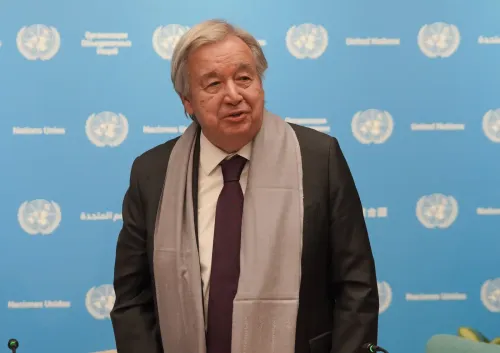
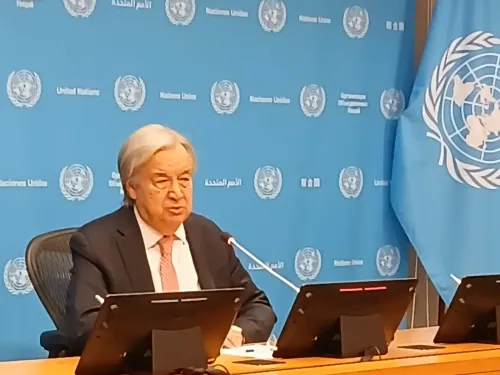
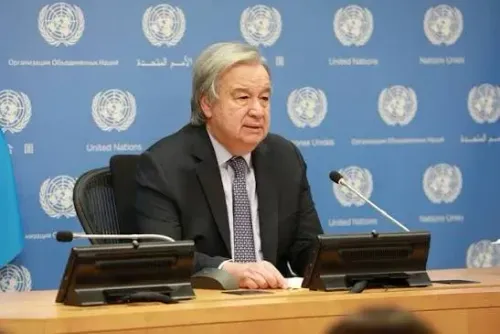
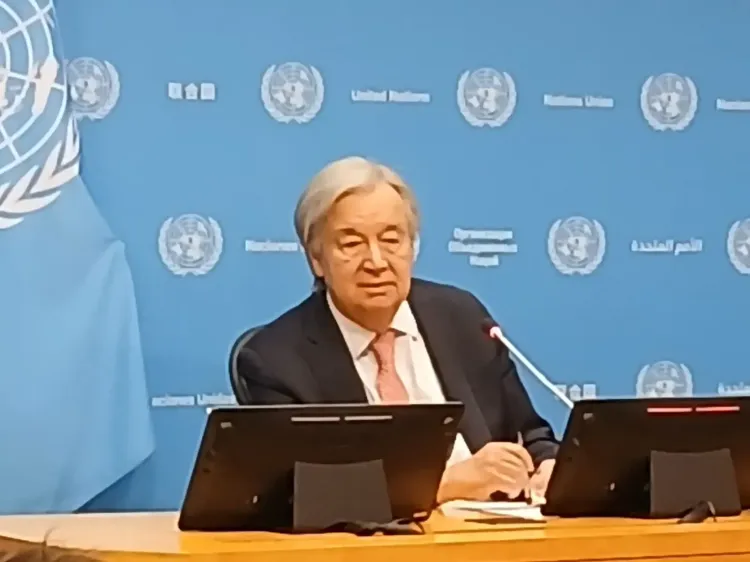
United Nations Secretary-General António Guterres on 17 September called for a fundamental redistribution of power within multilateral institutions, arguing that the global economic order has shifted dramatically since bodies like the International Monetary Fund (IMF), the World Bank, and the UN Security Council were first established. Speaking at a news conference, Guterres said the current structure no longer reflects the realities of the 21st century.
The Core Argument
'The world is changing, and we are seeing the emergence of new powers,' Guterres said. 'So, there must be a redistribution of power — and essential in this redistribution of power is the reform of multilateral institutions.' He specifically identified the Security Council and the Bretton Woods system as the two multilateral frameworks most in need of structural overhaul.
The Bretton Woods institutions — created at a landmark 1944 conference in New Hampshire to manage post-World War II monetary arrangements — gave birth to the IMF and the World Bank. Critics have long argued that the voting structures within these bodies remain anchored to the economic hierarchies of eight decades ago.
Shifting Economic Weights
Guterres painted the shift in stark terms: 'Every single day the percentage of developed countries' share in global GDP diminishes a little bit, and every single day the percentage of emerging economies' share in the global GDP increases a little bit.' He added that the mismatch between where economic weight actually sits today versus when these institutions were designed is the root of the governance problem.
The numbers bear this out. China has leapfrogged to second place globally by GDP, trailing only the United States, according to IMF data. India is reportedly poised to reclaim fifth place in global GDP rankings, moving ahead of Britain. Even within the traditionally industrialised bloc, Germany and Japan rose from the ruins of World War II to occupy the third and fourth positions.
Voting Power vs Economic Reality
Yet institutional power has not kept pace. At the IMF, China holds a voting share of just 6.08 per cent — placing it behind both the US and Japan. India ranks seventh with a voting share of only 2.63 per cent, even as it approaches the top five in economic output. This gulf between economic footprint and institutional voice is precisely what Guterres described as a structural barrier to effective multilateralism.
'The way power is distributed and power is used in our world does not allow multilateral institutions to act effectively,' he said.
Why This Matters Now
The call for reform comes amid intensifying debate at global forums — including BRICS, the G20, and ongoing UN General Assembly deliberations — over whether the post-war institutional architecture is fit for a multipolar world. Emerging economies have for years pressed for greater representation at the IMF and a permanent Security Council seat, with India's bid for a permanent seat being among the most prominent. Notably, this is not Guterres's first push on this front, but the remarks carry fresh weight as geopolitical tensions reshape alliances and trade blocs.
Whether member states — particularly the five permanent Security Council members and large IMF shareholders — will translate these calls into concrete reform remains an open question, one that will likely dominate the coming weeks of UN General Assembly discussions.
Point of View
And the Security Council's P5 structure has been sacrosanct since 1945. The real question is not whether reform is needed but whether any of the incumbents will cede ground voluntarily. History suggests they will not — meaningful redistribution has always required a crisis, not a speech. India and China have divergent interests that make a coordinated emerging-economy push difficult, and without that solidarity, the Guterres call risks being absorbed as rhetoric by the very institutions he is critiquing.
NationPress
17 Sept 2026
Frequently Asked Questions
What reforms did UN Secretary-General Guterres call for?
Guterres called for restructuring the UN Security Council and the Bretton Woods institutions — the IMF and World Bank — to better reflect the current global economic order. He argued that today's distribution of institutional power was designed for the post-World War II era and no longer matches the real economic weight of nations.
Why is China's IMF voting power significant?
Despite being the world's second-largest economy by GDP, China holds only 6.08% of IMF voting power — behind both the United States and Japan. This mismatch illustrates how institutional representation has not kept pace with economic realities, a central point in Guterres's argument for reform.
Where does India stand in IMF voting power and global GDP rankings?
India currently holds 2.63% of IMF voting power, placing it seventh within the institution, even as it is reportedly poised to reclaim fifth place globally by GDP. The gap between economic size and institutional voice makes India one of the most prominent examples cited in the reform debate.
What is the Bretton Woods system?
The Bretton Woods system refers to the international monetary framework established at a 1944 conference in New Hampshire, which created the IMF and the World Bank. It was designed to manage post-World War II monetary stability, and critics argue its governance structures still reflect the power hierarchies of that era.
Will the Security Council and IMF actually be reformed?
No concrete reform timeline has been announced. Structural changes to the IMF require shifting quotas that major shareholders are reluctant to dilute, while Security Council expansion requires agreement among the five permanent members, each of whom holds a veto. The debate is expected to feature prominently in ongoing UN General Assembly discussions.