PM Modi turns 76: Industry leaders hail GST, infrastructure reforms on 25-year milestone
Synopsis
On PM Modi's 76th birthday and 25th year in public service, India's top industry chambers — FICCI, PHDCCI, and WTC Mumbai — singled out GST, infrastructure expansion, and the Atmanirbhar Bharat drive as the defining economic achievements of his tenure, even as debate over implementation depth and manufacturing's share of GDP continues.
Key Takeaways
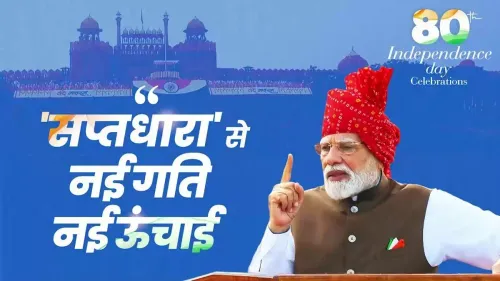
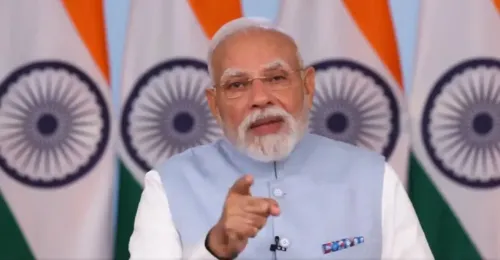
PM Narendra Modi turned 76 on 17 September 2026 , completing 25 years in public service.
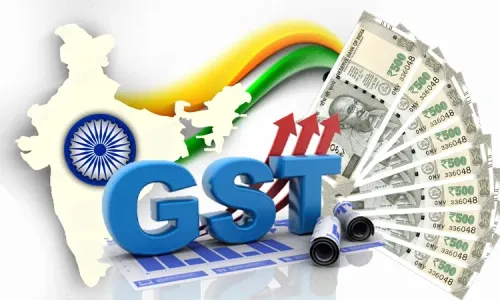
FICCI Secretary General Anant Swarup credited GST with simplifying tax compliance, reducing logistics costs, and enabling larger warehousing.
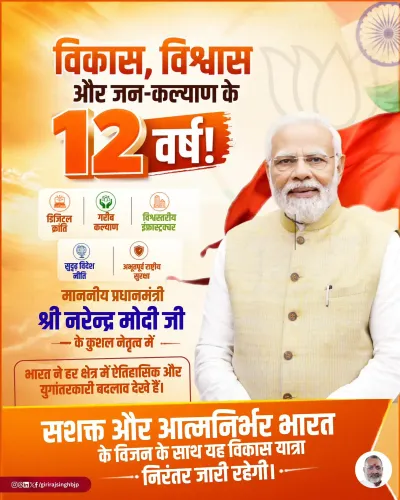
Ranjeet Mehta highlighted progress in the digital ecosystem, startups, and Atmanirbhar Bharat manufacturing over Modi's 12 years in office.
WTC Mumbai Chairman Vijay Kalantri pointed to Jan Dhan Yojana and Beti Bachao, Beti Padhao as welfare milestones alongside economic reforms.
The GST was introduced in 2017 and remains one of India's most consequential tax overhauls, though early implementation faced resistance from small traders.
As Prime Minister Narendra Modi marked his 76th birthday on 17 September 2026 and completed 25 years in public service, India's top industry bodies credited his leadership with reshaping the country's business environment through landmark reforms, large-scale infrastructure investment, and initiatives that elevated India's standing on the global stage.
FICCI: GST and Infrastructure as Defining Achievements
Anant Swarup, Secretary General of the Federation of Indian Chambers of Commerce and Industry (FICCI), said Modi has inspired the country to think at a larger scale over the course of his public career. Swarup specifically singled out the Goods and Services Tax (GST) as a transformational reform. 'GST is one such reform that has changed the way business is conducted across the country. It has led to the creation of larger warehouses, simplified tax-related regulations and reduced logistics costs. This remains one of the government's significant achievements,' he said.
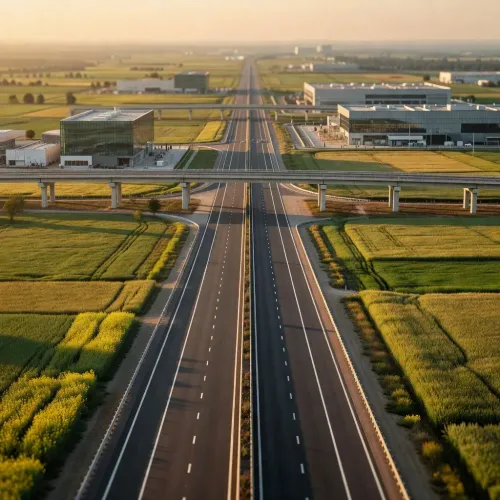
Swarup also highlighted the government's sustained push on physical infrastructure. 'Numerous ports, airports and highways have been built across the country. This has injected new energy into Indian industry and helped bring down logistics costs,' he added.
PHDCCI: Digital Growth and Atmanirbhar Bharat in Focus
Dr. Ranjeet Mehta, CEO and Secretary General of PHDCCI, noted that during Modi's 12 years in office, India has registered measurable progress across the digital ecosystem, infrastructure, the startup ecosystem, and youth empowerment. He described the promotion of domestic manufacturing under the Atmanirbhar Bharat initiative as among the most significant achievements of the government so far.
WTC Mumbai: India's Global Standing Has Strengthened
Vijay Kalantri, Chairman of the World Trade Center (WTC) Mumbai, said India's global standing has strengthened materially under Modi's leadership. He pointed to several grassroots welfare schemes as complementing the economic agenda, including the Jan Dhan Yojana — which expanded financial inclusion to millions of unbanked households — and the Beti Bachao, Beti Padhao initiative aimed at improving conditions for girls and women.
Context and Broader Picture
The tributes from FICCI, PHDCCI, and WTC Mumbai reflect a broadly positive assessment from organised industry, though critics have periodically raised concerns about implementation gaps in flagship programmes. Notably, the GST — introduced in 2017 — was initially contentious among small traders who found compliance burdensome, before subsequent simplifications eased the transition. The Atmanirbhar Bharat push has coincided with a significant rise in India's manufacturing exports, even as the country's manufacturing share of GDP remains a subject of ongoing policy debate. As Modi enters his next year in office, industry bodies are watching closely for the next round of structural reforms, particularly around labour and land, which have historically proved more difficult to execute.
Point of View
But the specific reforms cited — GST and infrastructure — are worth scrutinising. GST did streamline indirect taxation, yet compliance burdens on micro and small enterprises remain a live concern seven years in. The Atmanirbhar Bharat label has been applied broadly enough to cover everything from semiconductor incentives to local toy manufacturing, making it difficult to assess as a single policy. What organised industry chambers do not typically address in these moments is the unfinished agenda: labour reform, land acquisition, and the stubborn gap between India's manufacturing ambition and its GDP reality. The milestone is real; the full accounting is more complicated.
NationPress
17 Sept 2026
Frequently Asked Questions
Why are industry leaders praising PM Modi on his birthday?
Industry leaders from FICCI, PHDCCI, and WTC Mumbai marked PM Modi's 76th birthday and 25 years in public service by crediting his tenure with transformative economic reforms, particularly GST and large-scale infrastructure development. The tributes reflect the organised sector's broadly positive assessment of his business-climate reforms over the past decade.
What is the GST reform that FICCI highlighted?
The Goods and Services Tax (GST), introduced in 2017, replaced a complex web of central and state indirect taxes with a unified national levy. According to FICCI Secretary General Anant Swarup, it simplified tax-related regulations, reduced logistics costs, and enabled the creation of larger, more efficient warehouses across India.
What is the Atmanirbhar Bharat initiative?
Atmanirbhar Bharat, or Self-Reliant India, is the government's overarching push to boost domestic manufacturing and reduce import dependence. PHDCCI CEO Dr. Ranjeet Mehta described it as among the most significant achievements of the Modi government, noting progress across digital infrastructure, startups, and youth empowerment.
What welfare schemes were cited alongside the economic reforms?
WTC Mumbai Chairman Vijay Kalantri highlighted the Jan Dhan Yojana, which expanded banking access to millions of unbanked households, and the Beti Bachao, Beti Padhao initiative, which focuses on improving welfare and educational outcomes for girls and women.
How long has PM Modi been in national office?
PM Modi has completed 12 years in national office as of 2026, having first become Prime Minister in May 2014. He has been in public service for 25 years in total, a milestone that formed the backdrop for Thursday's industry tributes on his 76th birthday.