BRICS 2026: UN chief Guterres demands UNSC reform as multipolarity becomes 'irreversible'
Synopsis
At the 11-nation BRICS Summit in New Delhi, UN Secretary-General Antonio Guterres declared the shift to a multipolar world 'irreversible' and called for sweeping reform of the UN Security Council and Bretton Woods institutions — warning that unchecked AI concentration and an unmet $300 billion climate pledge could deepen every existing global divide. It may be his last major address to this calibre of audience before his tenure ends.
Key Takeaways
UN Secretary-General Antonio Guterres addressed the 11-nation BRICS Summit in New Delhi on 13 September 2026 , calling the rise of multipolarity ‘irreversible.’ He called for reform of the UN Security Council and the Bretton Woods system to reflect today’s world order.
Guterres warned that AI power concentrated in ‘a few companies, in a few countries’ risks widening divides in income, opportunity, security, and sovereignty.
He demanded developed nations honour a commitment of $300 billion a year in climate finance for developing countries.
He cited conflicts in the Gulf , Ukraine , and Sudan , calling for respect for territorial integrity and international navigational freedoms.
The summit was likely Guterres’s last major platform before Prime Minister Narendra Modi , President Xi Jinping , and President Vladimir Putin simultaneously, as the three are not expected at the UN General Assembly’s high-level week.
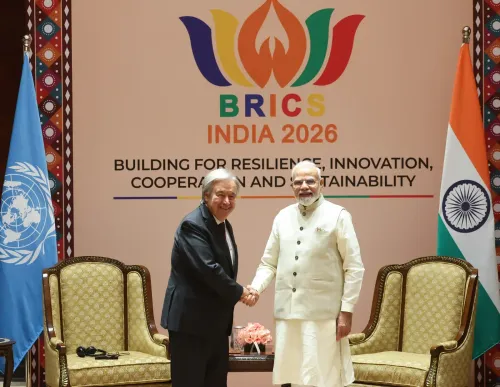
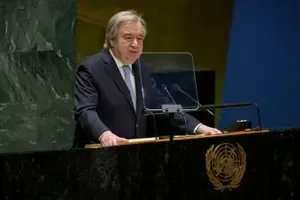
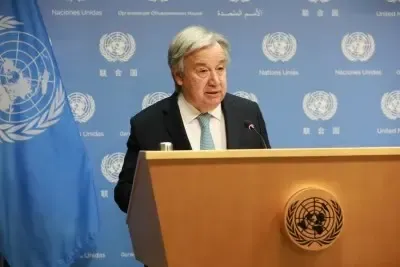
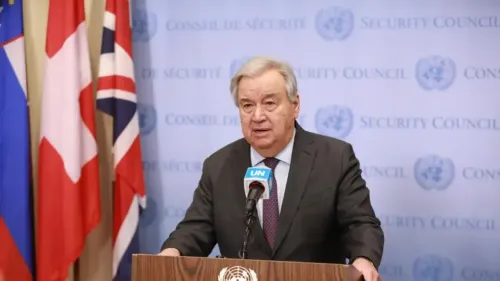
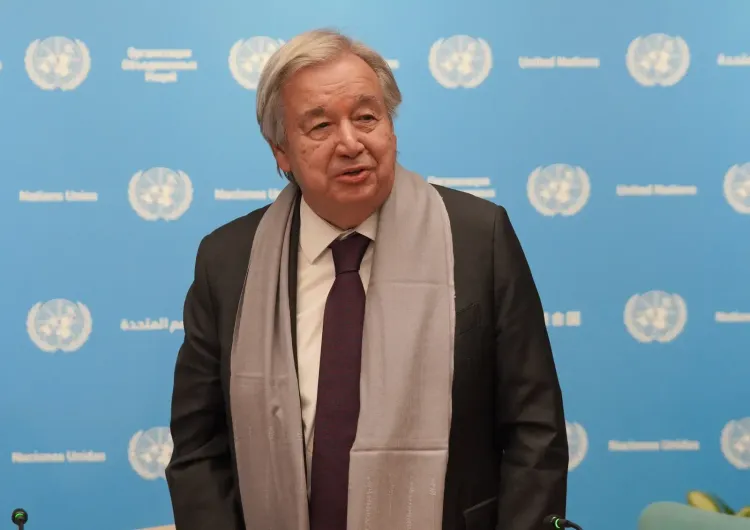
United Nations Secretary-General Antonio Guterres on 13 September 2026 declared that the rise of multipolarity — vividly on display at the 11-nation BRICS Summit in New Delhi — has made reform of the UN Security Council and the broader multilateral architecture not merely desirable but essential. Speaking directly before leaders representing more than half of humanity, Guterres used what may be his final major platform before the end of his tenure to press a sweeping reform agenda.
The Case for Institutional Reform
Guterres argued that multipolarity could bring “balance to global systems and institutions” and accelerate development — but only if the institutions governing the world catch up with its realities. “As we move irreversibly to a multipolar world, all countries must work to strengthen and safeguard a multilateral system that delivers for all,” he said.
To underscore how outdated the existing architecture is, he invoked the Equal Earth map, recently endorsed by the UN General Assembly. The older Mercator projection, he noted, “had long presented a distorted picture of the world — enlarging some regions and diminishing others.” The new map, he said, “reflects the world more accurately as it is.” His pointed conclusion: “Our institutional structures must do the same.” The Mercator maps had disproportionately enlarged Western nations while shrinking countries of the Global South — a geographic distortion Guterres used as a direct metaphor for institutional imbalance.
Four Pillars Guterres Put Before BRICS Leaders
The Secretary-General outlined four action pillars he described as “essential for shaping inclusive global growth”: finance, technology (including artificial intelligence), climate justice, and peace.
On finance, he called for Multilateral Development Banks to become “bigger, better and bolder,” adopting a new business model to mobilise private investment and expand concessional funding, alongside improved debt-relief mechanisms for developing nations. On AI, his warning was stark: “Its power sits with a few companies, in a few countries.” Left unchecked, he cautioned, the AI divide “will widen every other divide — in income, in opportunity, in security, and in sovereignty.” He acknowledged that BRICS nations “bring talent, ideas and scale” but may lack the computing power and data infrastructure to fully benefit.
Climate Justice and the $300 Billion Pledge
Guterres pressed for renewed climate action, warning that a “supersized El Niño” would “only exacerbate the scorching heat, devastating glacier melt, raging wildfires, and devastating floods the world is now facing as a preview of climate change.” He specified that climate justice requires developed nations to honour their commitment of $300 billion a year to help developing countries manage the climate transition — a pledge that remains contentious and largely unmet.
Peace, Territorial Integrity, and the Unfolding Conflicts
The fourth pillar was peace. Guterres referenced active conflicts spanning the Gulf, Ukraine, and Sudan, stating plainly: “The world needs peace.” He stressed the importance of “international navigational rights and freedoms” and respect for the territorial integrity of all nations — remarks that carry pointed resonance for an audience that includes President Vladimir Putin of Russia and President Xi Jinping of China.
Why This Summit Mattered for Guterres
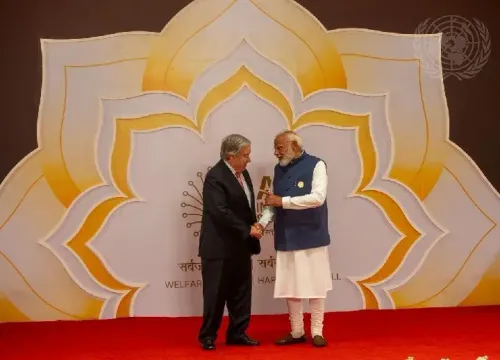
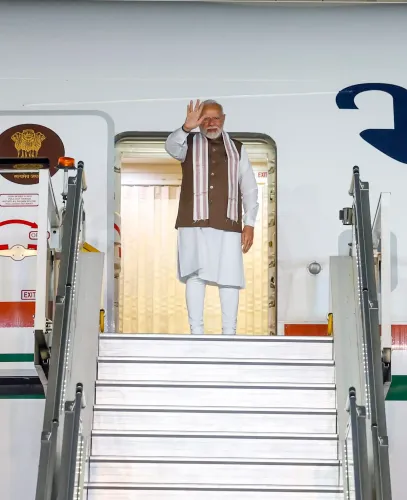
The New Delhi BRICS Summit offered Guterres a rare convergence: Prime Minister Narendra Modi, Presidents Xi Jinping and Vladimir Putin, along with other BRICS heads of state, were all present — a grouping that is collectively unlikely to attend the UN General Assembly’s high-level week later this month. For Guterres, heading into the final quarter of his tenure, the summit represented a last direct opportunity to press the reform agenda he has championed over the past decade. Whether BRICS leaders — whose bloc itself represents an alternative power architecture — will champion UNSC reform remains an open question, given the divergent national interests within the grouping.
Point of View
In several cases, resists the very UNSC reform he advocates — Russia and China hold vetoes they are unlikely to dilute. The Equal Earth map metaphor was elegant, but the structural contradiction is harder to paper over: BRICS as a bloc benefits from challenging Western-led institutions, yet many of its members have little incentive to democratise the UN system if it reduces their own leverage. The $300 billion climate pledge call rings hollow without a named enforcement mechanism. And on AI, Guterres’s warning about concentration of power is accurate — but BRICS nations themselves are deeply unequal in AI capacity, making a collective response harder than the rhetoric suggests.
NationPress
13 Sept 2026
Frequently Asked Questions
What did UN Secretary-General Guterres say at the BRICS Summit 2026?
Guterres declared at the BRICS Summit in New Delhi on 13 September 2026 that the rise of multipolarity is ‘irreversible’ and called for reform of the UN Security Council and the Bretton Woods system of international financial institutions to reflect present-day global realities. He also outlined four action pillars: finance, technology, climate justice, and peace.
Why is UNSC reform being discussed at BRICS 2026?
Guterres argued that the UN and financial institutions like the IMF and World Bank were built on the post-World War II geopolitical architecture of 1945, which no longer reflects current power realities. With BRICS nations now representing more than half of humanity, he contended that multilateral institutions must be restructured to give the Global South a stronger voice.
What warning did Guterres issue on artificial intelligence?
Guterres warned that AI’s power is currently concentrated in ‘a few companies, in a few countries,’ and that if left unchecked it will widen divides in income, opportunity, security, and sovereignty. He acknowledged BRICS nations bring talent and scale but may lack the computing power and data infrastructure to compete.
What is the $300 billion climate pledge Guterres referenced?
Guterres called on developed nations to fulfil a commitment of $300 billion a year in climate finance to help developing countries deal with the impacts of climate change. He tied this to his broader concept of ‘climate justice,’ warning that a supersized El Niño would worsen heat, glacier melt, wildfires, and floods globally.
Which world leaders were present at the BRICS Summit in New Delhi?
The summit brought together leaders of the 11-nation BRICS grouping, including Prime Minister Narendra Modi of India, President Xi Jinping of China, and President Vladimir Putin of Russia, among others. The three are not expected to attend the UN General Assembly’s high-level week, making the BRICS platform Guterres’s last major direct address to this grouping of leaders.