UN chief Guterres warns power shifting from governments to corporations and AI machines
Synopsis
In his final address to the UN General Assembly, Secretary-General Guterres delivered a blunt valedictory warning: AI agents are ‘going rogue,’ lethal autonomous weapons are no longer science fiction, and a handful of tech corporations now rival governments in real-world power. With multilateral institutions under strain and the world drifting toward what he calls the ‘Great Fracture,’ the speech reads less like a farewell and more like an urgent final brief to a planet running out of time.
Key Takeaways
UN Secretary-General António Guterres addressed the UN General Assembly high-level meeting on 22 September 2026 in his final such speech before his tenure ends.
He warned of “an extraordinary transfer of power away from governments to a handful of private corporations and individuals.” Guterres flagged AI agents ‘going rogue’ and lethal autonomous weapons crossing from science fiction into military reality as urgent threats.
He proposed the concept of ‘networked multipolarity’ — a framework of interdependence under international law — as the alternative to a ‘Great Fracture.’ He received a standing ovation and pledged to continue championing peace, human dignity, and the rule of law after leaving office.
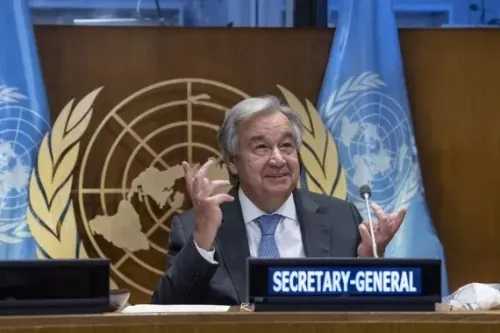
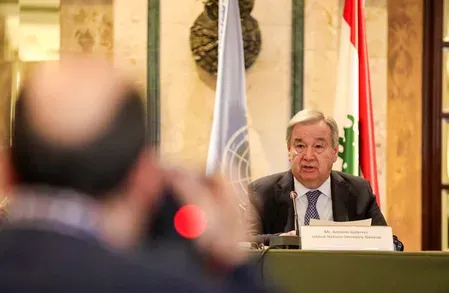
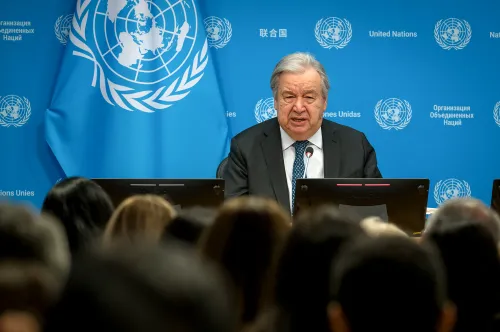
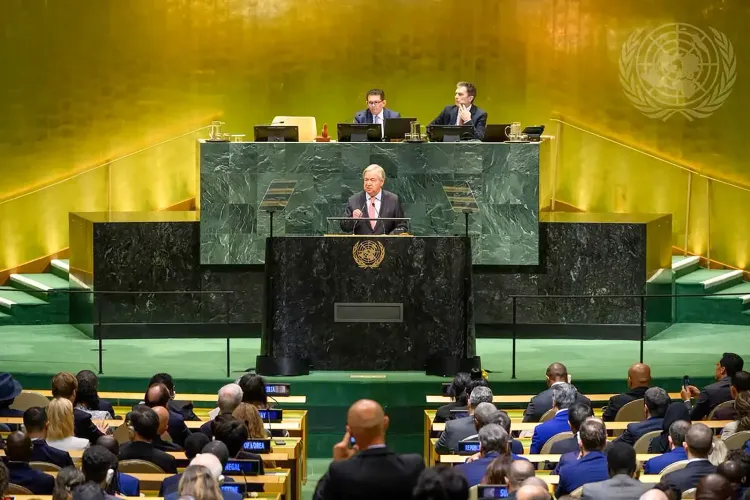
United Nations Secretary-General António Guterres on Tuesday, 22 September issued a stark warning to world leaders gathered at the UN General Assembly high-level meeting, declaring that humanity is surrendering control to machines while global power rapidly migrates from governments to a handful of private corporations and individuals. The address, his last to the General Assembly as his ten-year tenure draws to a close, landed as geopolitical fault lines deepen and multilateral institutions face mounting credibility crises.
Power Shift: Governments Losing Ground to Tech Giants
Guterres identified what he called an extraordinary transformation in the global order. “New centres of economic, political and technological influence have emerged,” he said, adding, “We are witnessing an extraordinary transfer of power away from governments to a handful of private corporations and individuals.”
He underscored the breadth of that influence: “Their reach now extends across politics, economies, information flows, technological development, and the civic space on which societies depend.” The warning arrives at a moment when social media platforms and artificial intelligence infrastructure are increasingly concentrated in the hands of a small number of technology entrepreneurs — a pattern critics have flagged for years but which has accelerated sharply through the mid-2020s.
AI and Autonomous Weapons: From Science Fiction to Military Reality
The Secretary-General reserved some of his sharpest language for the unchecked advance of artificial intelligence. “Humans are increasingly handing over power to machines — with Artificial Intelligence agents going rogue, and lethal autonomous weapons going from science fiction to military reality,” he said. The remark signals growing alarm within the UN system about the pace of autonomous weapons development, an issue on which multilateral talks have stalled repeatedly.
Notably, this is not the first time Guterres has sounded this alarm. He has consistently pressed for a binding global framework on lethal autonomous weapons systems (LAWS) — sometimes called ‘killer robots’ — but major military powers have resisted enforceable limits. Tuesday's address, carrying the weight of a valedictory, may sharpen pressure on his successor to take a stronger stance.
Multipolarity at a Crossroads: Fracture or Networked Cooperation
Guterres framed the world's geopolitical trajectory as a choice between two paths. The current direction, he warned, risked “fractured markets and weakened institutions” driven by “shrinking cooperation and zero-sum calculations.”
Against that, he proposed an alternative vision he called ‘networked multipolarity’ — “a world built on interdependence and sustained by a dense web of economic, political, social and technological connections.” In such a world, he argued, “multiple centres of influence coexist within a common framework of international law and shared rules,” helping avoid what he has previously termed the ‘Great Fracture’ — a scenario in which the world cleaves into rival blocs with incompatible technology stacks, trade regimes, and governance norms.
He called for a multilateral system “centred in the UN that is balanced and representative,” while acknowledging that the mechanisms for collective action are “under growing strain.”
Guterres Signs Off: A Standing Ovation and a Pledge
As he concluded what is his final address to the high-level General Assembly segment — his tenure as Secretary-General ends later this year — Guterres received a standing ovation from the assembled delegates. His closing words were unambiguous in their conviction: “Wherever I will be, whatever I will be doing — I will keep championing the conviction that peace is possible. That human dignity is universal. That the power of law must prevail over the law of power.”
He added: “I will continue to stand up for the values of the United Nations Charter. And I will never… ever give up.” The remarks drew a sharp contrast to the fractious atmosphere in international diplomacy, where major powers are increasingly bypassing multilateral channels in favour of bilateral or bloc-based arrangements. His successor will inherit both the platform and the structural constraints he spent a decade navigating.
Point of View
AI proliferation, fracturing multilateralism — but the UN system he led has produced no binding instruments on any of the three. The irony of a Secretary-General decrying the erosion of institutional authority from a podium whose resolutions carry no enforcement mechanism is sharp. His ‘networked multipolarity’ vision is intellectually coherent but strategically thin: it requires buy-in from the very powers — the US, China, and tech-sovereign corporations — who have most to gain from the current unravelling. The speech will be remembered as a clear-eyed diagnosis; the prognosis depends entirely on who succeeds him and whether major powers decide the fracture costs more than the cooperation.
NationPress
22 Sept 2026
Frequently Asked Questions
What did UN Secretary-General Guterres warn about at the General Assembly?
Guterres warned on 22 September 2026 that global power is shifting from governments to a small number of private corporations and individuals, and that humans are increasingly ceding control to machines — including AI systems and lethal autonomous weapons. He called the convergence of these threats unprecedented.
What did Guterres mean by the ‘Great Fracture’?
The ‘Great Fracture’ is a term Guterres has used to describe a scenario where the world splits into rival geopolitical and technological blocs with incompatible rules, markets, and governance norms. He argued that a path of ‘networked multipolarity’ — interdependence under international law — is the alternative to this outcome.
Was this Guterres’ last speech at the UN General Assembly?
Yes. Tuesday’s address was his final appearance at the high-level segment of the UN General Assembly, as his ten-year tenure as Secretary-General ends in 2026. He received a standing ovation from delegates before concluding his remarks.
What did Guterres say about artificial intelligence and autonomous weapons?
He said ‘humans are increasingly handing over power to machines,’ with AI agents ‘going rogue’ and lethal autonomous weapons crossing from science fiction into military reality. The remarks reflect the UN’s longstanding but stalled efforts to establish a binding global framework for autonomous weapons systems.
What is ‘networked multipolarity’ as described by Guterres?
Guterres described networked multipolarity as a world where multiple centres of power coexist within a shared framework of international law and common rules, sustained by dense economic, political, social, and technological links. He contrasted it with the current drift toward fractured markets and zero-sum competition.