UN launches AI governance dialogue in Geneva, Guterres warns of runaway speed
Synopsis
For the first time, every UN member state has a seat at the table on AI governance — and the Secretary-General's message was stark: AI reached a billion users twice as fast as the internet, power over it is concentrated in a handful of companies and countries, and machine-generated lies now rival the truth. Geneva is where the world decides whether it governs this technology or gets governed by it.
Key Takeaways
The UN Global Dialogue on AI Governance opened in Geneva on 7 July 2025 — the first such meeting to include every UN member state.
Secretary-General António Guterres issued three warnings: AI's runaway speed, dangerous concentration of power in a 'handful of companies and countries', and the erosion of truth by machine-generated content.
AI reached one billion users in two years , compared to fifteen years for the internet, according to Guterres.
The Independent International Scientific Panel on AI (IISPAI) released its preliminary report last week, setting the agenda for the dialogue.
The meeting will address bridging the AI divide, international cooperation on governance, and strengthening human oversight of AI systems.
General Assembly President Annalena Baerbock called the dialogue about defining 'a shared vision in which technological progress goes hand in hand with human dignity, equity, and sustainable development.'
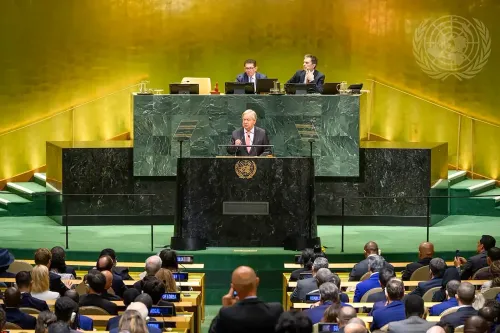
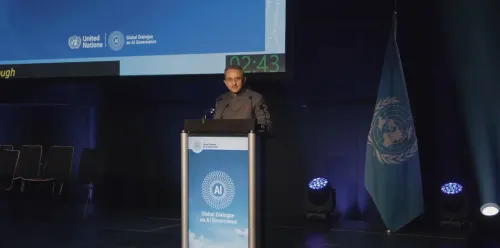
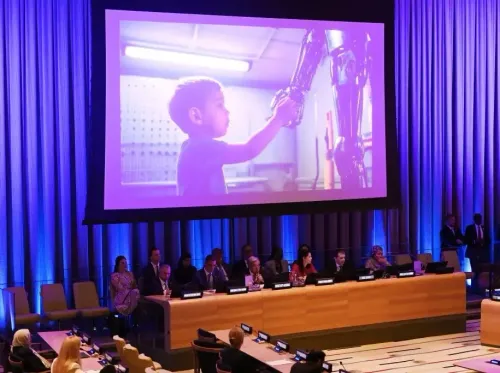
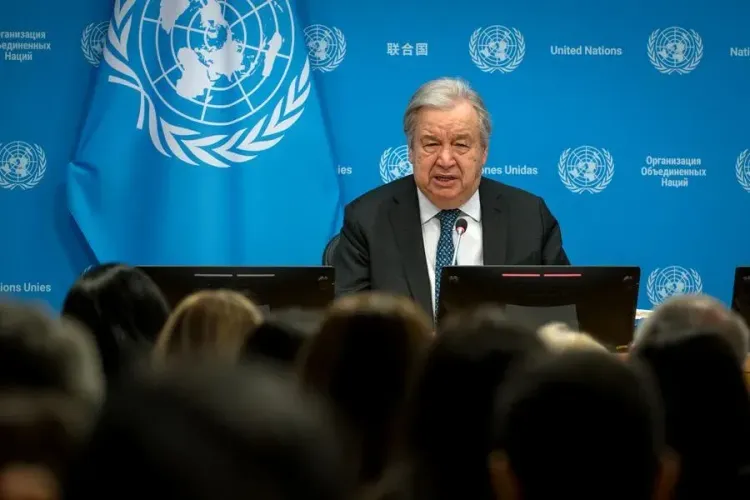
The United Nations on Monday, 7 July 2025, convened a landmark Global Dialogue on AI Governance in Geneva, as Secretary-General António Guterres posed a defining challenge to world leaders: will humanity 'shape this transformation together — or let it shape us?' The meeting, the first of its kind to give every UN member state a seat at the table, brings together governments, technology companies, and scientific experts to establish a shared framework for managing artificial intelligence.
The Three Warnings from the UN
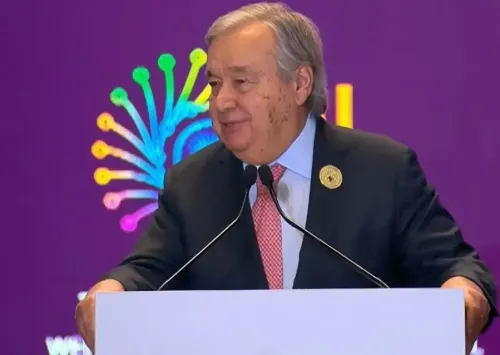
Guterres anchored his address around three core warnings drawn from the preliminary report of the Independent International Scientific Panel on AI (IISPAI), released last week. The first is about speed. 'The internet took fifteen years to reach a billion people. AI got there in two,' he said, cautioning that AI systems are 'no longer tools awaiting instruction; they are writing code, acting online, and making choices with less and less human oversight.' Human institutions, he argued, are 'not ready for machines that decide' for them.
The second warning concerns the concentration of power. 'The computing power, the data and the talent behind the most advanced systems are concentrated in a handful of companies, in a handful of countries,' Guterres said, adding that most nations 'have had no say in decisions that will shape their futures.' He warned that 'when power imbalances are hard-wired into technology, inequality becomes part of the code.'
The third warning is about truth. 'A machine-enabled lie can now persuade as effectively as the truth — and authentic evidence can be dismissed as fake,' Guterres said, describing the erosion of 'the integrity of our information ecosystem' as a systemic threat that demands urgent governance.
What the Dialogue Is Designed to Do
The Geneva meeting is structured around three core themes: bridging the global AI divide, strengthening international cooperation on AI governance, and reinforcing human oversight of AI systems to ensure safety and security. The Global Digital Compact, adopted by the UN General Assembly in 2024, and the IISPAI's work together provide what organisers describe as the first multilateral infrastructure capable of addressing AI at a global scale.
Amandeep Singh Gill, the Under-Secretary-General and Special Envoy for Digital and Emerging Technologies, called the inauguration 'a turning point — not just for AI governance, but for how the international community responds to transformative technology.' He noted that for the first time, an independent scientific panel and a fully inclusive global dialogue had come together simultaneously.
Political Leadership and the Shared Vision
General Assembly President Annalena Baerbock framed the stakes beyond regulation. 'This Global Dialogue is not merely about regulating a technology. It is about defining a shared vision in which technological progress goes hand in hand with human dignity, equity, and sustainable development,' she said.
Guterres was equally direct about the responsibilities that follow: governments must 'act with urgency,' companies must 'accept responsibility equal to their power,' and scientists must 'keep bringing evidence into the light.'
Why This Moment Is Different
This comes amid a growing global consensus that voluntary industry commitments and national-level regulations are insufficient to govern a technology that is, by nature, borderless. Notably, previous multilateral efforts on AI — including various OECD principles and bilateral agreements — have lacked binding force and universal participation. The Geneva dialogue is being positioned as the beginning of a more structured, evidence-based multilateral process. As Guterres put it, 'Some lines, once crossed, cannot be uncrossed.' The choice, he declared, is 'between governing by design — and drifting by default.'
Point of View
But because it finally assembles the right room. For years, AI governance has been a patchwork of voluntary industry pledges and unilateral national rules — neither binding nor universal. Guterres' three warnings — speed, power concentration, and epistemic erosion — are not new diagnoses, but framing them through an independent scientific panel and a universal multilateral forum gives them institutional weight they previously lacked. The harder question is what follows: a dialogue without enforcement architecture risks becoming another well-attended declaration. The real test will be whether the Global Digital Compact's governance structures can move from principles to accountability mechanisms before the technology outruns the conversation.
NationPress
5 Oct 2026
Frequently Asked Questions
What is the UN Global Dialogue on AI Governance?
It is a multilateral meeting convened by the United Nations in Geneva on 7 July 2025, bringing together governments, technology companies, and scientific experts to develop a shared framework for governing artificial intelligence. It is the first such forum to give every UN member state a seat at the table.
What did UN Secretary-General Guterres warn about AI?
Guterres issued three warnings: that AI is advancing at 'runaway speed' (reaching a billion users in two years versus fifteen for the internet), that control over advanced AI is concentrated in a handful of companies and countries, and that machine-generated misinformation now threatens the integrity of the global information ecosystem.
What is the IISPAI and what role does it play?
The Independent International Scientific Panel on AI (IISPAI) is a UN-backed body that released its preliminary report last week ahead of the Geneva dialogue. Its findings — on speed, power concentration, and truth — set the scientific agenda for the governance discussions.
What issues will the Geneva AI dialogue address?
The meeting is structured around three themes: bridging the global AI divide, strengthening international cooperation on AI governance, and reinforcing human oversight of AI systems to ensure safety and security.
What is the Global Digital Compact and how does it relate to AI governance?
The Global Digital Compact was adopted by the UN General Assembly in 2024 and provides the multilateral framework underpinning the Geneva dialogue. Together with the IISPAI, it gives the international community both an independent scientific assessment body and a universal governance forum — for the first time simultaneously.