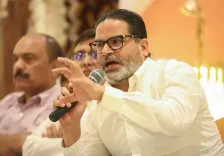
India at UN AI Governance Dialogue: Safe, inclusive AI for all, says MoS Singh

Synopsis
At the inaugural UN Global Dialogue on AI Governance in Geneva, India's MoS Kirti Vardhan Singh delivered a pointed message: AI governance must be decided now, at the UN, with the Global South at the table — or the window for consensus will close. It is a clear bid by India to position itself as a bridge-builder in the global AI order.
Key Takeaways
MoS Kirti Vardhan Singh represented India at the inaugural UN Global Dialogue on AI Governance in Geneva on 7 July .
India called for AI governance rooted in human oversight, human rights, and prevention of misuse.
Singh highlighted the need to close Global South capacity gaps for meaningful participation in AI governance.
The dialogue is mandated under UN General Assembly Resolution 79/325 , following the Global Digital Compact adopted in September 2024 .
India's National Strategy for AI and National AI Governance Guidelines reflect a philosophy of inclusive growth without stifling innovation.
Singh warned that AI could become a 'multiplier of existing inequalities' if global governance fails to achieve consensus.
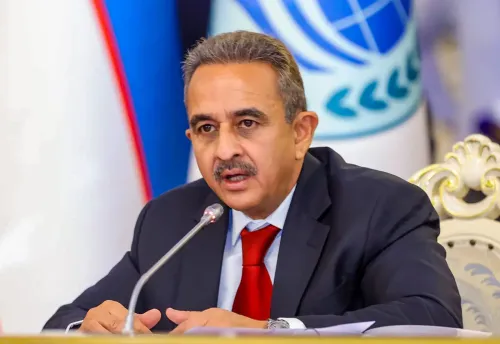
Minister of State for External Affairs Kirti Vardhan Singh on Tuesday, 7 July called on the international community to forge a unified framework for artificial intelligence governance, telling delegates at the inaugural United Nations Global Dialogue on AI Governance in Geneva that India remains firmly committed to building an AI future that is safe, secure, trustworthy, and inclusive.
India's Core Position on AI Governance
Singh articulated that responsible AI governance must be anchored in strong foundational principles — preserving human oversight, upholding human rights, and preventing misuse of the technology. He pointed to India's recent AI Impact Summit as a reflection of these values, arguing that AI systems operating across borders must be ethical, secure, and beneficial to all nations, not just the technologically advanced ones.
He underscored that India's National Strategy for AI and National AI Governance Guidelines are built on the philosophy of 'AI for all' — promoting inclusive growth without stifling innovation. 'These are not competing goals,' his remarks suggested; rather, they are complementary imperatives for a technology with global reach.
A Decisive Moment for the Global South
Singh drew particular attention to the capacity gaps facing Global South nations, arguing that meaningful participation in AI governance is impossible without first closing these structural disparities. Developing countries, he noted, risk being governed by AI frameworks they had little hand in shaping — a democratic deficit with long-term consequences.
He emphasised that the UN, as the world's foremost platform for building global consensus, is the appropriate arena for these deliberations. 'Machines do not quarrel over borders, ideology, or pride; humans do,' Singh said, urging that AI governance structures reflect unity of purpose and that divisions not be allowed to let technology outrun diplomacy.
The Stakes: Enabler or Inequality Multiplier
Singh warned that the policy choices made by governments, international organisations, and the private sector in the coming years will determine whether AI becomes an enabler of equitable progress or a multiplier of existing inequalities. He characterised the Global Dialogue not merely as a consultative forum but as a 'deciding forum' — one where consensus must be chosen over conflict before that choice is no longer available.
This framing positions India as a bridge-builder between the AI-advanced economies of the Global North and the aspirational but capacity-constrained nations of the Global South.
About the UN Global Dialogue on AI Governance
The Global Dialogue on AI Governance is a universal, multi-stakeholder UN forum established under General Assembly Resolution 79/325, following the Global Digital Compact adopted as part of the Pact of the Future in September 2024. Singh arrived in Geneva on Sunday to participate in the inaugural session, according to a statement from the Ministry of External Affairs.
As AI regulation accelerates globally — from the European Union's AI Act to emerging frameworks in the United States and China — India's active presence at this UN forum signals its intent to be a rule-shaper, not merely a rule-taker, in the governance of transformative technology.
Point of View
New Delhi is staking a claim to co-author the rules of a technology it did not invent but intends to shape. The tension worth watching: India's domestic AI ambitions — including its own large language model push and data localisation instincts — do not always sit easily with the open, interoperable governance it advocates internationally. Whether India can reconcile its 'AI for all' rhetoric with its own regulatory posture will determine whether its Geneva voice carries long-term credibility.
NationPress
6 Oct 2026
Frequently Asked Questions
What did India's MoS Kirti Vardhan Singh say at the UN AI Governance Dialogue in Geneva?
Singh said India is committed to an AI future that is safe, secure, trustworthy, and inclusive, and called for governance frameworks grounded in human oversight, human rights, and prevention of misuse. He also urged the international community to close the capacity gaps facing Global South nations so they can participate meaningfully in shaping AI rules.
What is the UN Global Dialogue on AI Governance?
It is a universal, multi-stakeholder forum established under UN General Assembly Resolution 79/325, created following the Global Digital Compact adopted as part of the Pact of the Future in September 2024. The inaugural session was held in Geneva in July 2025.
Why does India say the Global South must be included in AI governance?
Singh argued that developing nations face significant capacity gaps that prevent them from participating on equal footing in AI governance discussions. Without closing these gaps, the Global South risks being governed by AI frameworks it had little role in designing, deepening existing global inequalities.
What are India's key AI governance documents?
India's positions are anchored in its National Strategy for AI and National AI Governance Guidelines, both of which embody the philosophy of 'AI for all' — promoting inclusive, equitable growth while preserving space for innovation.
Why is the UN being emphasised as the forum for AI governance?
Singh stressed that the UN, as the world's foremost platform for forging global consensus on issues of shared international concern, is the appropriate and legitimate arena for AI governance. He cautioned that divisions among nations must not allow technology to outrun diplomacy.